Globalisation (Edexcel IGCSE Economics)
Introduction to Globalisation
Spec point —
2.2.1a
-
Globalisation is the economic integration of different countries through increasing cross-border movement of people, goods/services, technology and finance
- This integration of global economies has impacted national cultures, spread ideas, speeded up industrialisation in developing nations and led to de-industrialisation in developed nations
-
Globalisation has existed for hundreds of years; it is not a new phenomenon
- Improvements in technology and the speed of global connections have exponentially increased the level of interdependence between nations in the past 50 years
-
Consumers now source products globally recognising global brands wherever they travel
- In 2000, the value of global trade was approximately** $6.45 trillion**. By 2023, this figure was at** $31 trillion**
The Causes of Globalisation
Spec point —
2.2.1b
- Numerous factors have contributed to the rapid increase in the pace of globalisation including free trade, transport improvements, communication and MNCs
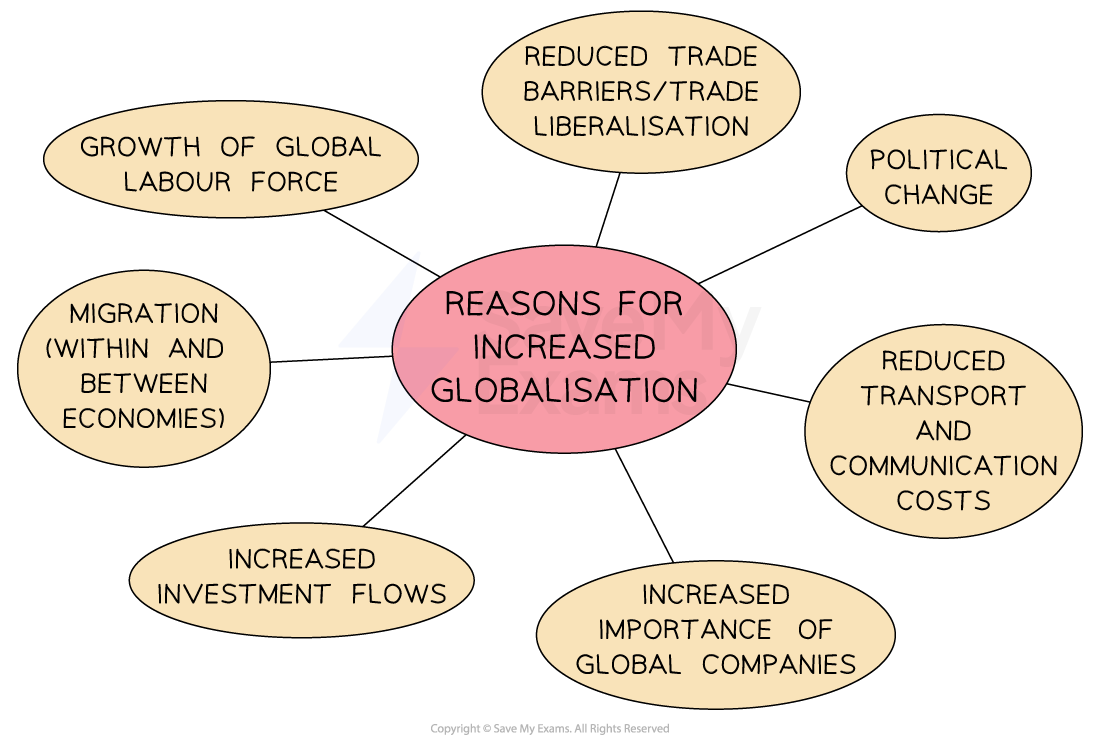
Four main factors drive globalisation
Reasons for the rise in globalisation
Free trade
- The increased effectiveness of the World Trade Organisation (WTO) in negotiating new trade agreements has meant that countries are open to free trade (reduced tariffs and quotas)
Reduced cost of transport
-
This allows businesses to increase the volume of goods traded globally
- For example, containerised shipping transports goods in bulk using metal containers on a boat
Reduced cost of communication
-
Communication costs are very low due to innovations in technology
- E.g. Skype, WhatsApp, and WeChat make it easier for firms to connect and promote themselves globally
Multinational Corporations (MNCs)
- The rapid growth and influence of MNCs contribute to globalisation by expanding their operations and presence across borders
Worked Example A firm is described as a multinational corporation (MNC) if it:
A. has shareholders in many countries
B. exports goods to other countries
C. imports goods from other countries
D. operates in more than one country
Final answer: D is the correct answer: it operates in more than one country
MNCs often have their headquarters in one country, but may manufacture their output in one or more different countries.
- A is incorrect, as shareholders are owners of a business and their ownership country does not indicate the firm conducts business in that country
- B is incorrect, as the firm would be known as an exporter
- C is incorrect, as the firm would be known as an importer
Was this revision note helpful?
Build on this topic