River Processes (Cambridge International IGCSE Geography)
Spec point —
2.2.3· Demonstrate an understanding of the work of a river in eroding, transporting and depositing
River Processes
Erosion
-
Erosion is the wearing down of surfaces
-
There are four erosion processes that change the shape of the river channel:
-
Hydraulic action
- The force of the water, which removes material from the bed and banks of the river
-
Abrasion
- When the materials carried by the river scrape away the banks and bed
-
Attrition
- When the material being carried by the river hits each other, the pieces become rounder and smaller
-
Corrosion (solution)
- When rocks are dissolved in slightly acidic water
-
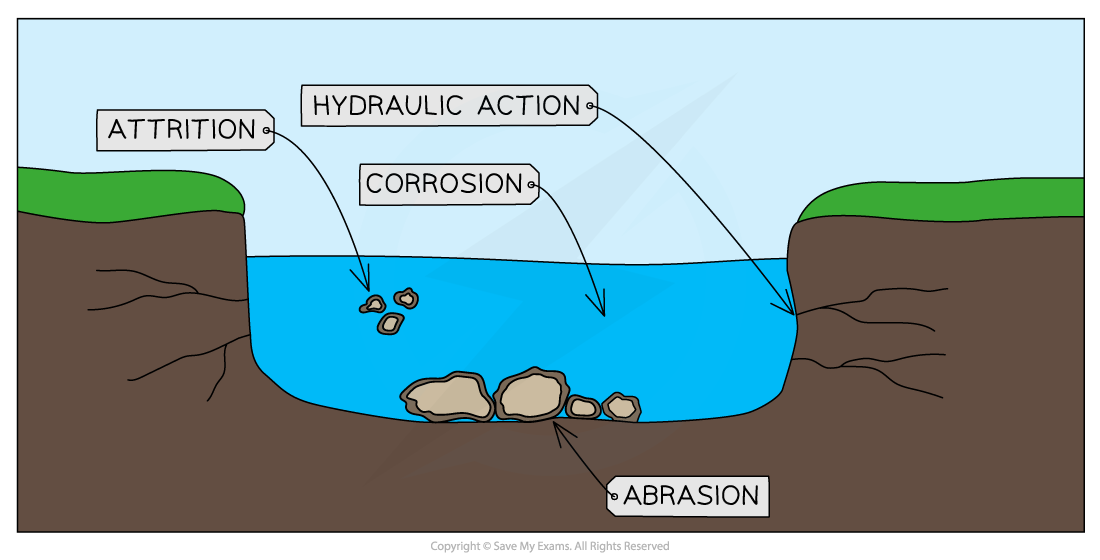
Types of erosion
-
Erosion can be mainly vertical or lateral:
- Vertical erosion is dominant in the upper course of rivers. It increases the depth of the river and valley as the river erodes downwards
- Lateral erosion is dominant in the middle and lower courses of rivers. It increases the width of the river and valley as it erodes sideways
Transportation
-
There are four processes of transportation:
-
Traction
- Occurs when larger rocks and materials are rolled along the riverbed
-
Saltation
- Smaller material, which can be lifted by the water, bounces along the riverbed
-
Suspension
- Lighter material carried within the river flow
-
Solution
- When materials are dissolved in the river water
-
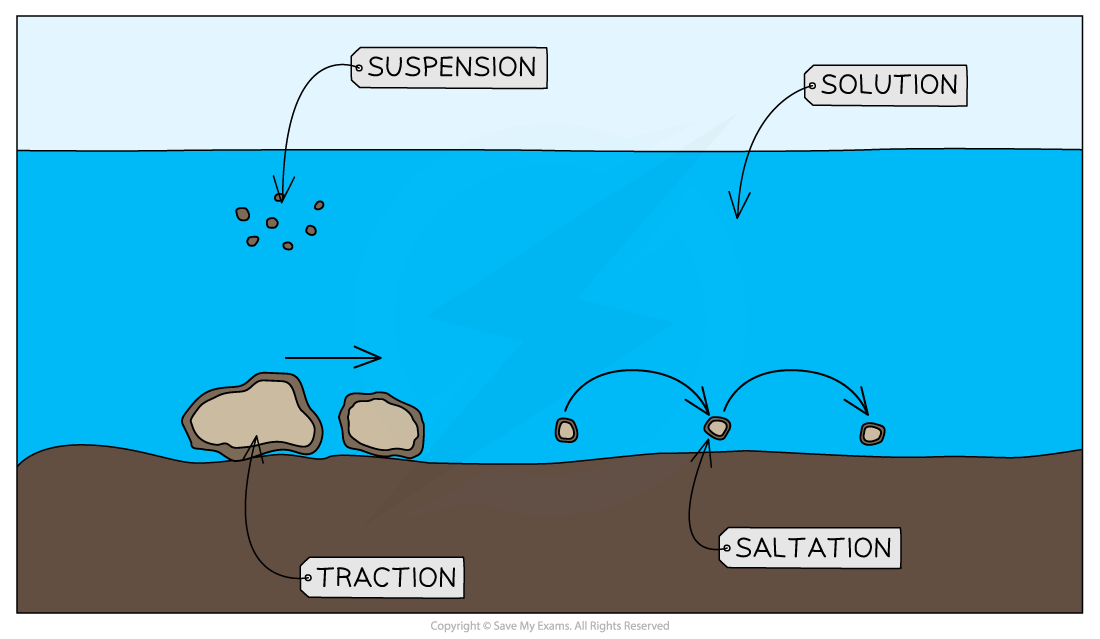
Exam Hint It can sometimes help to remember a word and the process it refers to if you know what the word means.
Traction: the action of pulling something over a surface
Saltation: leaping or jumping
Deposition
-
When a river does not have enough energy to carry materials, it drops them
- This is deposition
-
The causes of reduced energy include:
- Reduced discharge due to a lack of precipitation or abstraction upstream
- Decreased gradient
- Slower flow on the inside of a river bend or where the river is shallower
- When the river enters a sea, ocean or lake
-
The heaviest material is deposited first; this is known as the bedload
-
The lighter materials, gravel, sand and silt, are known as alluvium and they are carried further downstream
-
The dissolved materials are carried out to sea
-
As a result of erosion, transportation and deposition the character of a river changes as it moves downstream
-
These changes are summarised in the Bradshaw model
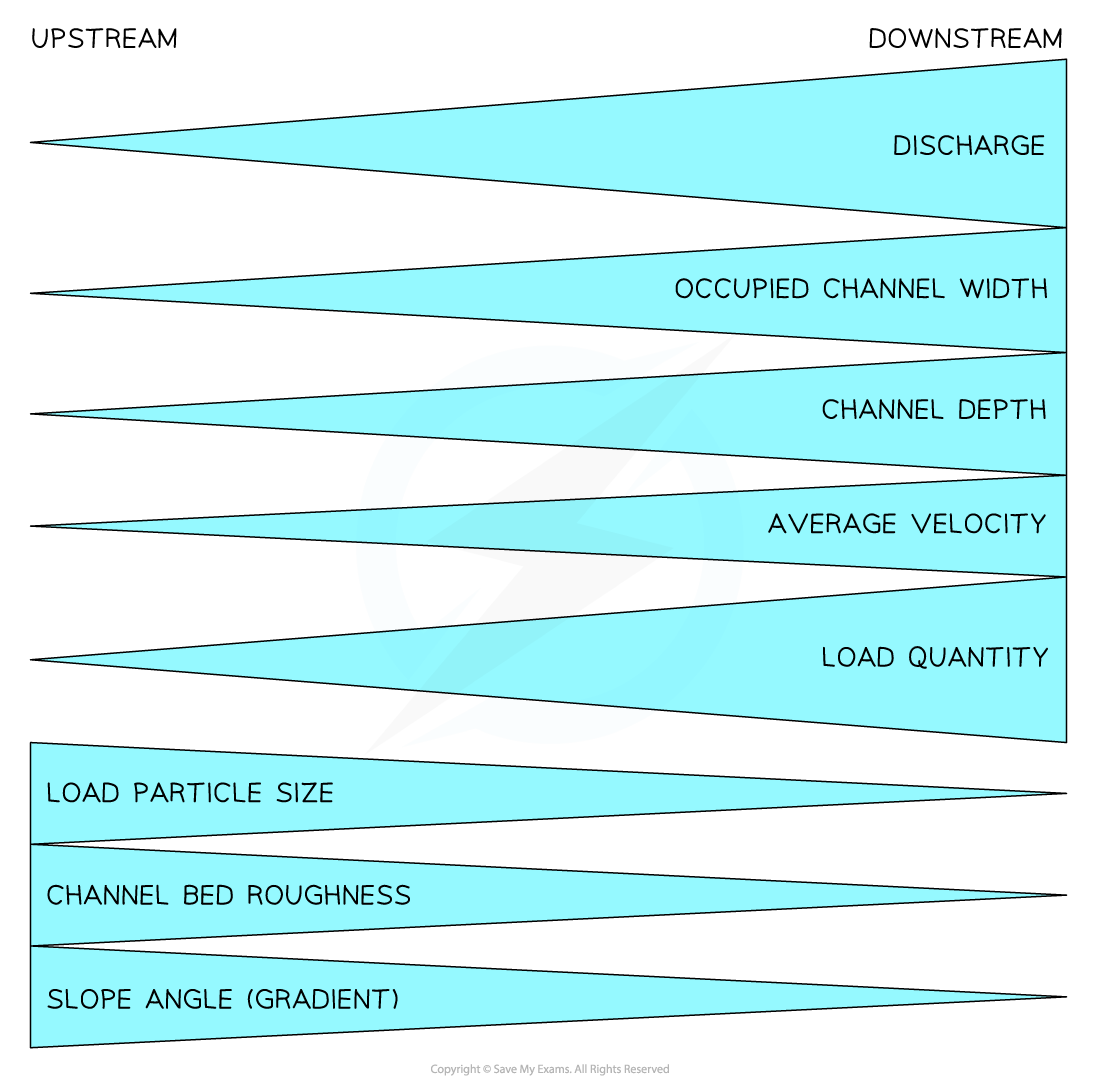
The Bradshaw Model
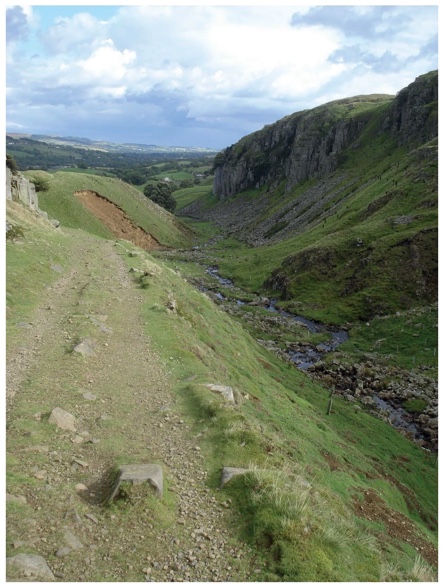
Worked Example Study Fig. 1, which is a photography of a river in an upland area.
Explain how the river in Fig 1 is likely to carry out erosion.
[5 marks]
Final answer: Answer
Hydraulic action [1] The power of water wears away bed and banks, releasing air compressed in cracks [1] Abrasion [1] Material carried by river grinds bed and banks/sandpaper action [1] Corrosion / solution [1] Rocks dissolved by chemical reactions [1] Attrition [1] Load reduced in size as particles hit each other when being carried by water [1] Vertical erosion [1]
Remember, you will receive 1 mark for the type of erosion and the second mark for explaining how the erosion process works.
River characteristics
- All rivers have long and cross-profiles
- Each river's long and cross profiles are unique but they do have some characteristics in common
- These profiles show changes in river characteristics from the source to the mouth
Long profile
-
The long profile of a river shows the changes in the river gradient from the source to the mouth
-
Most long profiles have a concave shape with similar characteristics:
- The source is usually in an upland area
- The upper course of the river includes steep areas with uneven surfaces
- In the middle course, the gradient decreases
- In the lower section, the gradient decreases further until it becomes almost flat
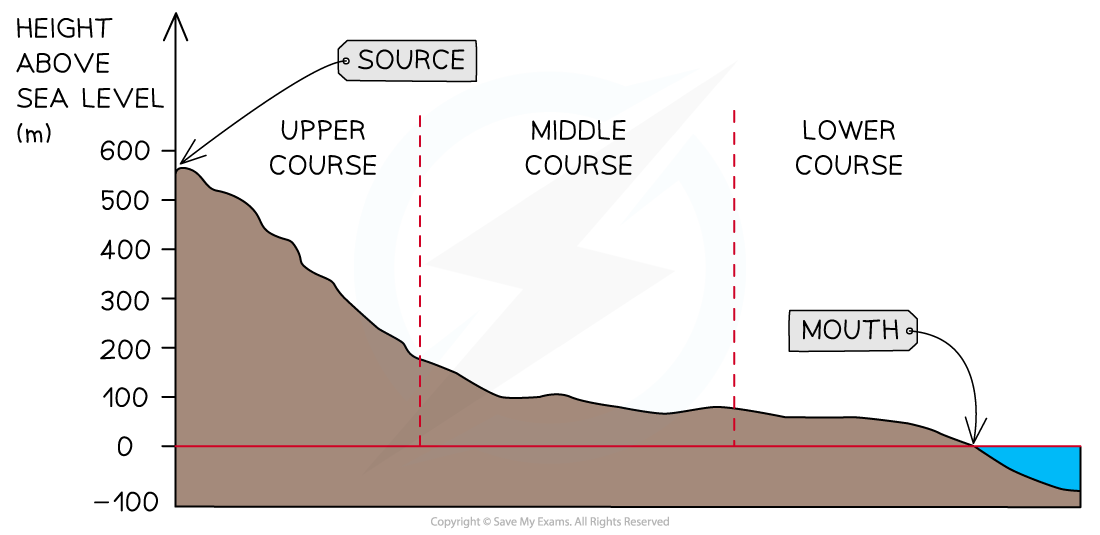
Long Profile
Cross profiles
-
The cross profiles of a river are cross-sections from one bank to another
-
Cross profiles of the upper, middle and lower courses show the changes in the river channel
-
Upper course characteristics include:
- Shallow
- Steep valley sides
- Narrow
- Low velocity
- Large bedload
- Rough channel bed
- High levels of friction
- Vertical erosion
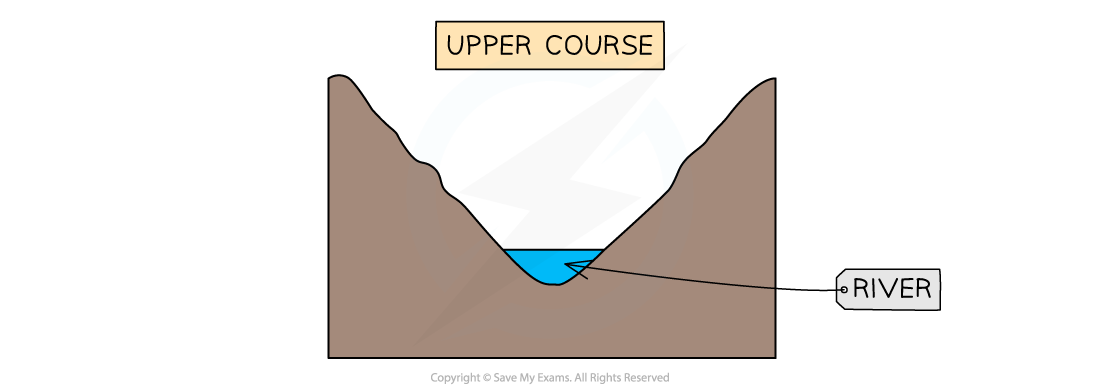
-
Middle course characteristics:
- Deeper than upper course channel
- Gentle valley sides
- Wider than upper course channel
- Greater velocity than upper course channel
- Material in river decreases in size
- Smoother channel bed
- Lower levels of friction than upper course channel
- Lateral erosion
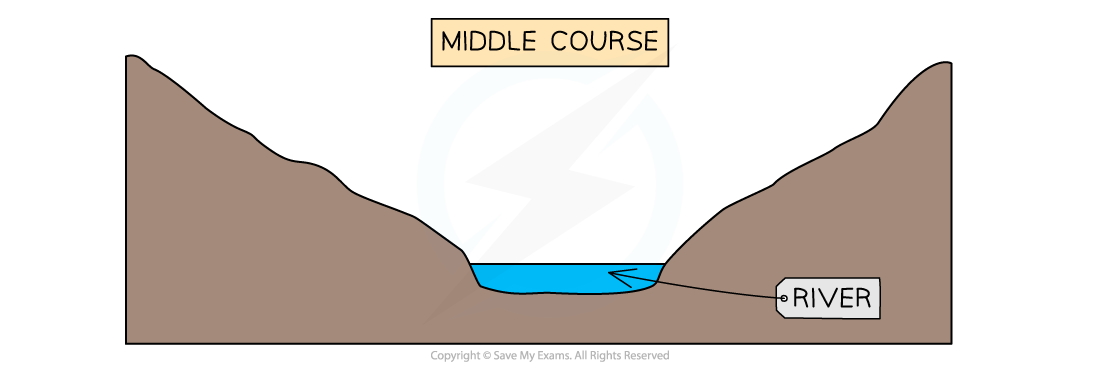
-
Lower course characteristics:
- Deeper than middle course channel
- Flat floodplains
- Wider than middle course channel
- Greater velocity than the middle course channel (apart from as the river enters the mouth)
- Material carried mainly sediment and alluvium
- Smooth channel bed
- Lowest friction
- Deposition is dominant

Exam Hint Remember, valley shape and river shape are not the same thing. If you are asked to describe a valley shape, you should focus on the gradient and shape of the land on either side of the river channel.
Was this revision note helpful?
Build on this topic