Shapes of Molecules (Cambridge International A-Level Chemistry)
VSEPR Theory
Spec point —
3.5.1
-
Bonding and non-bonding electron pairs around a central atom behave like negatively charged clouds that repel each other
-
To minimise repulsion, these electron pairs arrange themselves as far apart as possible in three-dimensional space
-
VSEPR theory follows three key rules:
- All electron pairs (bonding and lone pairs) spread out as far as possible
- Lone pairs repel more strongly than bonding pairs
- Multiple bonds behave like a single bond when determining shape
-
Using the valence shell electron pair repulsion theory (VSEPR), this allows us to predict:
- The shape of the molecule
- The angles between the bonds
-
Each region of electron density around the central atom is called an electron domain
- A domain may contain one, two, or three pairs of electrons
Repulsion between different types of electron pairs
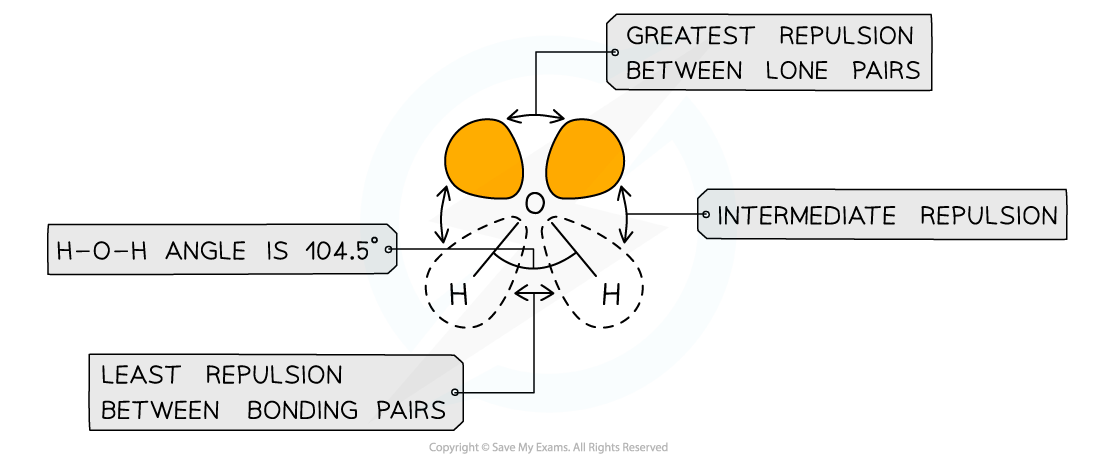
Different types of electron pairs have different repulsive forces
- Molecules can adapt the following shapes and bond angles:
Bond shapes and bond angles
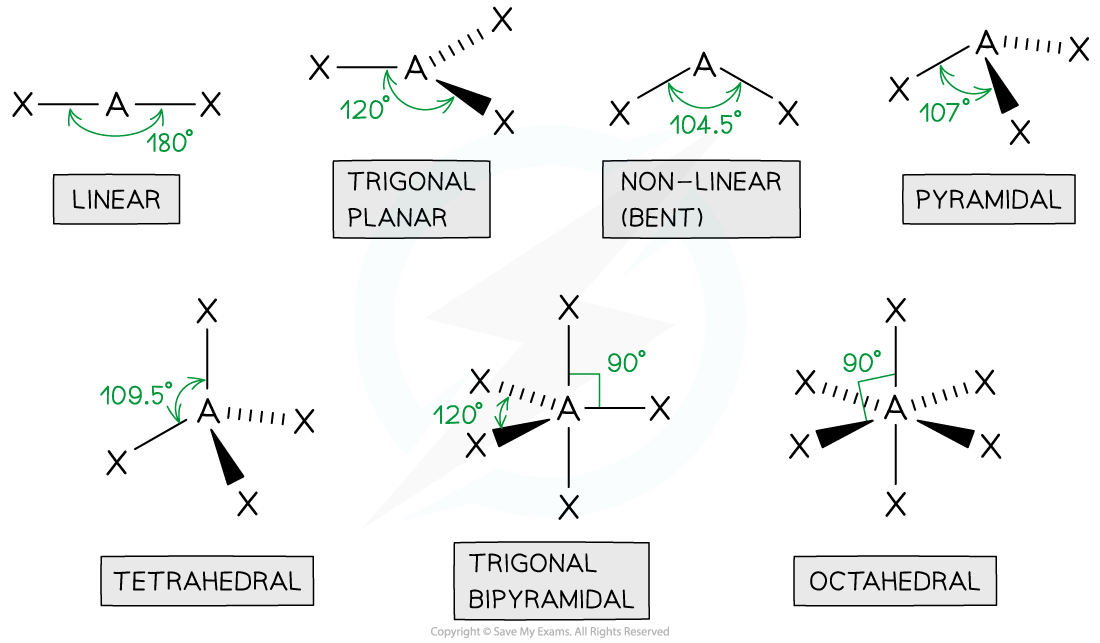
Molecules of different shapes can adapt with their corresponding bond angles
Examples of molecules with different shapes and bond angles
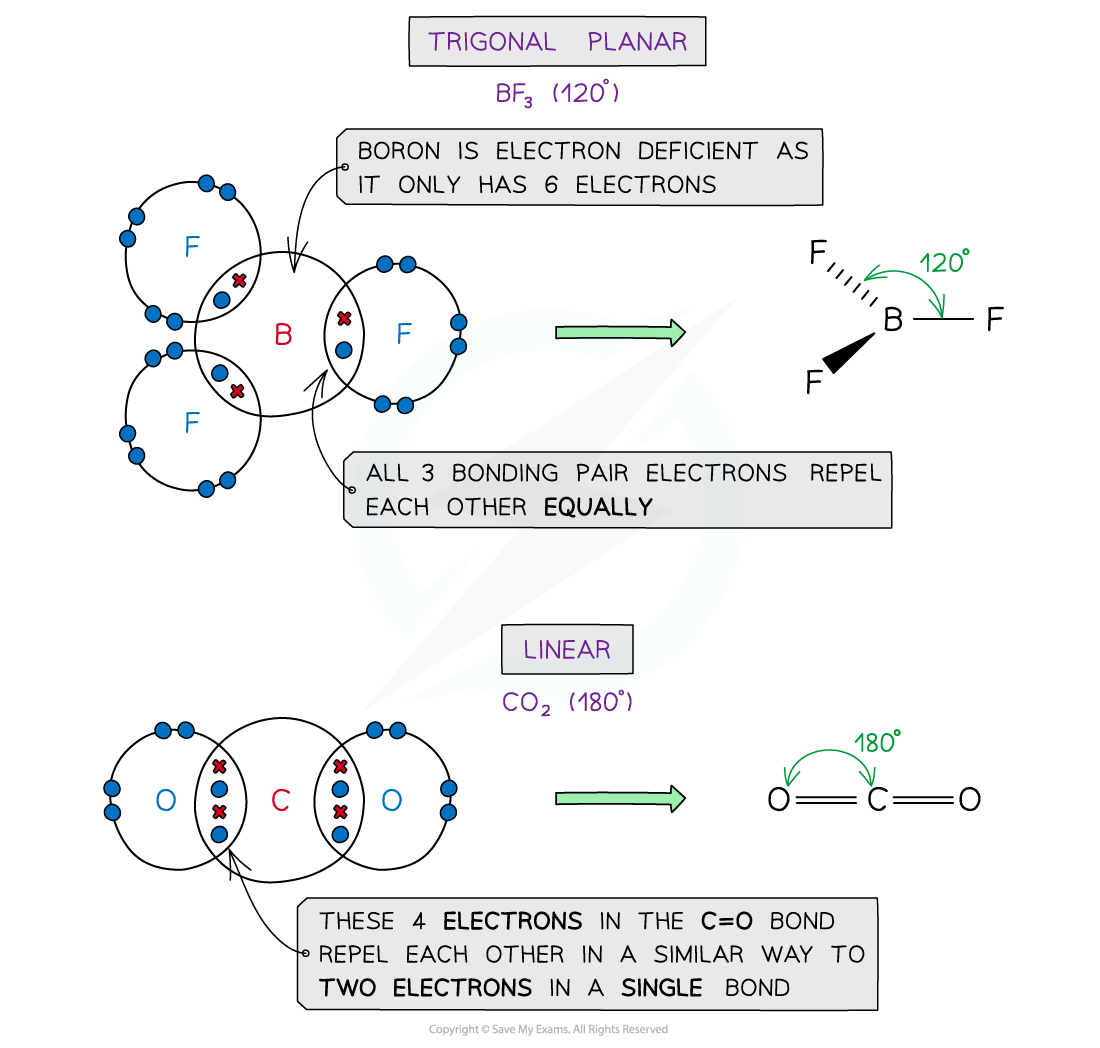
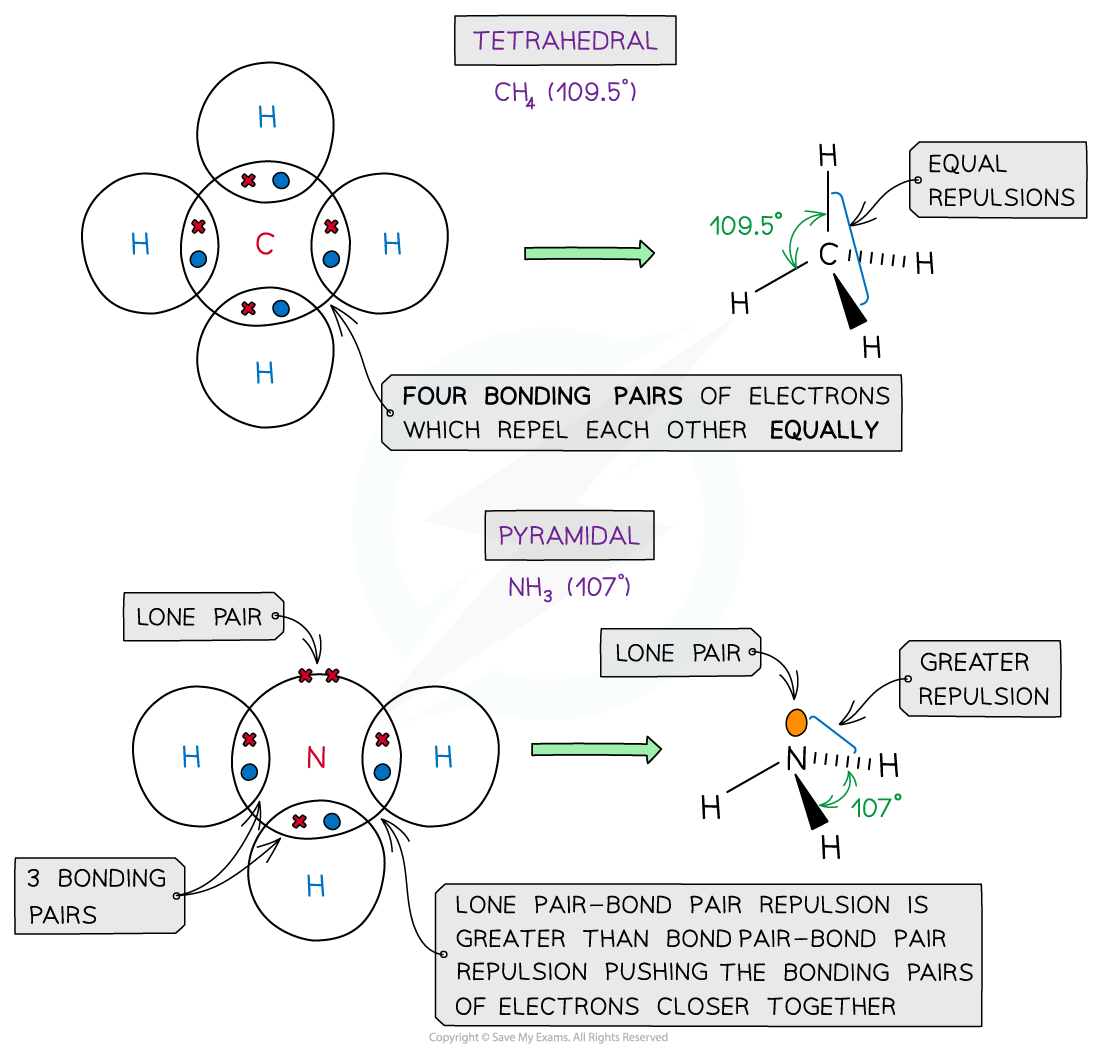
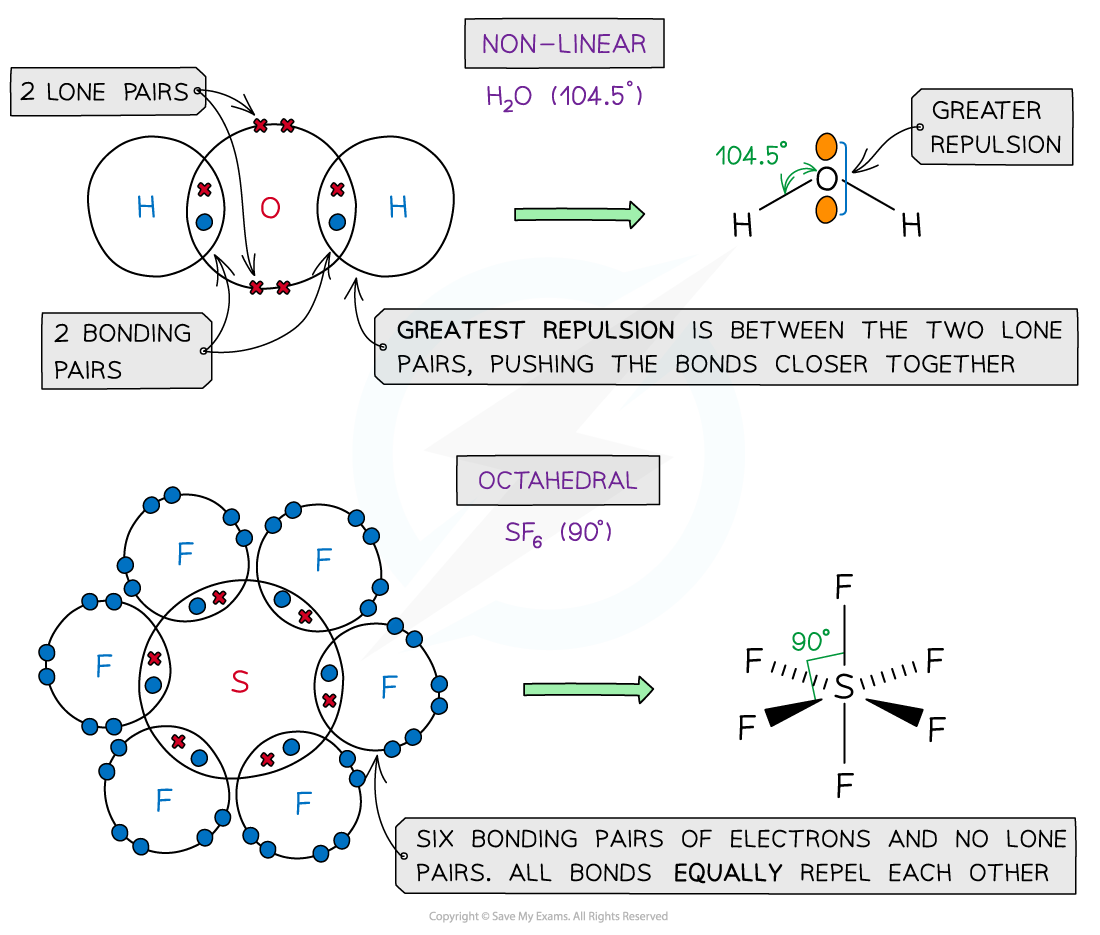
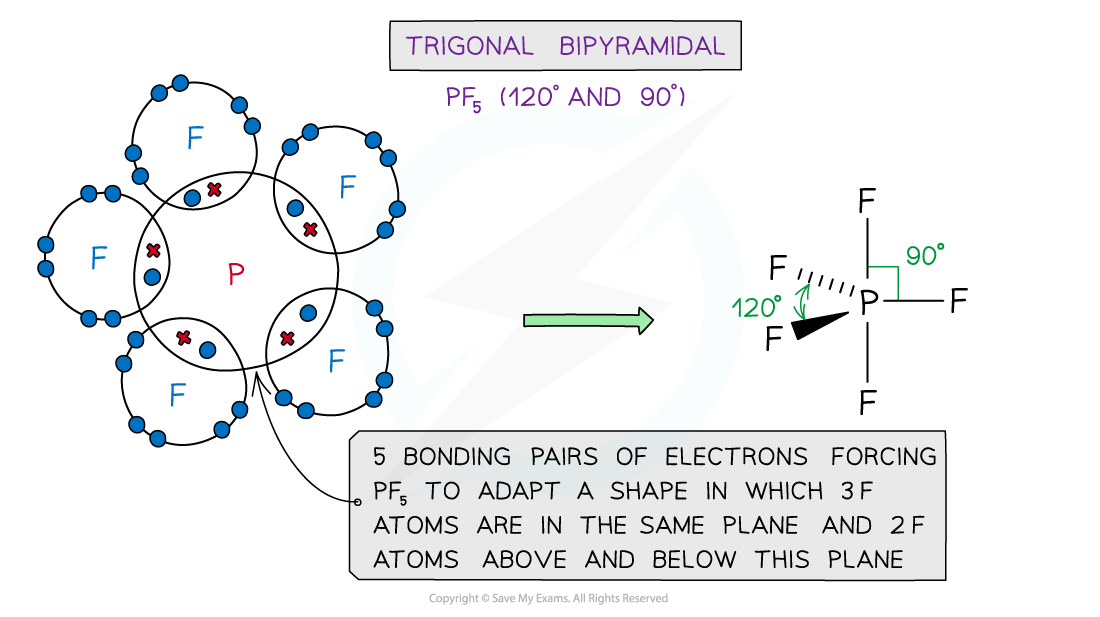
Each different shape has a specific name and specific bond angle(s)
Worked Example VSEPR & shapes of molecules
Draw the shape of the following molecules and compounds:
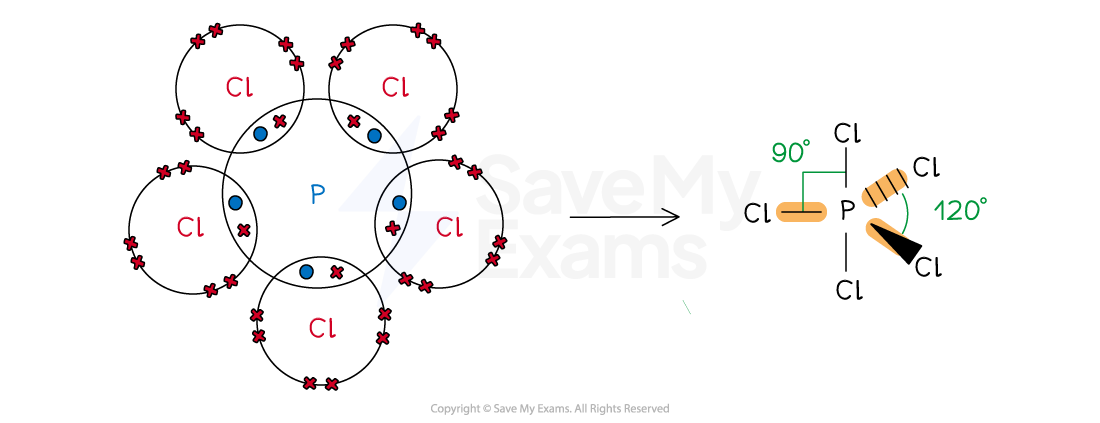
- Phosphorous(V) chloride
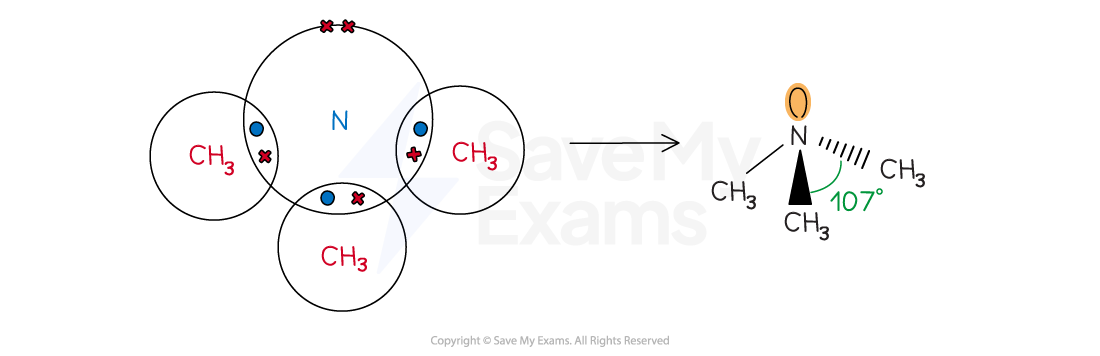
- N(CH3)3
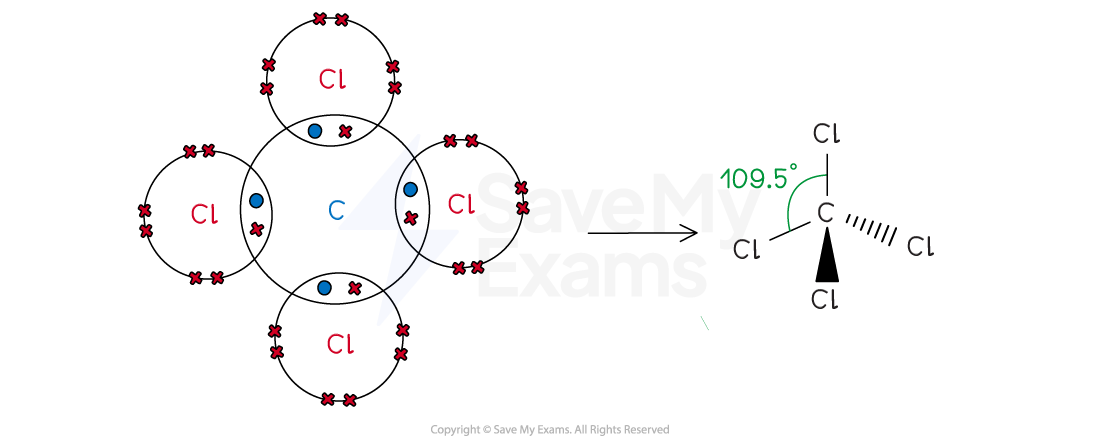
- CCl4
Answer 1
Phosphorous has a +5 charge so 5 Cl– ions are needed to neutralise the charge
- Therefore, the phosphorous(V) chloride is PCl5
P is in Group 5 and has 5 valence / outer electrons
Cl is in Group 7 (17) and has 7 valence / outer electrons
All 5 electrons of phosphorous are used to form single covalent bonds to the 5 chlorines
- There are no lone pairs
So, phosphorous(V) chloride has a trigonal bipyramidal shape
Answer 2
Nitrogen is in Group 5 and has 5 valence / outer electrons
The carbon in the -CH3 groups is in Group 4 and has 4 valence / outer electrons
- 3 of these electrons are already used in covalent bonds with hydrogen
3 of N's valence / outer electrons are involved in bonding pairs with the carbon from the -CH3 groups
- This leaves one pair of electrons as a lone pair
So, N(CH3)3 has a pyramidal shape
Answer 3
Carbon is in Group 4 and has 4 valence / outer electrons
Cl is in Group 7 (17) and has 7 valence / outer electrons
All 4 valence / outer electrons of carbon are used as bonding pairs with the 4 chlorines
- There are no lone pairs
So, the shape of CCl4 is tetrahedral
Was this revision note helpful?
Build on this topic