Isotopes (Cambridge International A-Level Chemistry)
Defining Isotopes
-
Isotopes are atoms of the same element that contain the same number of protons and electrons but a different number of neutrons
-
The name of an isotope is the chemical symbol (or word) followed by a dash and then the mass number
- E.g. carbon-12 and carbon-14 are isotopes of carbon containing 6 and 8 neutrons respectively
-
The chemical symbol of an isotope will still be shown in the usual form, as shown:
A general chemical symbol
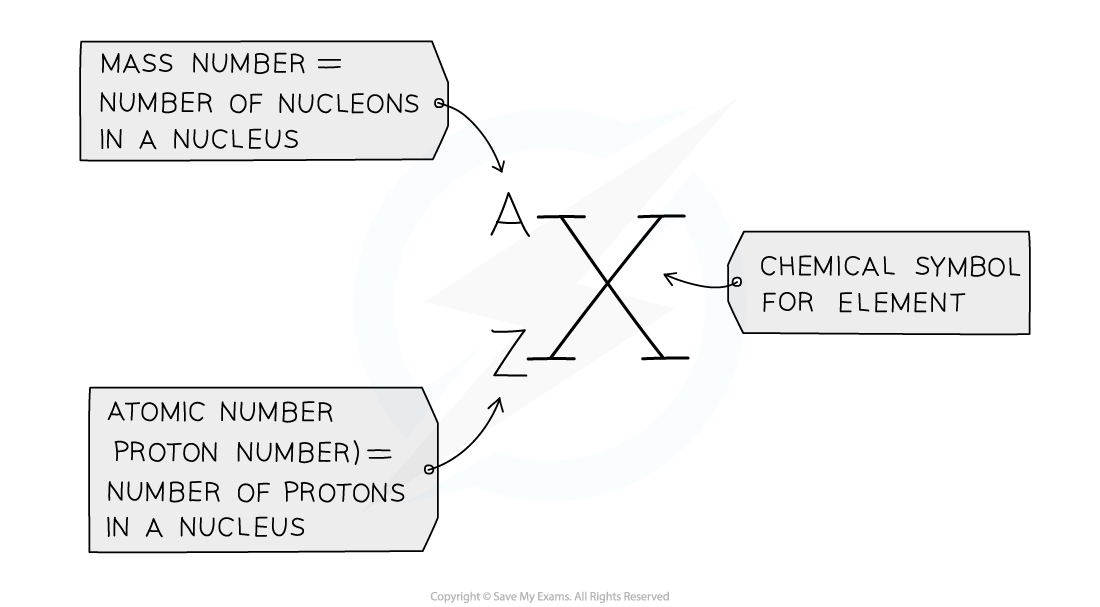
Isotopes of the same element have the same chemical symbol with a different mass number
-
For chemical symbols, isotopes have:
-
The same chemical symbol
- e.g. isotopes of chlorine all have the symbol Cl
-
The same atomic number
- e.g. isotopes of chlorine all have an atomic number of 17
-
A different mass / nucleon number
- e.g. the chlorine-35 isotope has a mass number of 35, while the chlorine-37 isotope has a mass number of 37
-
The atomic structure and symbols of three isotopes of hydrogen
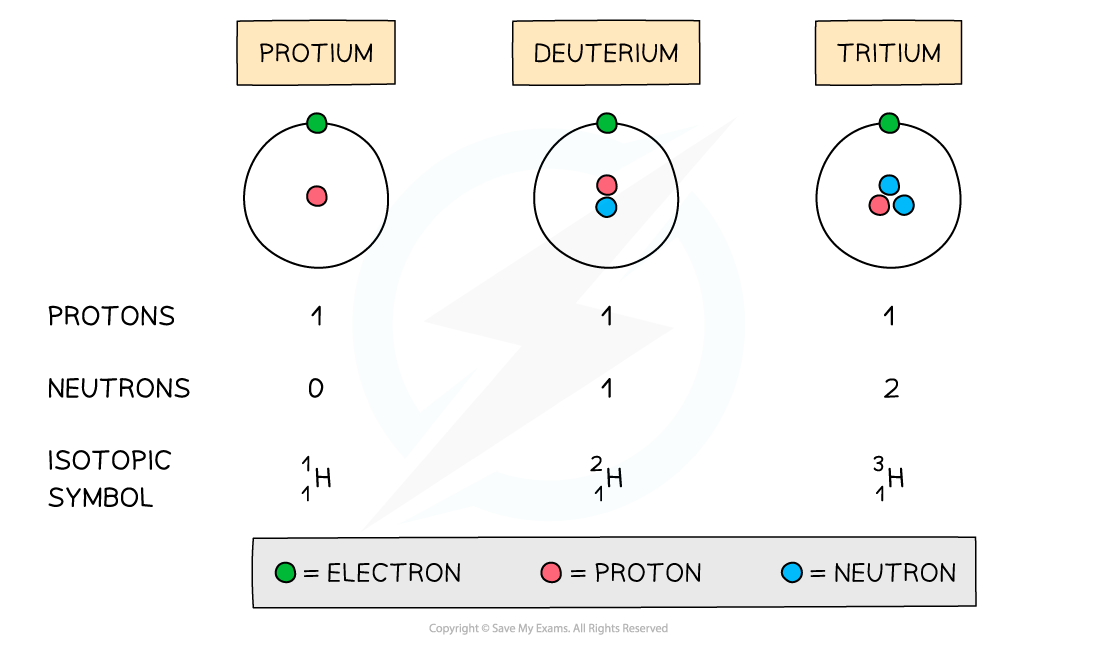
All three hydrogen isotopes have the chemical symbol H, the same number of protons but a different number of neutrons
Chemical & Physical Properties of Isotopes
- Isotopes have similar chemical properties but different physical properties
Chemical properties
-
The chemical behaviour of an atom depends on its electron configuration, especially the electrons in the outer (valence) shell
-
This is because all isotopes of the same element have the same number of electrons and the same electron arrangement, they:
- Form the same types of bonds
- React with the same elements
- Show identical chemical reactivity
Physical properties
-
Although isotopes have identical chemical properties, they differ in physical properties because they have different numbers of neutrons
-
Neutrons add mass to the nucleus but carry no charge and don’t influence chemical bonding
-
As a result, isotopes have:
- Different relative atomic masses
- Slight differences in density
Exam Hint
These small differences in physical properties become important in processes like:
- Mass spectrometry (detecting different isotopes by mass)
- Isotope separation (e.g. in nuclear chemistry)
- Medical imaging (radioisotopes rely on differences in physical properties)
Was this revision note helpful?
Build on this topic