Formation of Polyesters (Cambridge International A-Level Chemistry)
Spec point —
35.1.1
Formation of Polyesters
-
Addition polymerisation has been covered in reactions of alkenes
- They are made using monomers that have C–C double bonds joined together to form polymers such as (poly)ethene
-
Condensation polymerisation is another type of reaction and is used in the making of polyesters
- A small molecule (e.g. a water molecule) is lost when the monomers join together to form a polyester
- Polyesters contain ester linkages
Example of a polyester
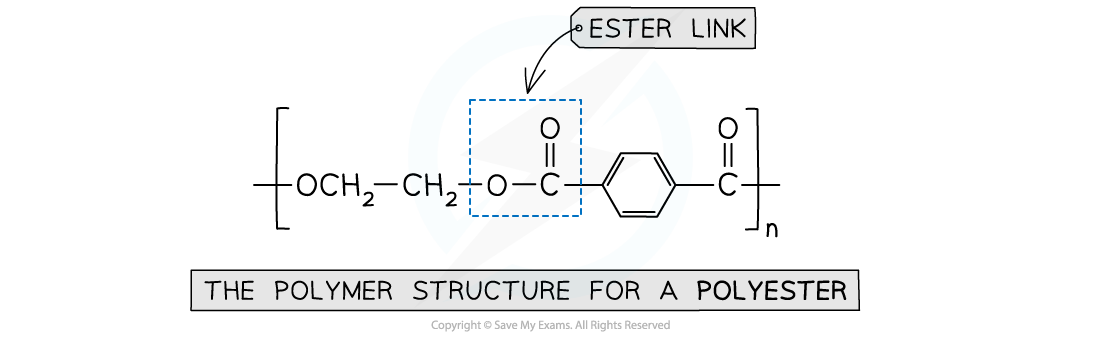
This polymer structure shows an ester functional group linking monomers together
Formation of polyesters
-
A diol and a dicarboxylic acid are required to form a polyester
- A diol contains 2 -OH groups
- A dicarboxylic acid contains 2 COOH groups
Diol and dicarboxylic acid examples
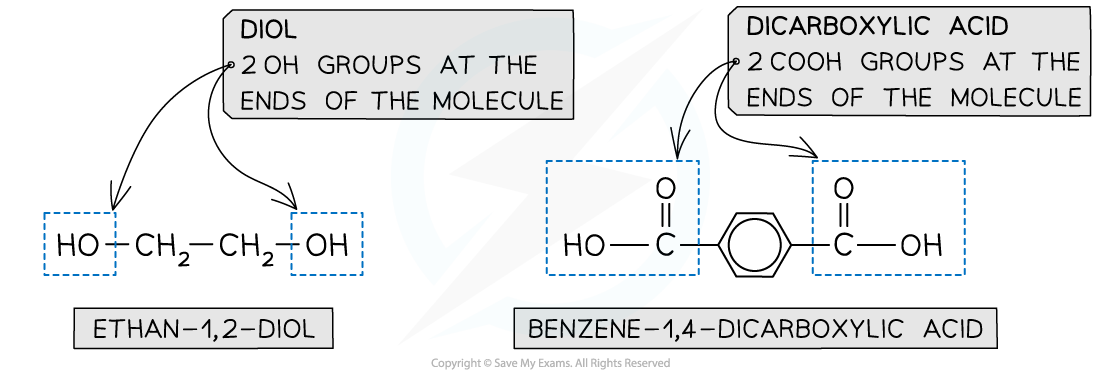
The position of the functional groups on both of these molecules allows condensation polymerisation to take place effectively
- When the polyester is formed, one of the -OH groups on the dicarboxylic acid and the hydrogen atom of the diol are expelled as a water molecule (H2O)
- The resulting polymer is a polyester
Forming polyethylene terephthalate (PET)
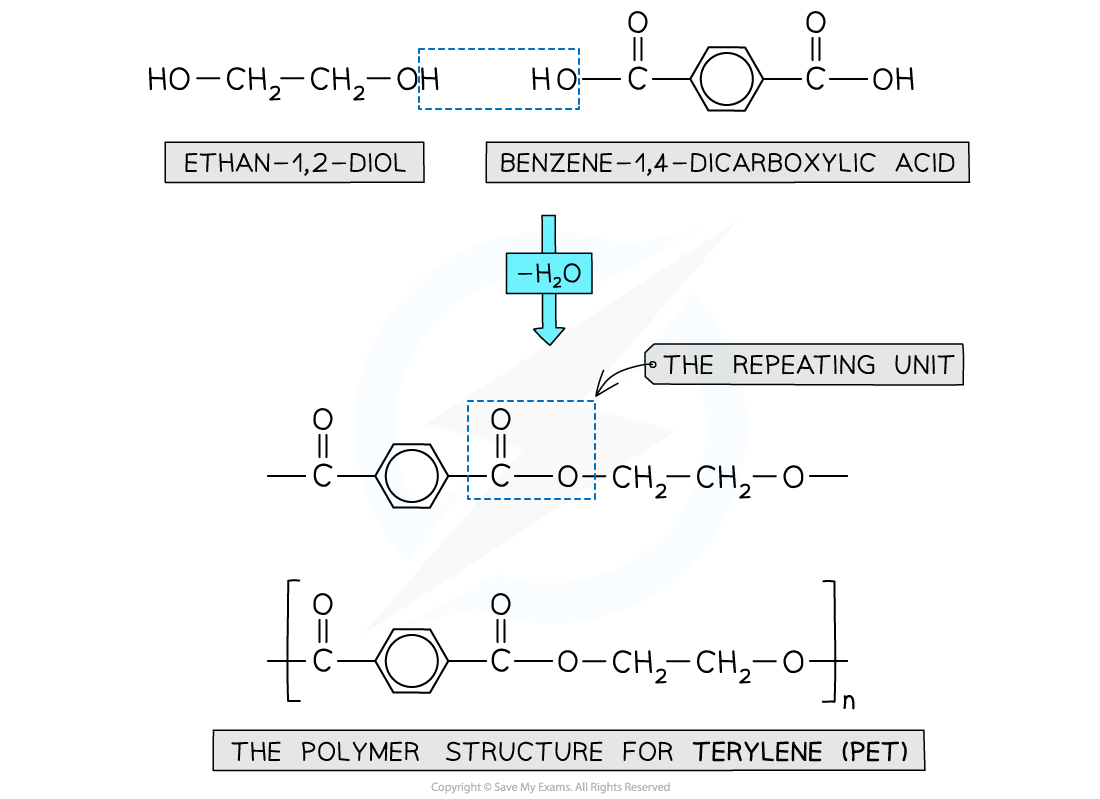
Expulsion of a water molecule in this condensation polymerisation forms the polyester called Polyethylene terephthalate also known as Terylene or PET
Hydroxycarboxylic acids
-
So far the examples of making polyesters have focused on using 2 separate monomers for the polymerisation
-
There is another route to making polyesters
-
A single monomer containing both of the key functional groups can also be used
-
These monomers are called hydroxycarboxylic acids
- They contain an alcohol group (-OH) at one end of the molecule while the other end is capped by a carboxylic acid group (-COOH)
Using hydroxycarboxylic acids to form condensation polymers
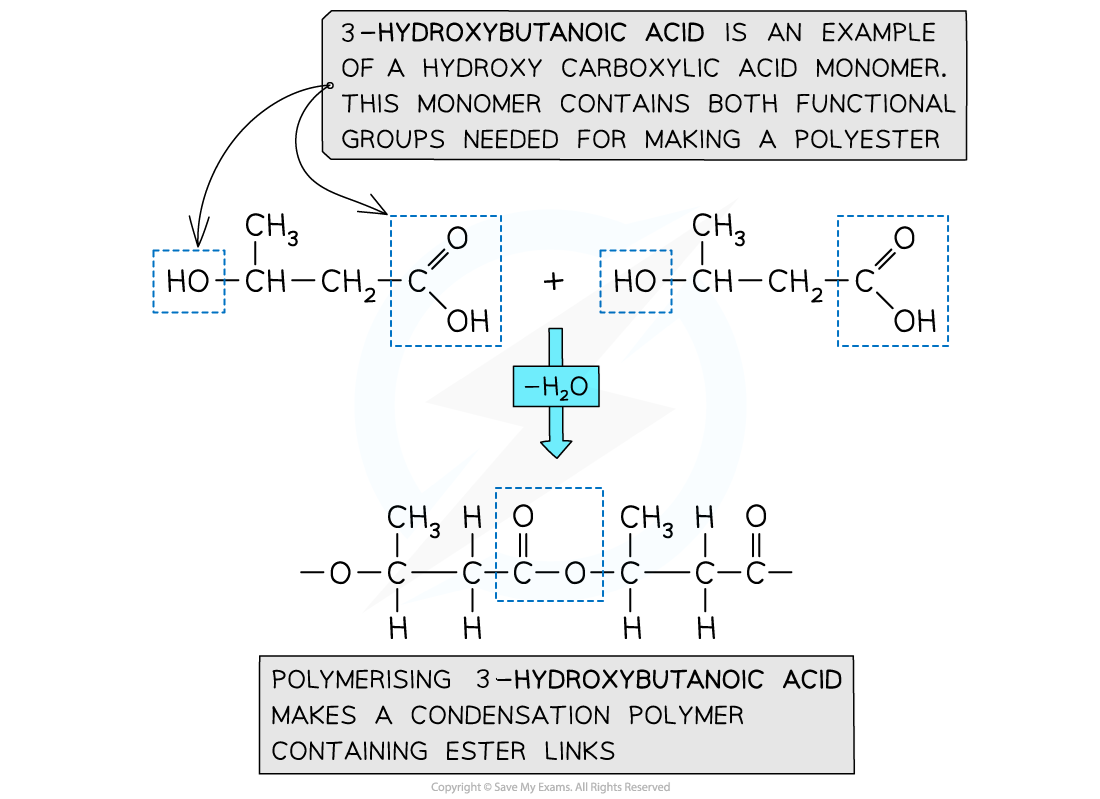
Both functional groups needed to make a polyester come from the same monomer
Exam Hint
- Polyesters can be made using condensation polymerisation
- The monomers needed are diols and dicarboxylic acids / dioyl chlorides or a single hydroxycarboxylic acid monomer
Was this revision note helpful?