Degradability of Polymers (Cambridge International A-Level Chemistry)
Poly(alkenes) & Biodegradability
-
Many of the polymers in use have been produced through addition polymerisation of alkenes
-
The (poly)alkene chains are non-polar and saturated
- This makes them chemically inert and, therefore, non-biodegradable
-
(Poly)alkenes can be melted and recycled for new uses
- However, even in the new applications, the (poly)alkenes are not biodegradable
-
Recycling plants can burn used plastic materials
- The energy released from burning can be used to generate electricity
- Burning plastics in oxygen releases carbon dioxide and water (complete combustion) which can contribute to global warming
Photodegradation of Polymers
-
Polyesters and polyamides are biodegradable polymers for a number of reasons
- One such reason is their ability to breakdown with the use of light
-
Carbonyl groups (C=O) along polymer chains are able to absorb energy from the Electromagnetic Spectrum, in particular ultraviolet (UV) light
- Absorbing UV light weakens the carbonyl areas of polymers and breaks them down into smaller molecules
Disadvantages of photodegradability
-
Despite this ability being a great advantage of polyesters and polyamides, it may pose problems when the polymers are repurposed
-
When applied to a new use, the biodegradability could give a weaker polymer
-
Breaking down polymers also poses another challenge
- Once used, polymeric materials are taken to landfill sites where many other materials are piled on top of each other
- This could mean that photodegradable polyesters or polyamides do not have access to UV light in order to break down naturally
Biodegrading Polyesters & Polyamides
Biodegradable polymers
- Both polyesters and polyamides can be broken down using hydrolysis reactions
- This is a major advantage over the polymers produced using alkene monomers (polyalkenes)
- When polyesters and polyamides are taken to landfill sites, they can be broken down easily and their products used for other applications
Hydrolysis of polyamides
-
Hydrolysis is the breakdown of molecules using water
-
In acidic hydrolysis, an acid (such as hydrochloric acid) acts as the catalyst
- Polyamides such as Kevlar are heated with dilute acid
- This reaction breaks the polyamide into a dicarboxylic acid and ammonium ions
-
Alkaline hydrolysis
- The polyamide is heated with a species containing hydroxide ions (eg. sodium hydroxide)
- This breaks the polymer into the sodium salts of its monomers (dicarboxylic acid salt and diamines)
Hydrolysis of Kevlar, a polyamide
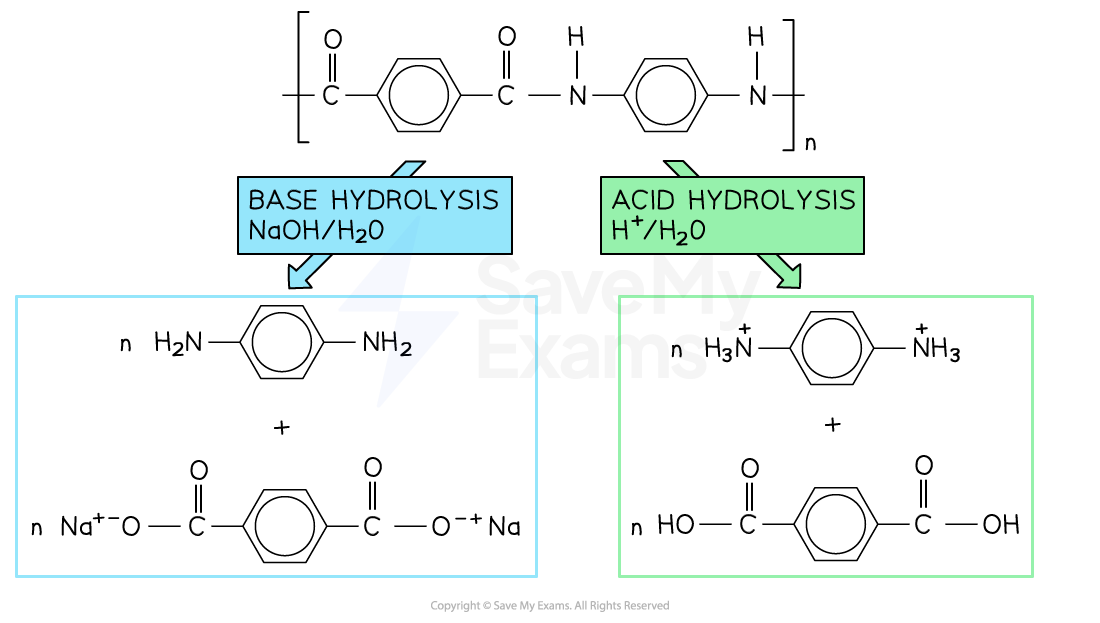
Hydrolysis of Kevlar produces different products based on whether it is acid hydrolysis or base hydrolysis
Hydrolysis of polyesters
-
Ester linkages can also be degraded through hydrolysis reactions
- The acidic and alkaline hydrolysis of polyethylene terephthalate (PET) is shown
Hydrolysis of polyethylene terephthalate (PET), a polyester
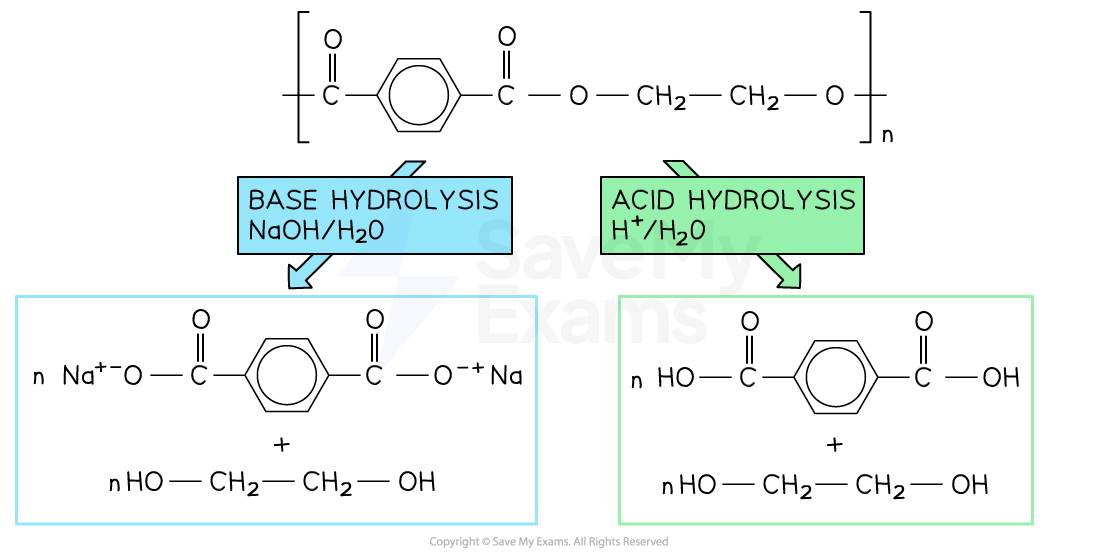
Hydrolysis of polyethylene terephthalate (PET) produces different products based on whether it is acid hydrolysis or base hydrolysis
- Acid hydrolysis forms the diol and dicarboxylic acid that were used to form the polyesters
- Alkaline hydrolysis forms the diol and dicarboxylic acid salt
Was this revision note helpful?
Build on this topic