Acid-Alkali Titrations
2 guided lessons · 18 checks · 2. Inorganic Chemistry → Acids, Alkalis & Titrations
Guided lessons for this note
Which concept don't you understand yet?
We'll explain it simply and check your understanding. Pick any lesson — any order works.
0 of 18 checks correct so far
Lesson 1 of 2
What is a titration?
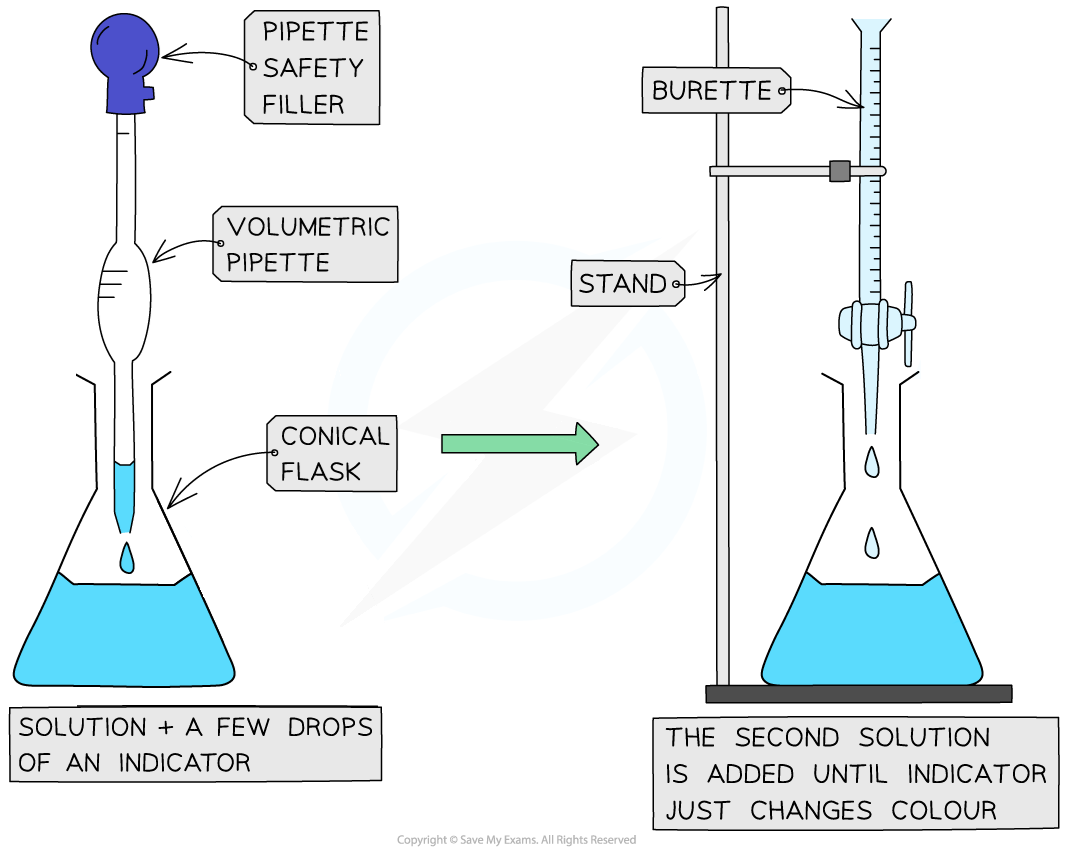
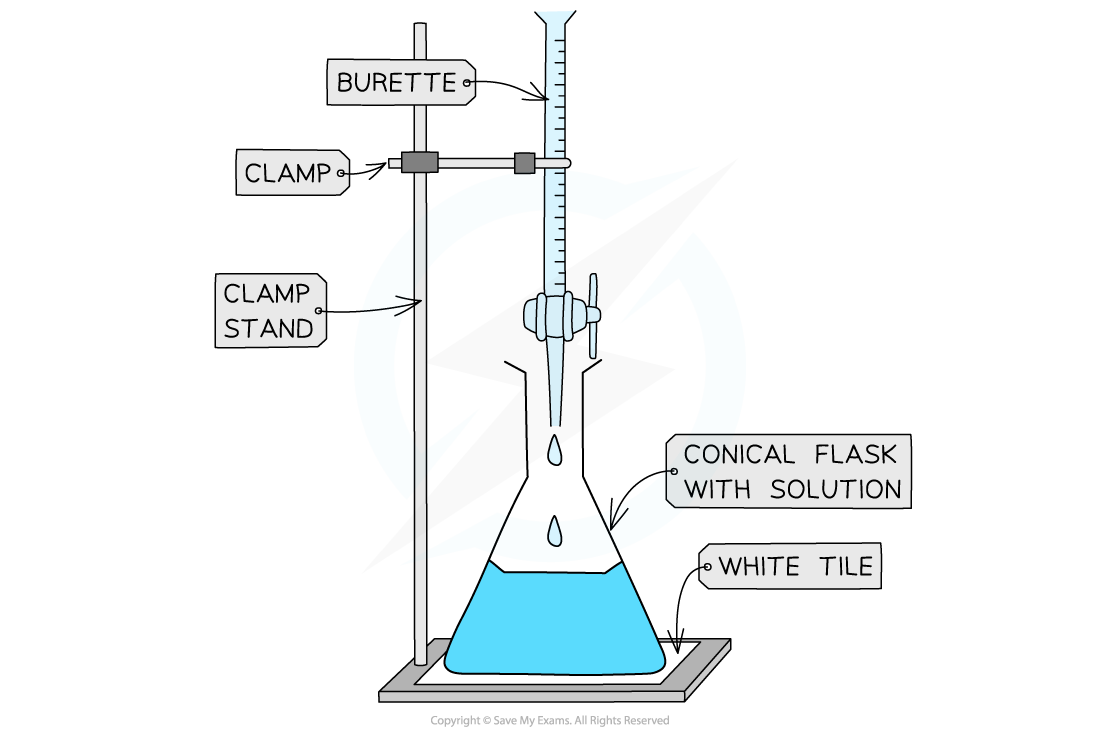
A titration is a method of analysing the concentration of solutions, most importantly in acid-base work. Running one solution from a burette into another, with an indicator watching, tells you exactly how much alkali neutralises a quantity of acid. Titrations also let you calculate moles, concentration or volume, and can be used to prepare salts.
What you know already
From Acids, Alkalis & Titrations you know that acids supply hydrogen ions and alkalis supply hydroxide ions. A titration puts that chemistry to work: measured volumes are run together until neutralisation is complete, and the readings reveal how much of each is needed. This note walks through the apparatus, the method and the handling of results.
Key points of understanding
- Titrations analyse the concentration of solutions.
- Acid-base titrations find exactly how much alkali neutralises a quantity of acid.
- You may be asked for the moles, the concentration or the volume needed.
- Salt preparation is another use, with the neutralisation done under controlled volumes.
- The apparatus centres on a burette, a pipette and a conical flask.
Choose a confidence level to continue.
Prefer to read it all at once? Show the full lesson as a page
1.What is a titration?
A titration is a method of analysing the concentration of solutions, most importantly in acid-base work. Running one solution from a burette into another, with an indicator watching, tells you exactly how much alkali neutralises a quantity of acid. Titrations also let you calculate moles, concentration or volume, and can be used to prepare salts.
Key points
- Titrations analyse the concentration of solutions.
- Acid-base titrations find exactly how much alkali neutralises a quantity of acid.
- You may be asked for the moles, the concentration or the volume needed.
- Salt preparation is another use, with the neutralisation done under controlled volumes.
- The apparatus centres on a burette, a pipette and a conical flask.
Guided content from the SME authoring corpus — note rn_qV5R2cKB59bSKD33, pinned at 286b5ac81d43 · promoted SyllabAI/syllabai-resources e967e75f1339