Extracting Metals
2 guided lessons · 18 checks · 2. Inorganic Chemistry → Extraction & Uses of Metals
Guided lessons for this note
Which concept don't you understand yet?
We'll explain it simply and check your understanding. Pick any lesson — any order works.
0 of 18 checks correct so far
Lesson 1 of 2
Extraction of metals and the reactivity series
A metal's position in the reactivity series decides how it is extracted. Metals above carbon are too reactive to be reduced by it, so electrolysis is used, while those below carbon are extracted by heating with this cheap reducing agent. Iron, sitting mid-series, is won from hematite in the blast furnace, a continuous process making thousands of tonnes per day.
What you know already
From Reactivity Series you know that carbon sits part-way up the ranking and that more reactive metals hold oxygen more tightly. This note applies the ranking to industry: metals above carbon need electrolysis, those below can be reduced by coke, and the blast furnace and the aluminium cell show both routes in detail.
Key points of understanding
- The more reactive a metal, the higher it sits in the series and the more readily it is oxidised.
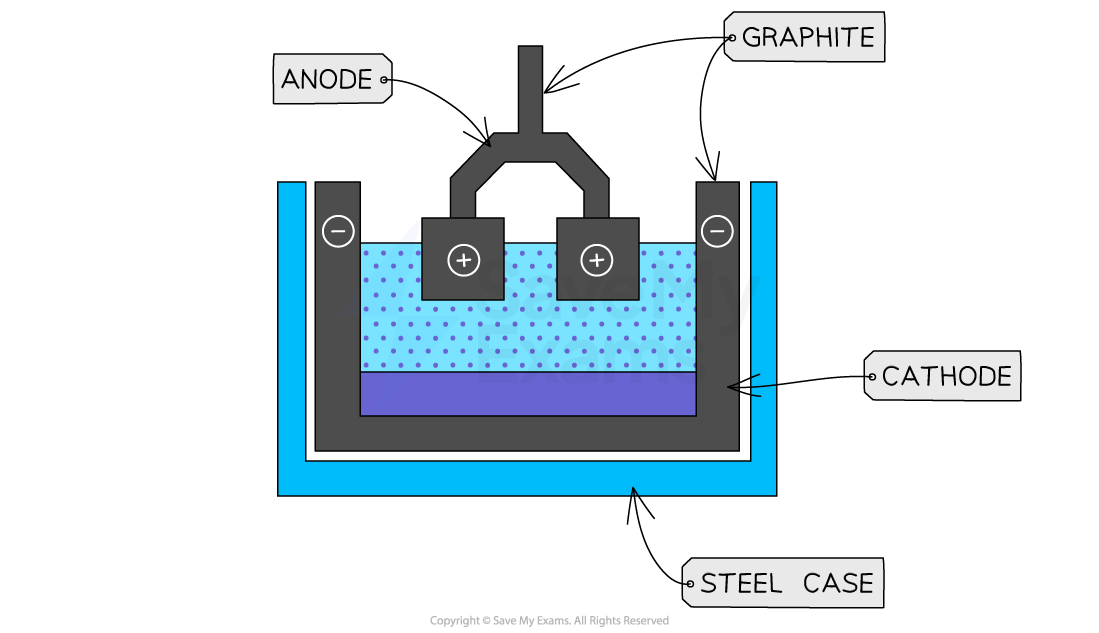
- Metals above carbon in the series must be extracted by electrolysis of their molten compounds.
- Metals below carbon are extracted by heating with carbon, a cheap reducing route.
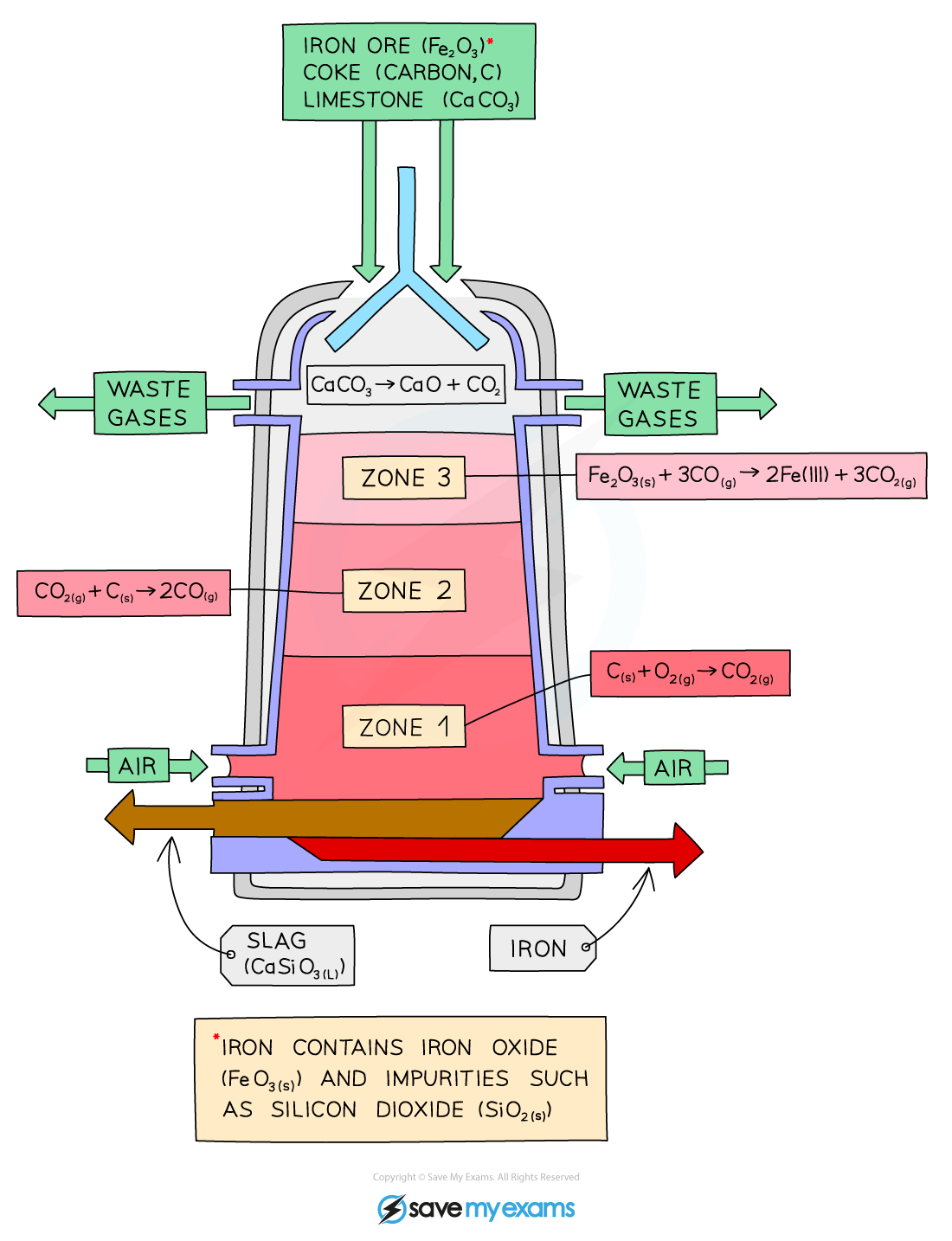
- In the blast furnace, coke burns in hot air and the exothermic reaction heats the furnace.
- Carbon monoxide reduces the iron(III) oxide to molten iron, which is tapped off at the bottom.
Choose a confidence level to continue.
Prefer to read it all at once? Show the full lesson as a page
1.Extraction of metals and the reactivity series
A metal's position in the reactivity series decides how it is extracted. Metals above carbon are too reactive to be reduced by it, so electrolysis is used, while those below carbon are extracted by heating with this cheap reducing agent. Iron, sitting mid-series, is won from hematite in the blast furnace, a continuous process making thousands of tonnes per day.
Key points
- The more reactive a metal, the higher it sits in the series and the more readily it is oxidised.
- Metals above carbon in the series must be extracted by electrolysis of their molten compounds.
- Metals below carbon are extracted by heating with carbon, a cheap reducing route.
Guided content from the SME authoring corpus — note rn_nzW5ppBTV3ZnfSYY, pinned at 286b5ac81d43 · promoted SyllabAI/syllabai-resources e967e75f1339