Separation Techniques
2 guided lessons · 18 checks · 1. Principles of Chemistry → Elements, Compounds & Mixtures
Guided lessons for this note
Which concept don't you understand yet?
We'll explain it simply and check your understanding. Pick any lesson — any order works.
0 of 18 checks correct so far
Lesson 1 of 2
Distillation: Simple and Fractional
Distillation separates the part of a solution that boils off: heat the flask, the vapour rises into the condenser, and the liquid drips out pure while the dissolved solid stays behind. Simple distillation handles one liquid from a solution, or a pure liquid from a blend; fractional distillation handles two or more miscible liquids by boiling out the more volatile one first.
What you know already
You already know from Element, Compound or Mixture that mixtures come apart by physical means. This note tours the five techniques the syllabus names — simple distillation, fractional distillation, filtration, crystallisation and paper chromatography — and matches each one to the kind of mixture it separates best.
Key points of understanding
- Simple distillation separates the liquid from a solution, leaving the dissolved solid behind in the flask.
- In the condenser, vapour cools and condenses into the pure liquid, which collects in a beaker.
- Condenser water enters at the bottom, near the collecting beaker, and leaves at the top.
- Fractional distillation separates a pair of miscible liquids, or several, by their boiling points.
- Heat the mixture to the lowest boiling point present; that substance boils first and distils out.
- With ethanol and water, collect the ethanol at 78 °C and stop heating when the thermometer reaches 100 °C.
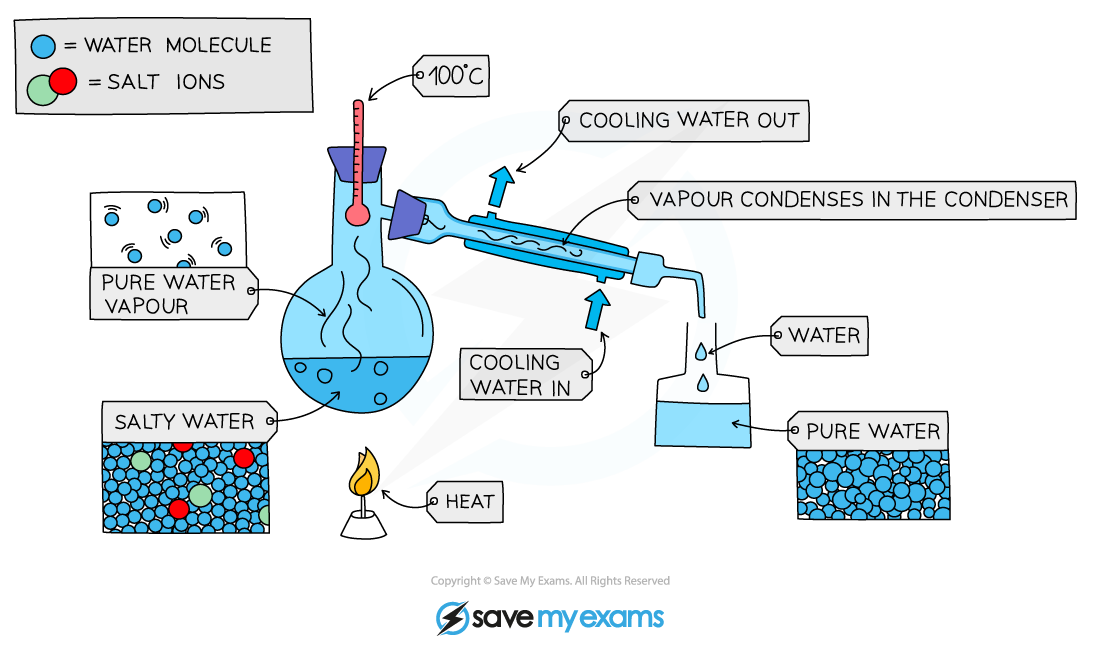
Diagram showing the distillation of a mixture of salt and water
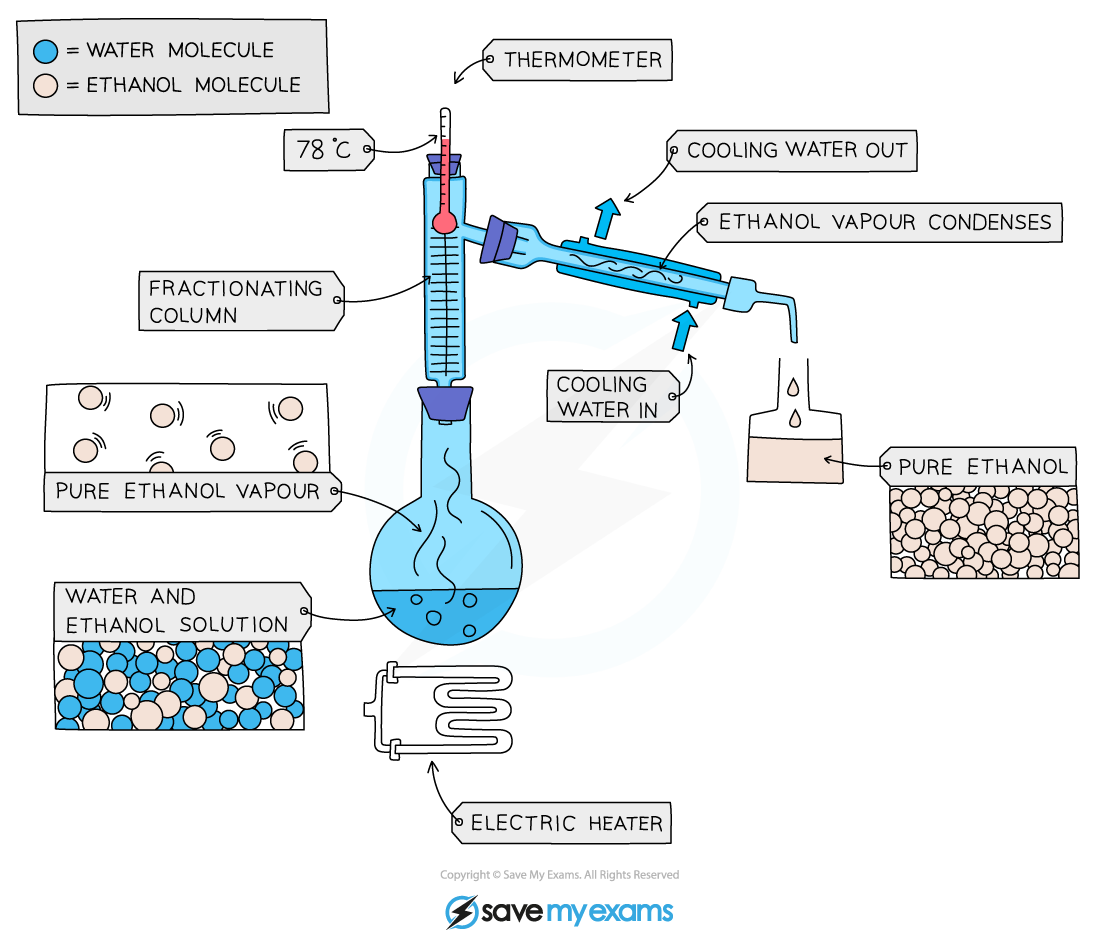
Fractional distillation of a mixture of ethanol and water
Choose a confidence level to continue.
Prefer to read it all at once? Show the full lesson as a page
1.Distillation: Simple and Fractional
Distillation separates the part of a solution that boils off: heat the flask, the vapour rises into the condenser, and the liquid drips out pure while the dissolved solid stays behind. Simple distillation handles one liquid from a solution, or a pure liquid from a blend; fractional distillation handles two or more miscible liquids by boiling out the more volatile one first.
Diagram showing the distillation of a mixture of salt and water
Fractional distillation of a mixture of ethanol and water
Key points
Guided content from the SME authoring corpus — note rn_YBWYstSRgM2QPzQq, pinned at 96c261a3a06e · promoted SyllabAI/syllabai-resources e967e75f1339