Practical: Determine the % of Oxygen in Air
2 guided lessons · 18 checks · 2. Inorganic Chemistry → Gases in the Atmosphere
Guided lessons for this note
Which concept don't you understand yet?
We'll explain it simply and check your understanding. Pick any lesson — any order works.
0 of 18 checks correct so far
Lesson 1 of 2
Aim and method
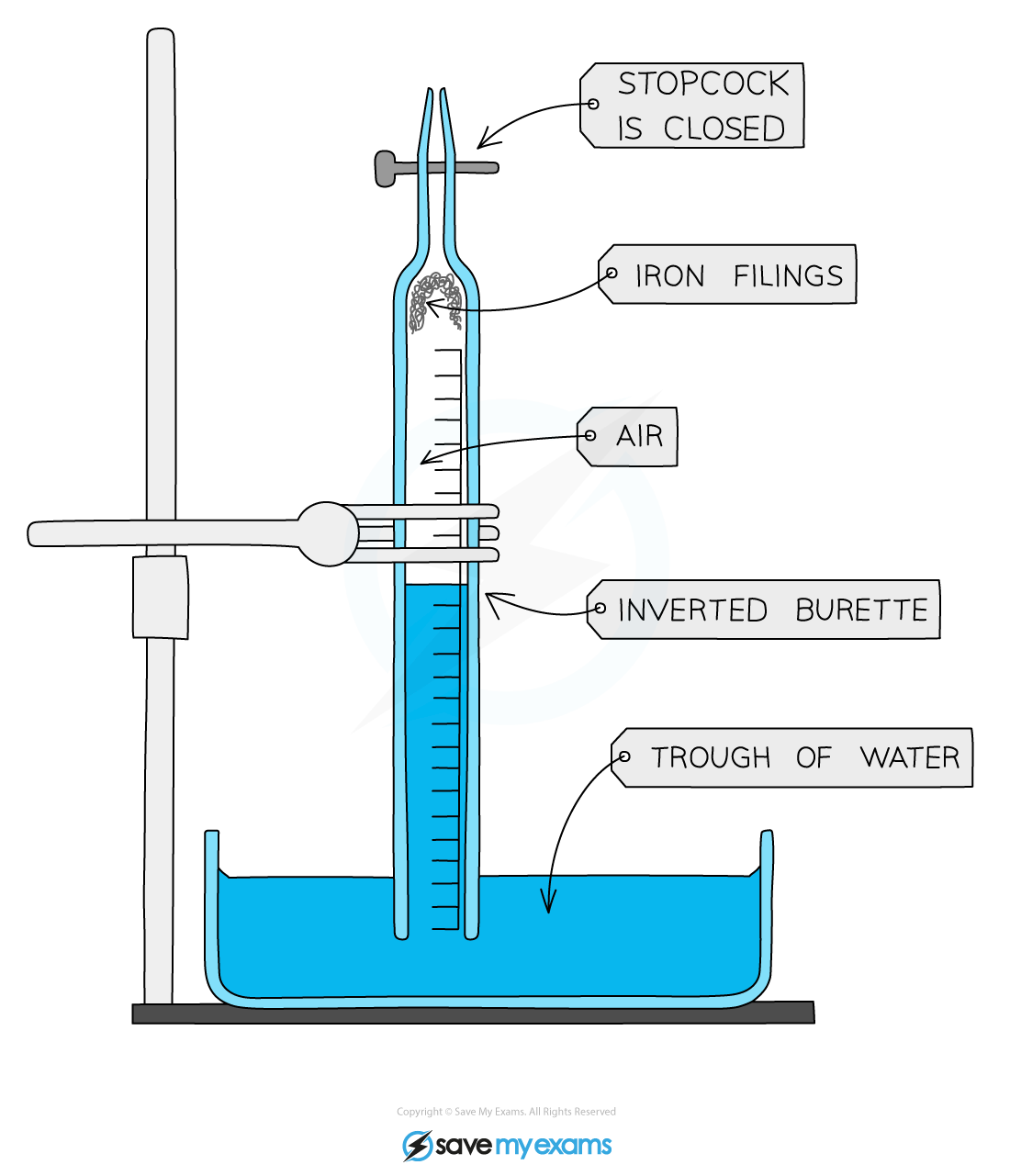
This practical determines how much of the air is oxygen, using the oxidation of iron as the measuring reaction. A piece of iron wool sits at the bottom of a burette filled with water, and the tube stands upside down in a trough, held upright by a clamp. Over several days the iron slowly uses up the oxygen inside, and the water level climbs to record exactly how much gas has gone.
What you know already
From Composition of Air you already know that oxygen makes up about one-fifth of dry air and that its share can be found by reacting a metal or non-metal with a sealed volume of air. This practical note walks the iron-wool burette experiment from aim to conclusion, including the working that turns water-level readings into the approximate percentage of oxygen.
Key points of understanding
- First the dead volume from the last graduation to the tap is measured by draining 50.0 mL of water.
- Iron filings or a piece of iron wool are placed in the bottom of the closed burette.
- The burette is inverted into a trough of water and clamped vertically.
- The starting water level is recorded, then read again after 3-4 days.
- A little water moistens the inside of the burette before the iron is added.
Choose a confidence level to continue.
Prefer to read it all at once? Show the full lesson as a page
1.Aim and method
This practical determines how much of the air is oxygen, using the oxidation of iron as the measuring reaction. A piece of iron wool sits at the bottom of a burette filled with water, and the tube stands upside down in a trough, held upright by a clamp. Over several days the iron slowly uses up the oxygen inside, and the water level climbs to record exactly how much gas has gone.
Key points
- First the dead volume from the last graduation to the tap is measured by draining 50.0 mL of water.
- Iron filings or a piece of iron wool are placed in the bottom of the closed burette.
- The burette is inverted into a trough of water and clamped vertically.
Guided content from the SME authoring corpus — note rn_WJD4ZN4kQfzJNSPV, pinned at 6fb25fc02d1a · promoted SyllabAI/syllabai-resources e967e75f1339