Electronic Configurations
2 guided lessons · 18 checks · 1. Principles of Chemistry → The Periodic Table
Guided lessons for this note
Which concept don't you understand yet?
We'll explain it simply and check your understanding. Pick any lesson — any order works.
0 of 18 checks correct so far
Lesson 1 of 2
Deducing Electronic Configurations
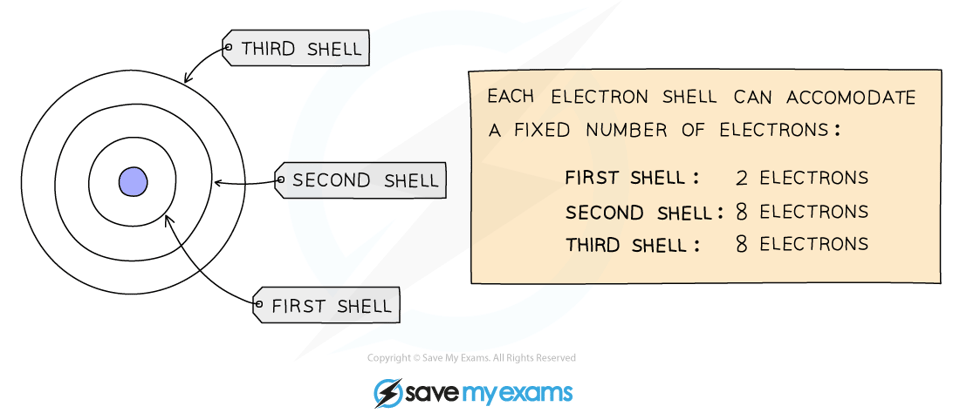
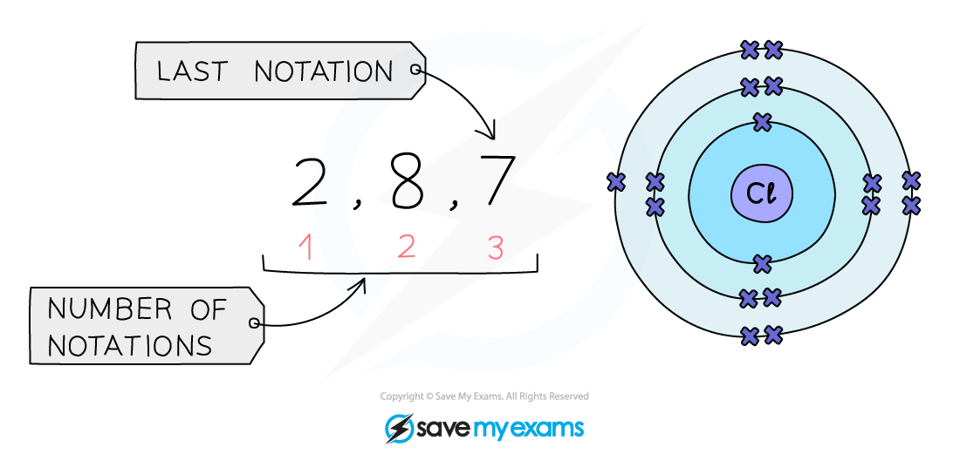
There are two ways to show where the electrons are in an atom: a shell diagram with rings, or a short list of numbers called the electronic configuration. The numbers count how many electrons sit in each shell, taken from the nucleus outwards. Carbon, for instance, carries six electrons, so its configuration is 2,4.
What you know already
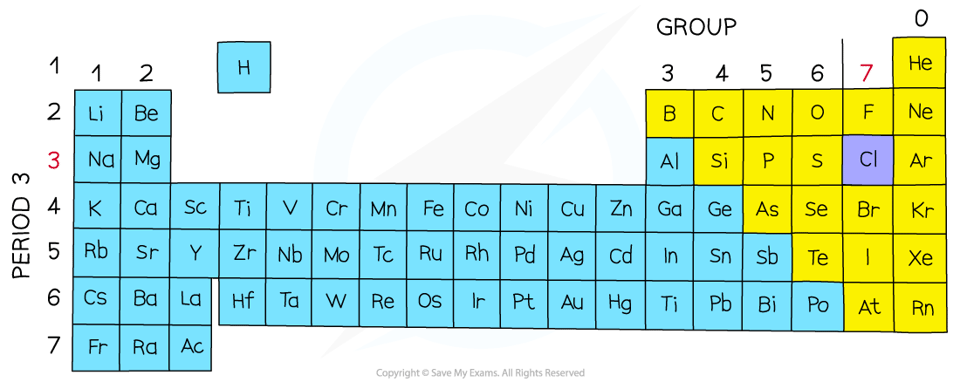
From Atomic Structure you already know that electrons orbit the nucleus in shells, and that each shell further out carries more energy. This note turns that picture into a working tool: how to write down the electron arrangement for the first twenty elements, and how those same numbers reveal an element's group and period on the Periodic Table.
Key points of understanding
- Electrons occupy the shell nearest the nucleus first, and a shell must be full before the next one starts to fill.
- The first shell holds 2 electrons, the second holds 8, and in this course the third shell is also treated as holding 8.
- For the first twenty elements, the fourth shell only starts to fill once the third shell already holds eight electrons.
- The electronic configuration lists the electron count of each shell, separated by commas, counting from the nucleus outwards.
- Ions have configurations too: a sodium atom has 11 electrons, but the ion has lost one, leaving 2,8.
- Potassium and calcium break the simple pattern: their electrons enter the fourth shell before the third shell fills further.
Choose a confidence level to continue.
Prefer to read it all at once? Show the full lesson as a page
1.Deducing Electronic Configurations
There are two ways to show where the electrons are in an atom: a shell diagram with rings, or a short list of numbers called the electronic configuration. The numbers count how many electrons sit in each shell, taken from the nucleus outwards. Carbon, for instance, carries six electrons, so its configuration is 2,4.
Key points
- Electrons occupy the shell nearest the nucleus first, and a shell must be full before the next one starts to fill.
- The first shell holds 2 electrons, the second holds 8, and in this course the third shell is also treated as holding 8.
- For the first twenty elements, the fourth shell only starts to fill once the third shell already holds eight electrons.
- The electronic configuration lists the electron count of each shell, separated by commas, counting from the nucleus outwards.
- Ions have configurations too: a sodium atom has 11 electrons, but the ion has lost one, leaving 2,8.
Guided content from the SME authoring corpus — note rn_Syxyh4Fct8KFg8NQ, pinned at da18433ed9e8 · promoted SyllabAI/syllabai-resources e967e75f1339