Simple Molecular Structures
2 guided lessons · 18 checks · 1. Principles of Chemistry → Covalent Bonding
Guided lessons for this note
Which concept don't you understand yet?
We'll explain it simply and check your understanding. Pick any lesson — any order works.
0 of 18 checks correct so far
Lesson 1 of 2
Simple molecular structures & C60 fullerene
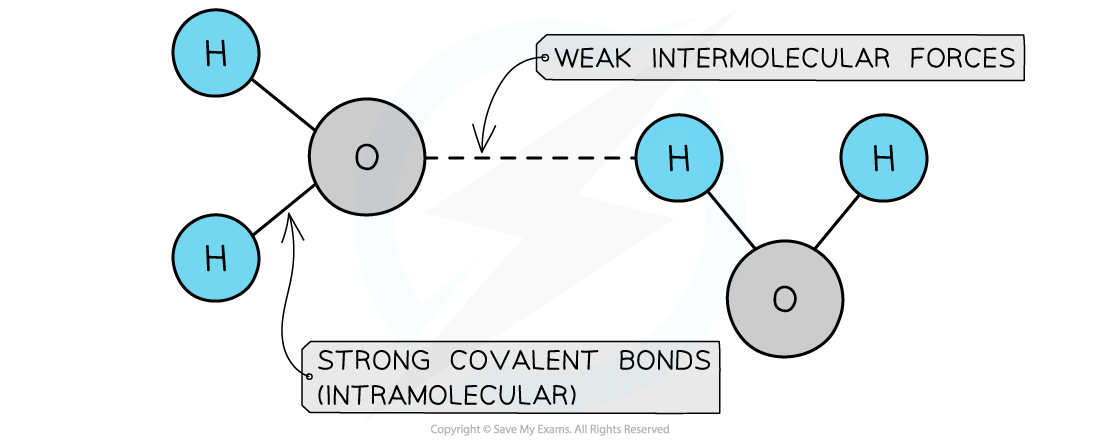
Simple molecular substances hold their atoms together with strong covalent bonds, but the forces acting between neighbouring molecules are weak. That split explains their behaviour: little energy is needed to pull separate molecules apart, so most are gases or liquids at room temperature, or solids that melt easily. C60 fullerene belongs here too, as a simple molecular structure built from sixty carbon atoms.
What you know already
From the earlier Covalent Bonding notes you know that non-metal atoms share pairs of electrons in strong covalent bonds. This note looks at what happens between whole molecules: why the forces there are weak, why that makes melting points low, how bigger molecules push the boiling point up, and why covalent substances rarely conduct.
Key points of understanding
- Simple molecular structures have strong covalent bonds inside each molecule but weak forces between neighbouring molecules.
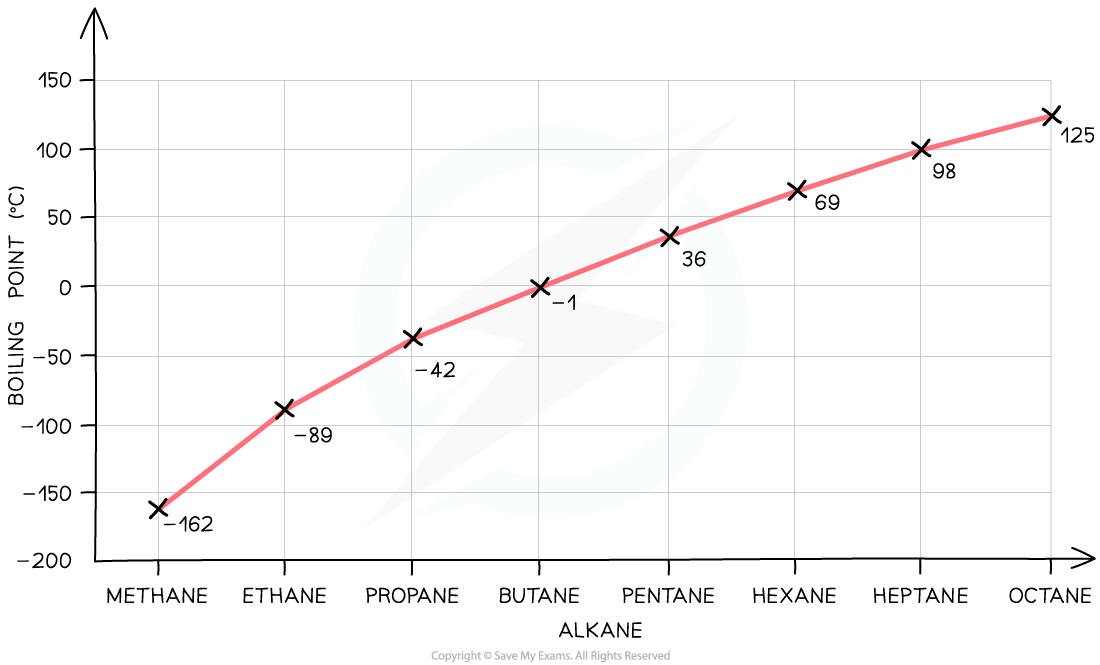
- The weak intermolecular forces need only a little energy to overcome, so melting and boiling points are low.
- Most simple molecular substances are gases or liquids at room temperature; solids with low melting points are less common.
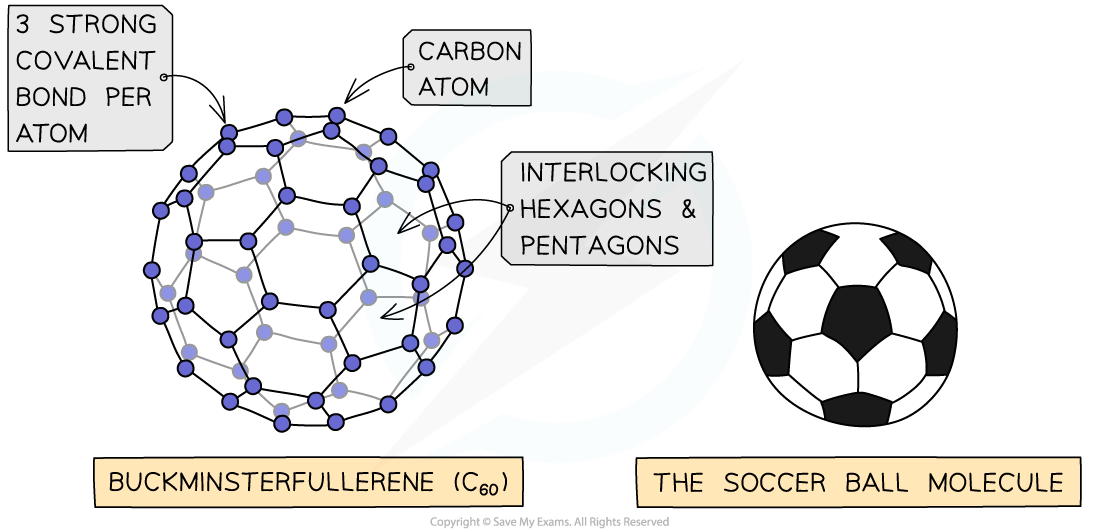
- C60 fullerene is a hollow sphere of 60 carbon atoms, joining 20 hexagons and 12 pentagons like a football.
- C60 cannot conduct, because its spare electrons move only within each buckyball and cannot migrate between them.
Choose a confidence level to continue.
Prefer to read it all at once? Show the full lesson as a page
1.Simple molecular structures & C60 fullerene
Simple molecular substances hold their atoms together with strong covalent bonds, but the forces acting between neighbouring molecules are weak. That split explains their behaviour: little energy is needed to pull separate molecules apart, so most are gases or liquids at room temperature, or solids that melt easily. C60 fullerene belongs here too, as a simple molecular structure built from sixty carbon atoms.
Key points
- Simple molecular structures have strong covalent bonds inside each molecule but weak forces between neighbouring molecules.
Guided content from the SME authoring corpus — note rn_KpvF2TWr5fYHk2Jz, pinned at fa1f302050ba · promoted SyllabAI/syllabai-resources e967e75f1339