Cracking
2 guided lessons · 18 checks · 4. Organic Chemistry → Crude Oil
Guided lessons for this note
Which concept don't you understand yet?
We'll explain it simply and check your understanding. Pick any lesson — any order works.
0 of 18 checks correct so far
Lesson 1 of 2
Breaking long chains on purpose
Cracking is the deliberate breaking of long hydrocarbon chains into shorter, more useful ones. This lesson covers what the process is, the hot conditions it needs, and the mixture of products it always delivers.
What you know already
From Crude Oil you already know how the column sorts molecules by chain length, and Combustion showed what happens when they burn. This note explains the industrial fix for the wrong-sized fractions: cracking long chains apart over a hot catalyst to make the short ones the market wants.
Key points of understanding
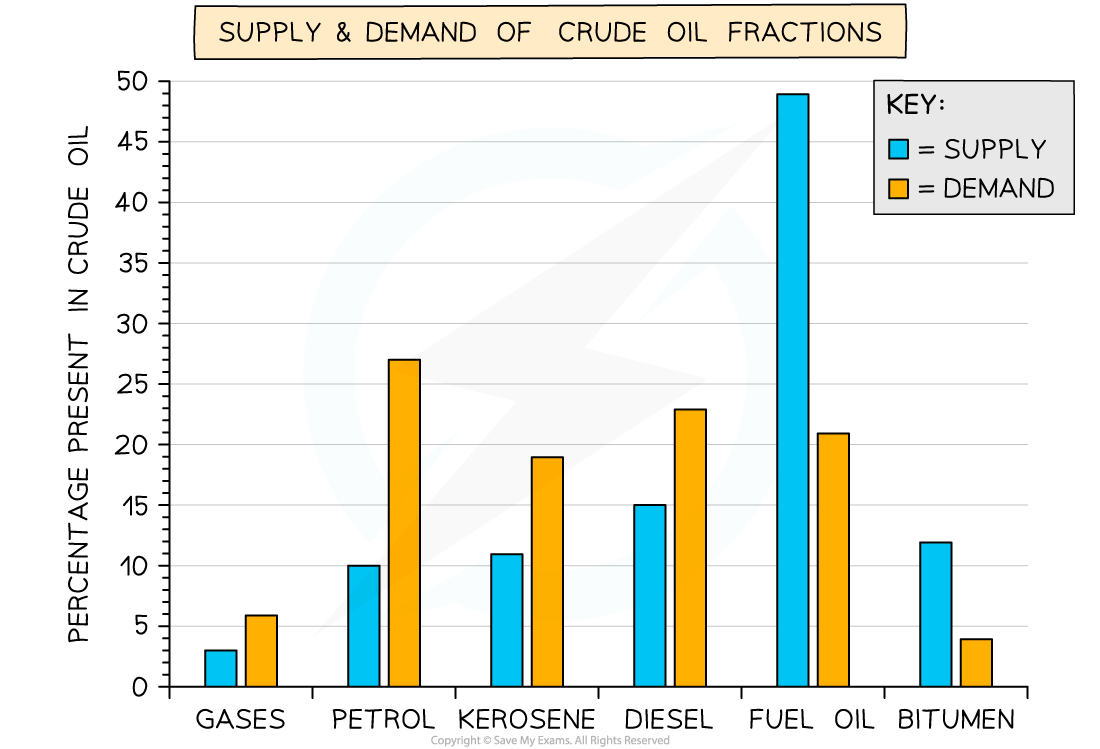
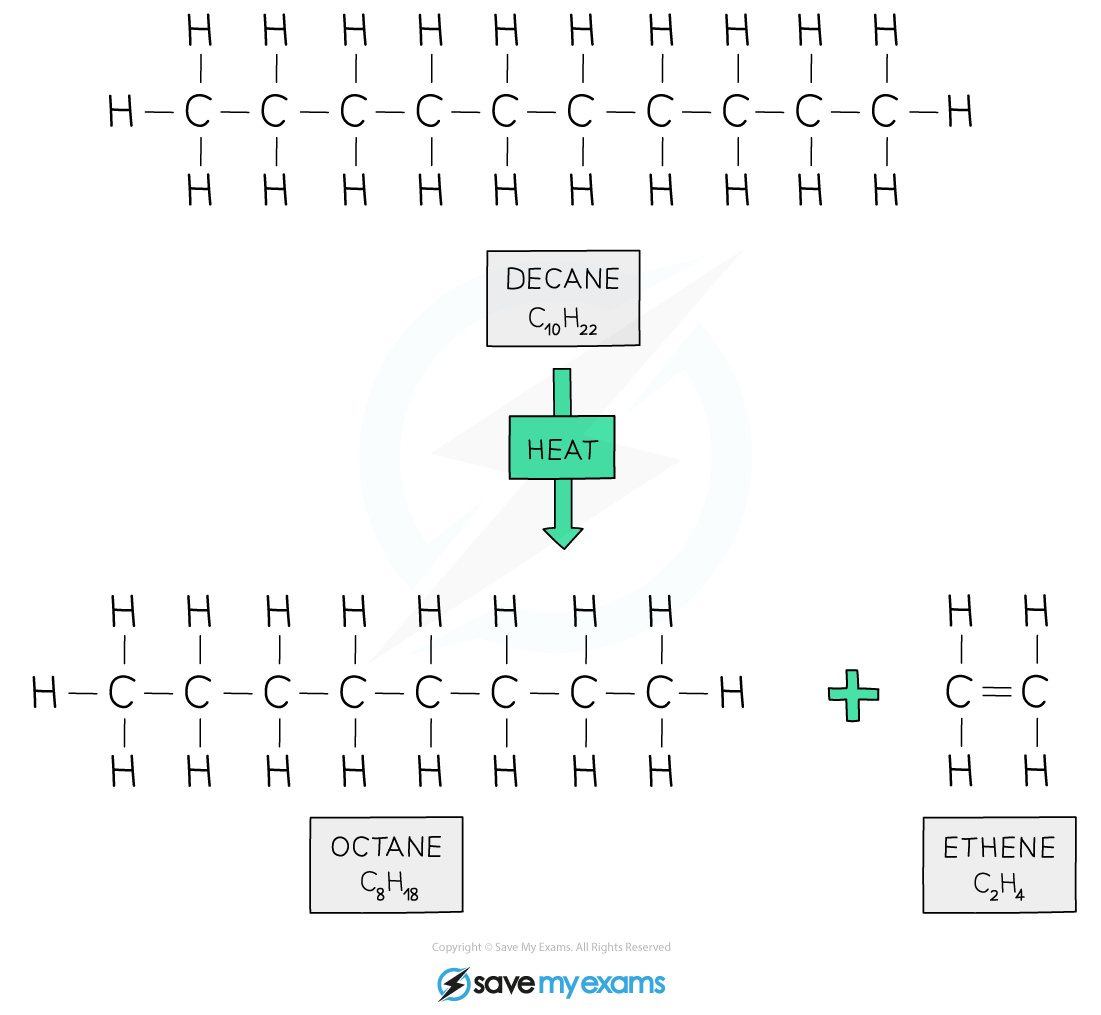
- Cracking breaks low-demand long-chain hydrocarbons into more useful short-chain molecules.
- Kerosene and diesel are the usual feedstocks, cracked to give petrol, alkenes and hydrogen.
- Catalytic cracking heats hydrocarbons to around 600 to 700 degrees Celsius to vaporise them.
- The vapours pass over a hot powdered catalyst such as alumina or silica, whose surface breaks the covalent bonds.
- The bond-breaking causes thermal decomposition reactions, producing a mixture of shorter alkanes and alkenes.
Choose a confidence level to continue.
Prefer to read it all at once? Show the full lesson as a page
1.Breaking long chains on purpose
Cracking is the deliberate breaking of long hydrocarbon chains into shorter, more useful ones. This lesson covers what the process is, the hot conditions it needs, and the mixture of products it always delivers.
Key points
- Cracking breaks low-demand long-chain hydrocarbons into more useful short-chain molecules.
- Kerosene and diesel are the usual feedstocks, cracked to give petrol, alkenes and hydrogen.
- Catalytic cracking heats hydrocarbons to around 600 to 700 degrees Celsius to vaporise them.
- The vapours pass over a hot powdered catalyst such as alumina or silica, whose surface breaks the covalent bonds.
- The bond-breaking causes thermal decomposition reactions, producing a mixture of shorter alkanes and alkenes.
Guided content from the SME authoring corpus — note rn_DrqzYWZMScqGrbWT, pinned at 52acc7ec1650 · promoted SyllabAI/syllabai-resources e967e75f1339