Addition Polymers
3 guided lessons · 27 checks · 4. Organic Chemistry → Synthetic polymers
Guided lessons for this note
Which concept don't you understand yet?
We'll explain it simply and check your understanding. Pick any lesson — any order works.
0 of 27 checks correct so far
Lesson 1 of 3
Monomers
Polymers are the giant molecules behind plastics, polystyrene and nylon, and this lesson introduces their recipe. Every polymer is assembled from huge numbers of small starter molecules called monomers, linked end to end by covalent bonds. The reaction needs demanding conditions, and it comes in two natural varieties: manufactured and biological.
What you know already
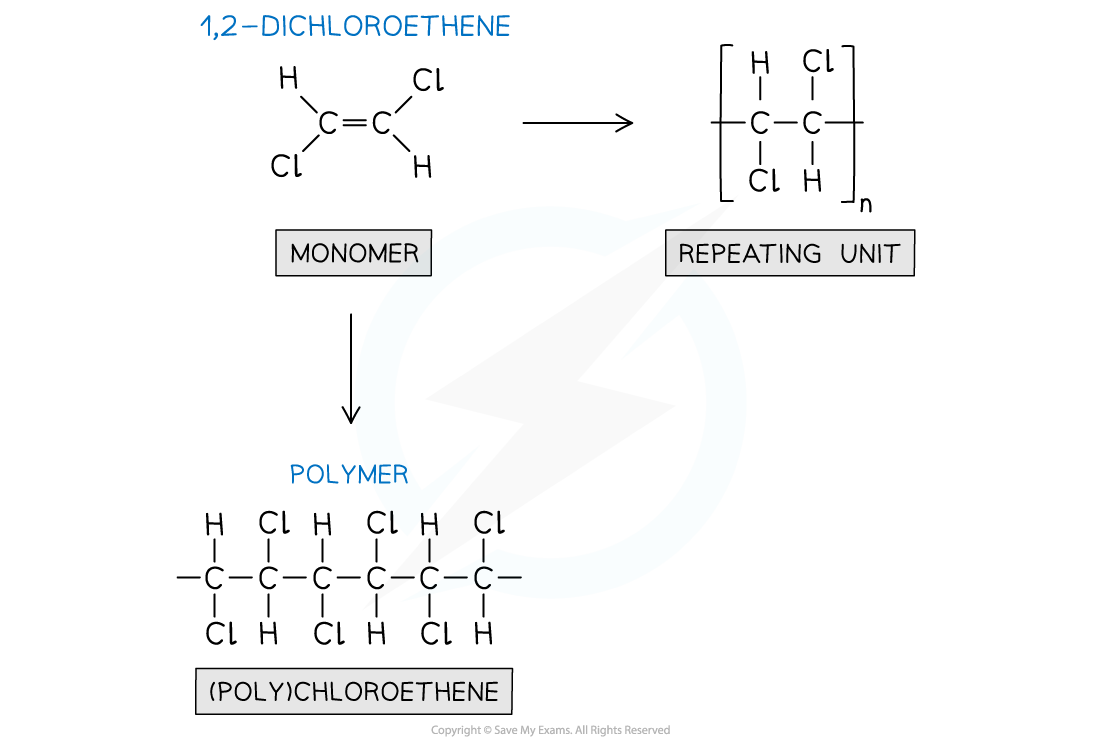
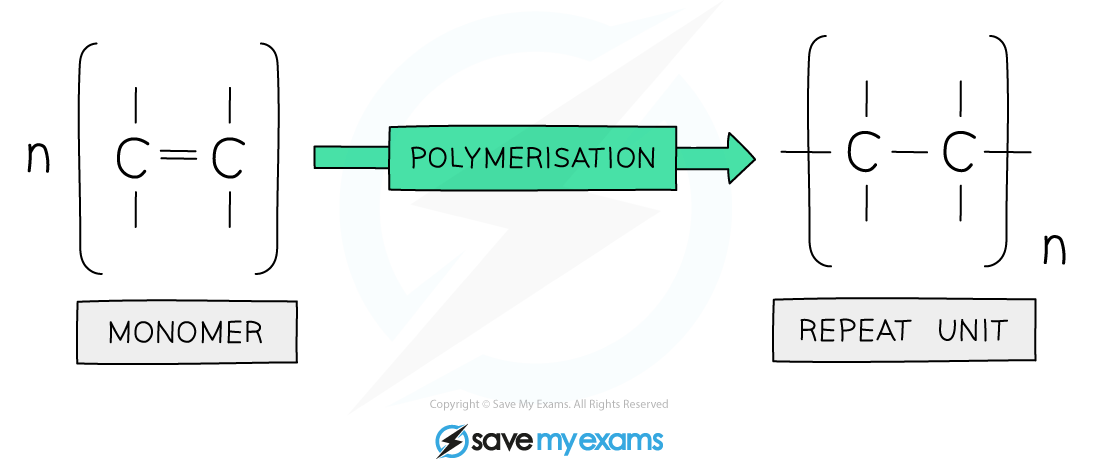
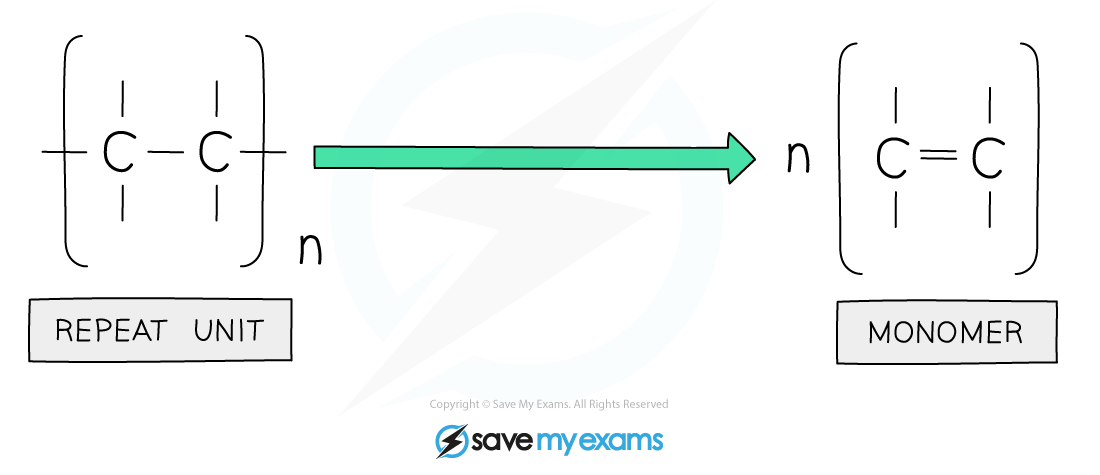
You already know from Alkenes that the C=C double bond is reactive and can open up to add other atoms across it. Addition polymerisation is that same reactivity put to work on a grand scale, with each alkene opening to grip its neighbours. This note shows how the giant chains form, how to draw them, and how to read them backwards.
Key points of understanding
- A polymer is a large molecule of high relative molecular mass, built from many joined monomers.
- The process of joining monomers together is called addition polymerisation.
- Each monomer becomes a repeat unit, connected to its neighbours by covalent bonds.
- Polymerisation reactions usually need high pressures and a catalyst.
- Synthetic polymers are manufactured, like plastics and nylon, while nature makes natural or biological polymers.
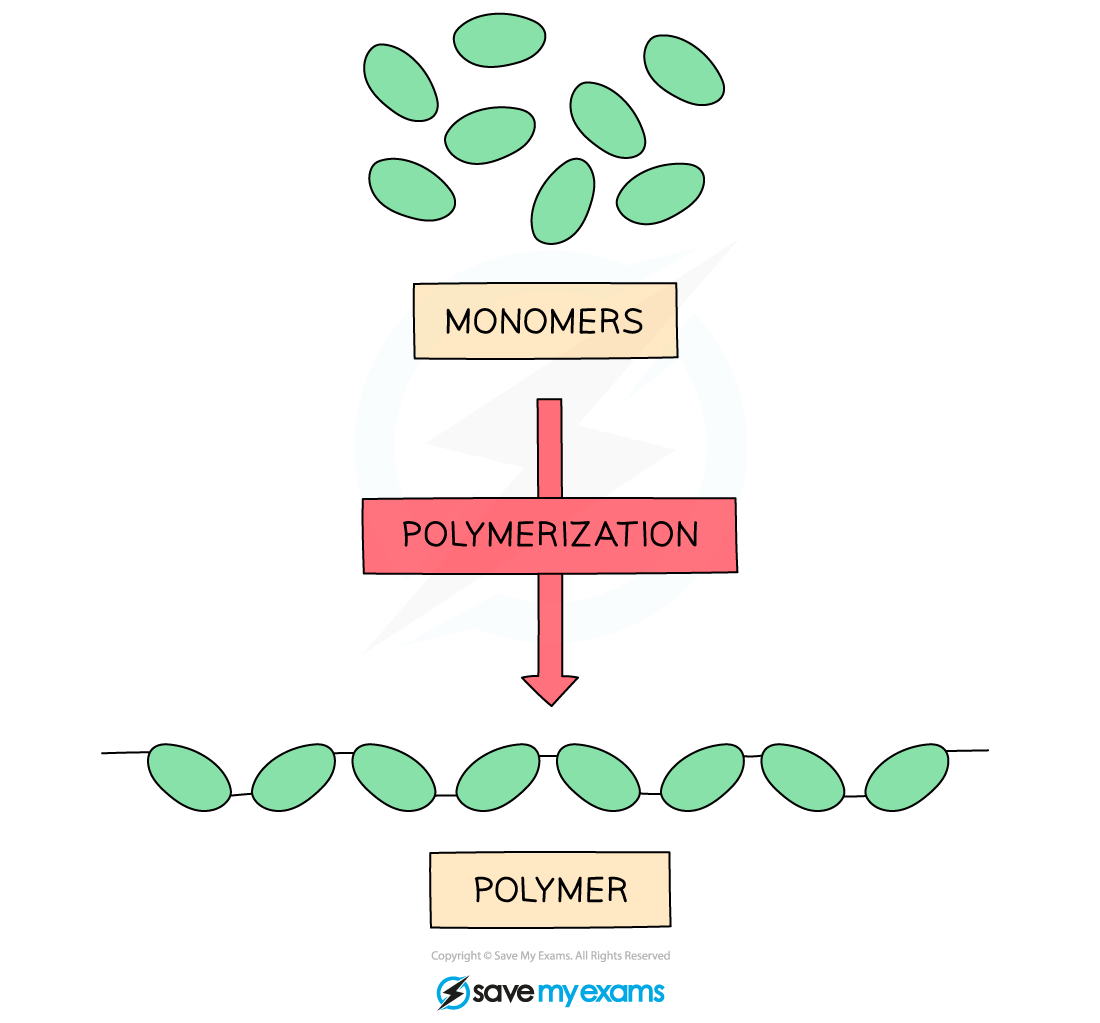
Diagram showing how lots of monomers bond together to form a polymer
Choose a confidence level to continue.
Prefer to read it all at once? Show the full lesson as a page
1.Monomers
Polymers are the giant molecules behind plastics, polystyrene and nylon, and this lesson introduces their recipe. Every polymer is assembled from huge numbers of small starter molecules called monomers, linked end to end by covalent bonds. The reaction needs demanding conditions, and it comes in two natural varieties: manufactured and biological.
Diagram showing how lots of monomers bond together to form a polymer
Key points
- A polymer is a large molecule of high relative molecular mass, built from many joined monomers.
- The process of joining monomers together is called addition polymerisation.
- Each monomer becomes a repeat unit, connected to its neighbours by covalent bonds.
Guided content from the SME authoring corpus — note rn_4SgDJv8rKxpQQSBh, pinned at 78ad6a2073c6 · promoted SyllabAI/syllabai-resources e967e75f1339