Dynamic Equilibrium
2 guided lessons · 18 checks · 3. Physical Chemistry → Reversible Reactions & Equilibria
Guided lessons for this note
Which concept don't you understand yet?
We'll explain it simply and check your understanding. Pick any lesson — any order works.
0 of 18 checks correct so far
Lesson 1 of 2
Dynamic equilibrium
Some reactions can undo themselves: the products re-form the reactants as readily as the reactants form the products. This lesson defines the special state such a reaction settles into, called dynamic equilibrium, and the one condition it demands — a closed container. Two features mark that state, and they are the ones the exam asks for.
What you know already
You already know from Rates of Reaction how fast a reaction proceeds and what speeds it up or slows it down. That idea is the engine of this note, because equilibrium is not about reactions stopping but about two rates meeting. Here you will meet reversible reactions and the balanced, dynamic state they settle into inside a sealed container.
Key points of understanding
- A reversible reaction is one that can run in both the forward and reverse directions.
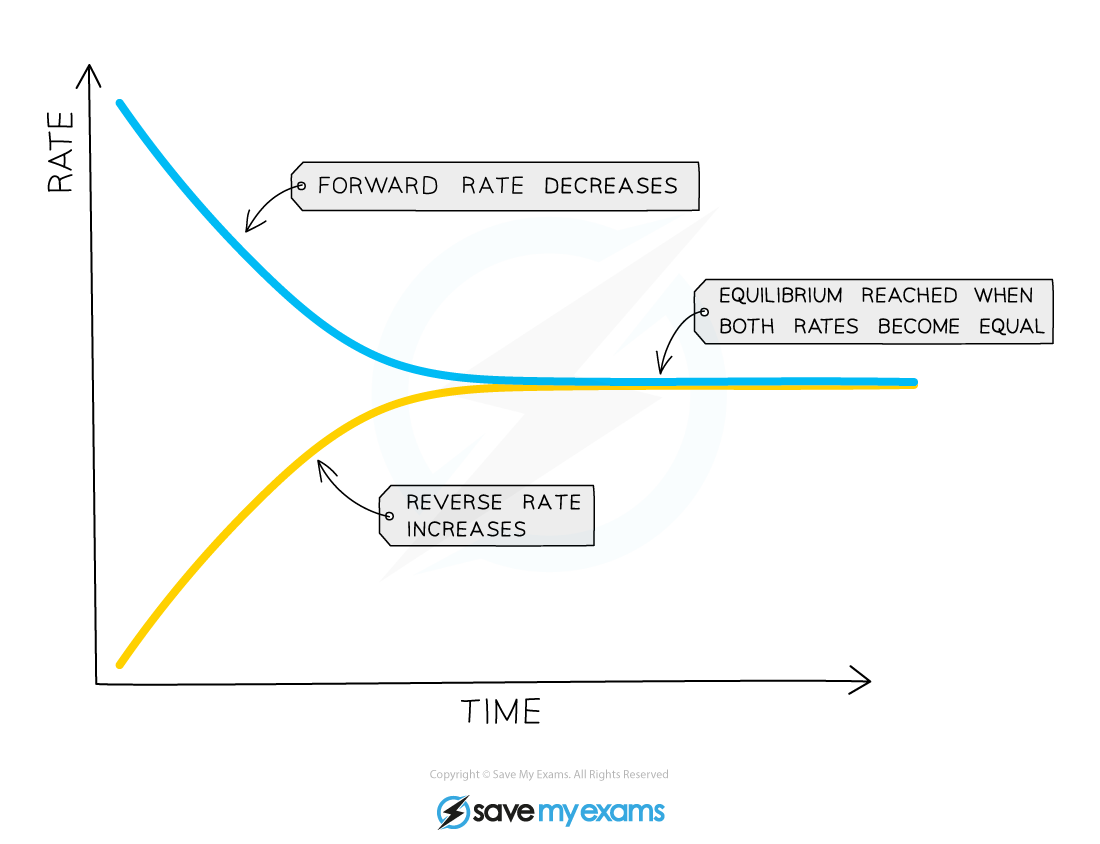
- Equilibrium is reached when the rates of the forward and reverse reactions become equal.
- At equilibrium the molecules keep changing into each other, which is why it is called dynamic.
- The concentrations of reactants and products stay constant while nothing else changes.
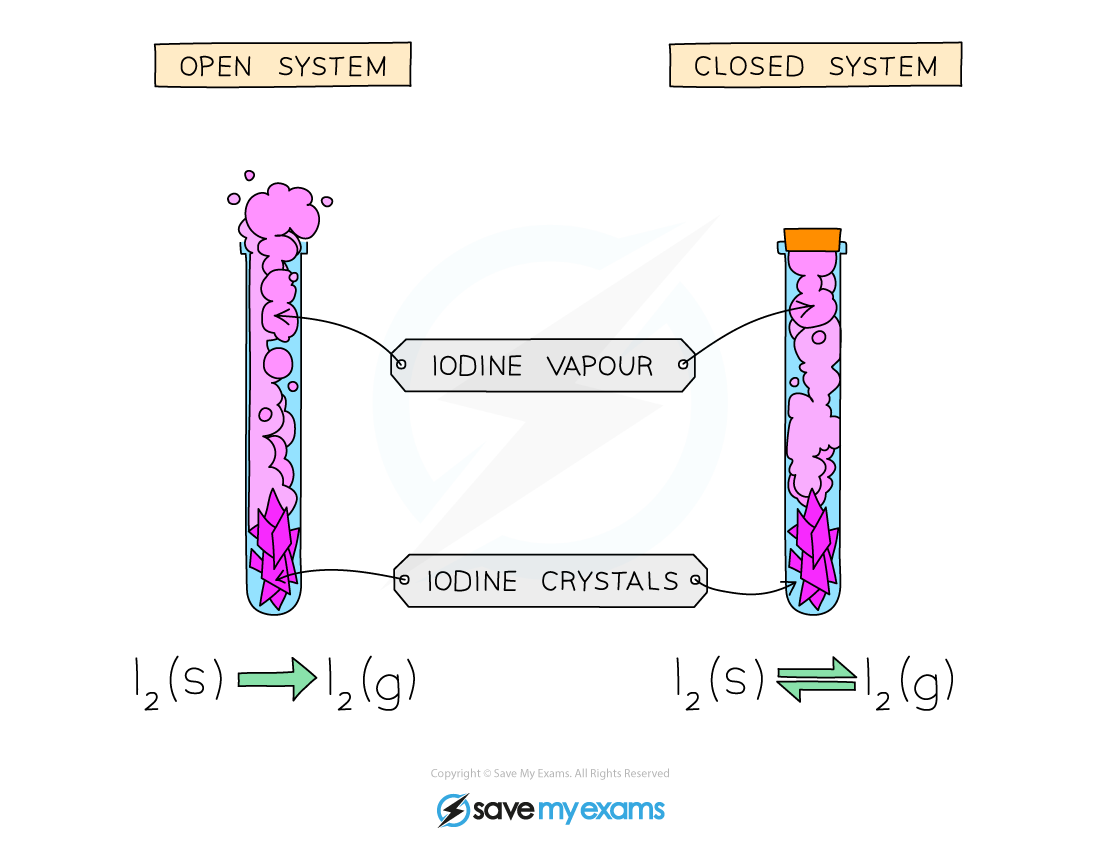
- A closed system is required, so no species can leave the vessel and nothing can enter.
Choose a confidence level to continue.
Prefer to read it all at once? Show the full lesson as a page
1.Dynamic equilibrium
Some reactions can undo themselves: the products re-form the reactants as readily as the reactants form the products. This lesson defines the special state such a reaction settles into, called dynamic equilibrium, and the one condition it demands — a closed container. Two features mark that state, and they are the ones the exam asks for.
Key points
- A reversible reaction is one that can run in both the forward and reverse directions.
- Equilibrium is reached when the rates of the forward and reverse reactions become equal.
- At equilibrium the molecules keep changing into each other, which is why it is called dynamic.
Guided content from the SME authoring corpus — note rn_2d6Yb8GwGfRRd6pZ, pinned at 78ad6a2073c6 · promoted SyllabAI/syllabai-resources e967e75f1339