Analysis & Conclusions (Cambridge International IGCSE Geography)
Exam board Cambridge International · IGCSEUpdated 2024-12-03
Analysis & Conclusion
Analysis
-
Once data has been collected and presented, it needs to be analysed
-
Analysis is the process that makes sense of the data collected
- It identifies patterns, trends, significance, connections, and/or meaning in the data
-
The analysis of data involves several stages
- Describe the data shown in the graphs/photographs/maps
- Identification of the highest and lowest results
- Identification of any patterns and trends
- Identification of any relationships between data
-
Methods of analysis depend upon the data collected
-
Quantitative data is analysed using numerical and statistical methods
Numerical and statistical skills
- Statistical methods can be used to help explore and explain the results gathered during data collection
Mean, median and mode
- These are measures of central tendency
- The mean (average) is calculated by adding up all of the values in the data set and then dividing by the total number of values in the data set
- The median is the middle value of a set of data. The numbers are arranged in rank order and then the middle value is selected
- The mode is the value that occurs most frequently in a set of data
Range
- A measure of dispersion— the spread of data around the average
- The range is the distance between the highest and lowest value
- The interquartile range is the part of the range that covers the middle 50% of the data
Anomalies
- These are results that do not fit the pattern or trend
- They need to be described and explained
Analysing photographs and field sketches
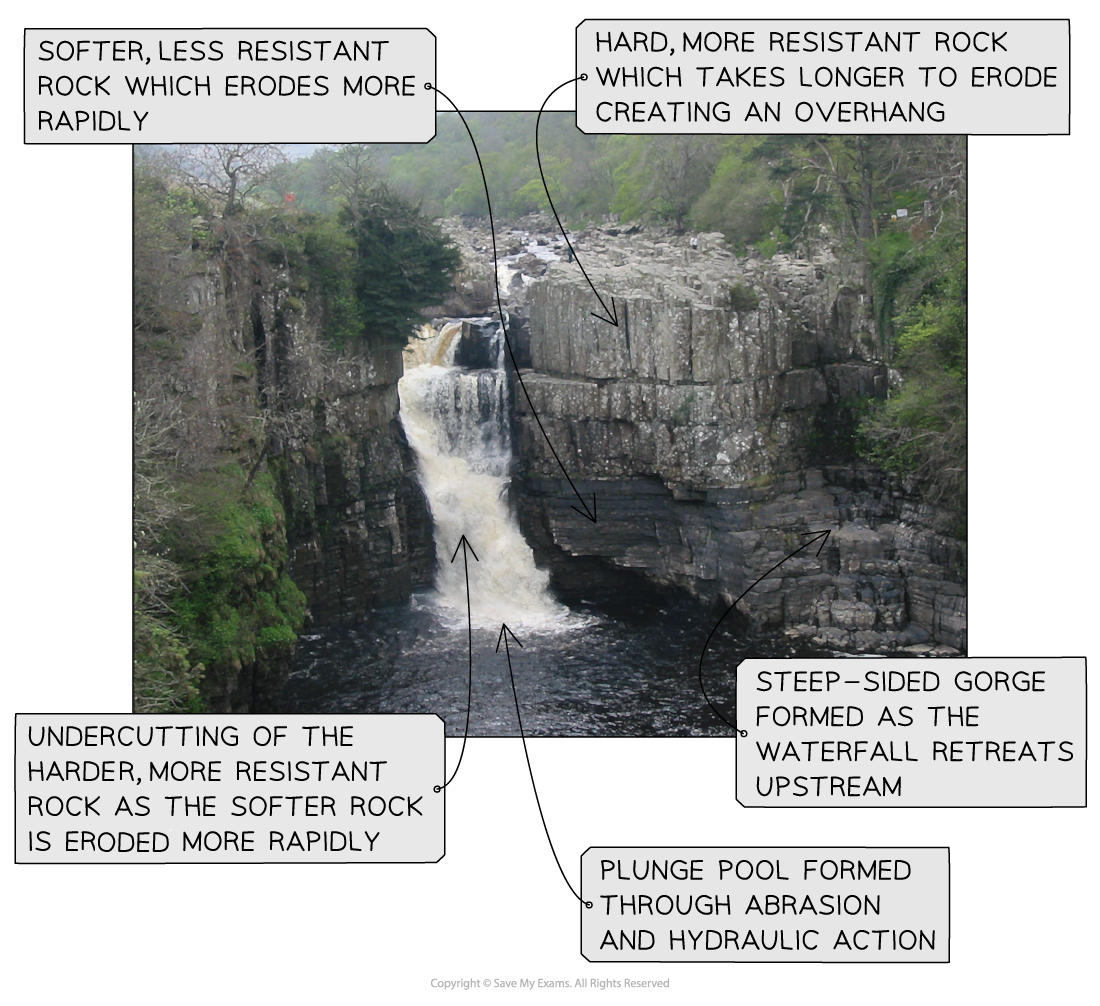
- Annotation of photographs and field sketches is part of the analysis
- The use of photographs and field sketches is a qualitative analysis
- Analysis in annotation gives meaning to the features shown in the photograph/field sketch
Conclusion
-
The fieldwork conclusion should:
- return to the hypothesis and aim
- identify any evidence that supports the hypothesis
- outline any evidence that contradicts the hypothesis
- describe and explain any links to geographical theories
- acknowledge any unusual results
- state whether the hypothesis is supported or not
-
A key focus in the fieldwork questions in the exam is the evaluation of data collection
-
Enquiry evaluation should:
- identify any problems with, or limitations of, data collection methods
- suggest other data that would have been useful in the study or improvements that could be made
- evaluate how reliable the conclusions were
- suggesting how the scope of the study could be extended
Data collection - problems and limitations
-
There are always issues and limitations associated with data collection; they may include:
- Accessibility of sample sites—could all sample sites be accessed?
- **Sample size: **Was the sample size large enough?
- Duration of the data collection—was the enquiry time long enough to collect the data needed?
- **Methods: **Were the questionnaire questions appropriate to meet the aim and test the hypothesis?
- Were there any issues with the** equipment?**
- Was there any** human error** in the process of recording data or reading the equipment?
- Time of the data collection— did the weather or time impact the results collected?
- Unforeseen issues— were there any problems on the day, such as road works and river flow, that affected the results?
Other data and improvements
-
There are always improvements that could be made to data collection; these may include:
- increasing the sample size
- taking more measurements
- looking at a wider range of secondary sources
- using other equipment—a flow meter would be more accurate for measuring river velocity than a float
Evaluating the conclusions
-
To evaluate the conclusion, students should examine whether the
- conclusions reflect the aims and hypothesis set out at the start of the enquiry
- aim and hypothesis were appropriate—could the hypothesis be easily assessed?
- location was appropriate
- accuracy of results could be improved if the data collection were to be repeated
Was this revision note helpful?
Build on this topic