Photographs & Pictorial Material (Cambridge International IGCSE Geography)
Spec point — Questions may include field sketches of physical and human landscapes to stimulate geographical description and annotation. Cartoons illustrating a geographical theme may be set for interpretation and analysis.
Photographs & Pictorial Material
Photographs
-
The command word for photographs is usually 'describe'
-
This is about observational skills and understanding about what is being viewed
-
When describing, look for:
- Physical features: vegetation, climate, relief, drainage, distinct features (cliff, river, desert, landslide, etc.), rocky outcrops, etc.
- Human features: grouping of buildings: offices, homes, factories, etc. Urban, rural or fringe settlements. Industry and transport; developed or developing areas and general condition of features: busy, quiet, modern, old, etc.
- Relief: height and shape of ground surface, named features, overall appearance
- Agriculture: animals—type and spread; vegetation type—grass, barren, sparse, etc. Land type: arable or pasture, ploughed or fallow, crops or harvested, etc. Types of farm buildings and machinery along with their condition
- Settlements: rural or urban, features of buildings, types of buildings, use of settlements and buildings, spacing between or among buildings—linear, dispersed, nucleated, etc.
- Housing: size and storey: bungalow, large, multistorey, skyscraper, etc. number of windows, are there building plots or vacant sites on the urban fringe or new builds, etc.
Exam Hint
- When the exam question asks you to describe, it is asking you to 'say what you can actually see', not 'what you think you see'
- The 'what and why' usually comes in a later question
- You will not gain extra marks for explaining, but you will lose out on precious time
Example
There is a photograph of a black cat and I describe it as:
- The cat has black fur with a little bit of white on her tummy. Her fur is soft, and she has long whiskers and a stubby tail. She has sharp claws and purrs a lot; even though she has lost a tooth, she can still bite when she is annoyed.
How do I know all this? The photo wouldn't tell me that the cat is female, has long claws, lost a tooth, bites, purrs or has soft fur.
Always remember to say what you can only see in the photograph
Field sketches
-
Field sketches should include:
- title
- location/site number
- compass direction
- key features found at a site
| Strengths | Limitations |
|---|---|
| - Things can be left out of the sketch if they are not relevant to the enquiry - Smaller, important areas can be more detailed - Gives a broad overview of the features - Helps recall of key features | - The scale in the sketch may be inaccurate - Important key details may be missed - The sketch may contain inaccuracies which affect the analysis, for example, more litter than there actually was at the site |
Exam Hint In the exam, you can be asked to sketch and label key features from a photograph. Total accuracy or artistic prowess is not assessed; however, important features such as rivers, coastlines, hills, etc. must be identified.
Follow the geographical rules for sketching:
- Draw a box to frame the sketch
- Always draw in pencil
- Use colour to highlight a feature
- Use a ruler for straight lines and arrows
- The arrows always go to the feature, not the label
- Never cross arrow lines
- Write horizontally to the arrow in pen
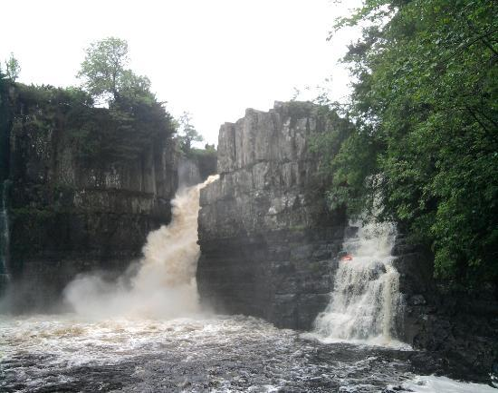
Worked Example The photograph below shows a feature of a river in its upper course.
- Identify the landform in the photograph [1 mark]
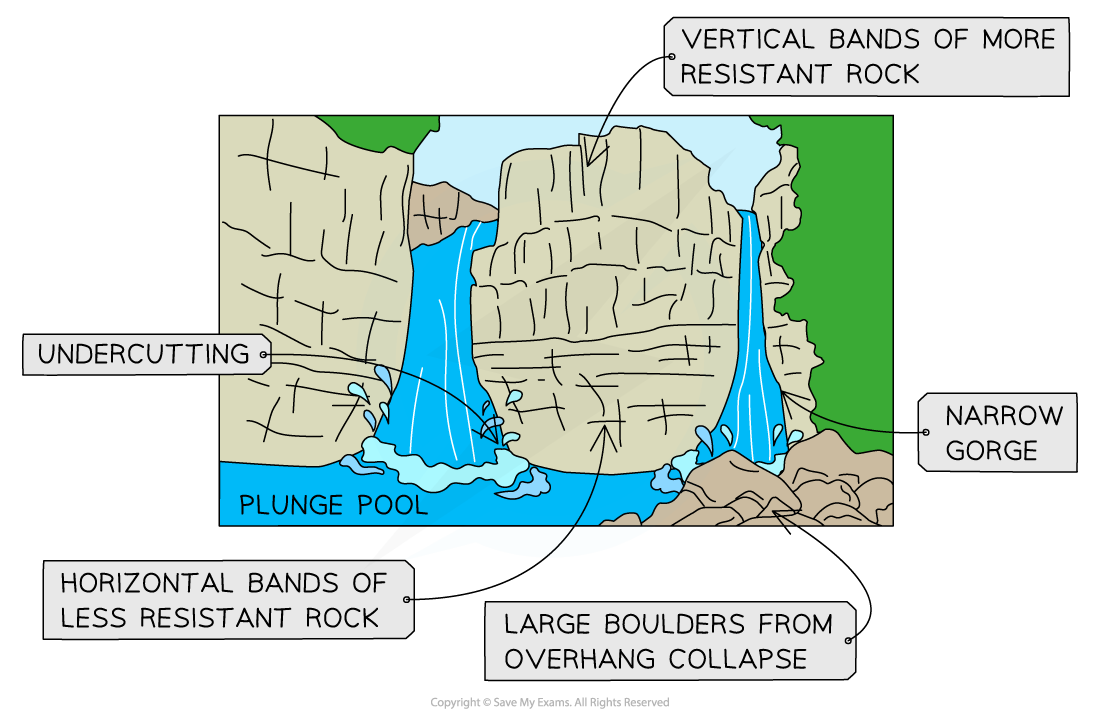
- Sketch and label the key features of this landform [4 marks]
Final answer: Answer
- Waterfall and gorge [1 mark].
Sketch of photograph showing key labelling of features
Was this revision note helpful?
Build on this topic