Resource Conservation (Cambridge International IGCSE Geography)
Spec point —
3.7.4· Understand the importance of resource conservation
Resource Conservation
-
Conservation is the protection and rational use of the environment and natural resources to ensure they are there for future generations
-
This involves measures that use resources efficiently to extend their existence for as long as possible
-
Conservation measures include:
- Recycling and reuse of resources such as clothing or glass and plastics
- Using energy-efficient appliances— these use less energy to power them and less water
- Stewardship of protected areas—National Parks, Areas of Outstanding Natural Beauty (AONB)
- Greater use of, and investment in, renewable energies
- Quotas on resources used—raising quotas to ensure the fish population is not overfished
- Protection of particular ecosystems—Sites of Special Scientific Interest (SSSI) and the Antarctica Treaty, which includes agreements about the exploitation of Antarctica
- Reducing deforestation
- Laws to protect resources and areas
- Fines for people/organisations/companies that damage the environment
- Reducing the use of or rationing of resources
-
There are many non-governmental organisations (NGOs) that aim to conserve and protect the environment and natural resources;
- World Wildlife Fund
- Greenpeace
- Friends of the Earth
- Woodland Trust
Government actions to conserve resources
- Congestion charges within cities to reduce traffic
- Investment in renewable energy sources
- Grants for solar panels
- Gas emission limits for vehicles
- Charging points for electrical vehicles
- Increase in tax on petrol and diesel
Individual actions to conserve resources
- Use public transport
- Walk or cycle
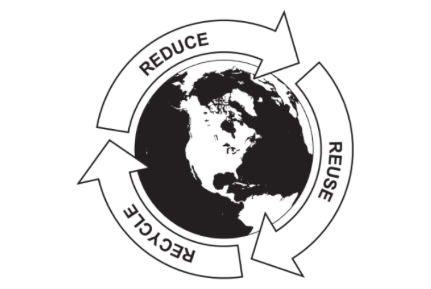
- Reduce, reuse and recycle
- Buy energy-efficient appliances
- Invest in double glazing and insulation
- Wash clothes less often and at lower temperatures
- Compost food and garden waste
Worked Example Study Fig 1, which shows advice about conservation of natural resources.
Explain how following the advice given in Fig 1 can help to conserve natural resources.
[3 marks]
Final answer: Answer
- Uses fewer resources/less demand for resources or example/there are fewer resources wasted [1]
- Saves resources for the future [1]
- Can use resources again/make more use [1]
- Resources last longer [1]
- Saves energy [1]
- Waste products become useful [1]
Explain the importance of conserving natural resources and the natural environment.
[5 Marks]
Final answer: Answer
- Many are non-renewable/will run out/are finite [1]
- Life in the future would not be possible without clean water [1]
- Life in the future would not be possible without clean air [1]
- Life in the future would not be possible without land for cultivation [1]
- To protect habitats [1]
- Conserving the natural environment will ensure ecosystems remain in balance [1]
- Species do not become extinct/animals do not die [1]
- To prevent global warming/acid rain/desertification etc. [1]
- Creates conflict/civil rest [1]
- Forests act as carbon sinks [1]
Example Case Study: Pearl River Delta, China
Spec point —
3.7.4· An area where economic development is taking place & causing the environment to be at risk
Case Study
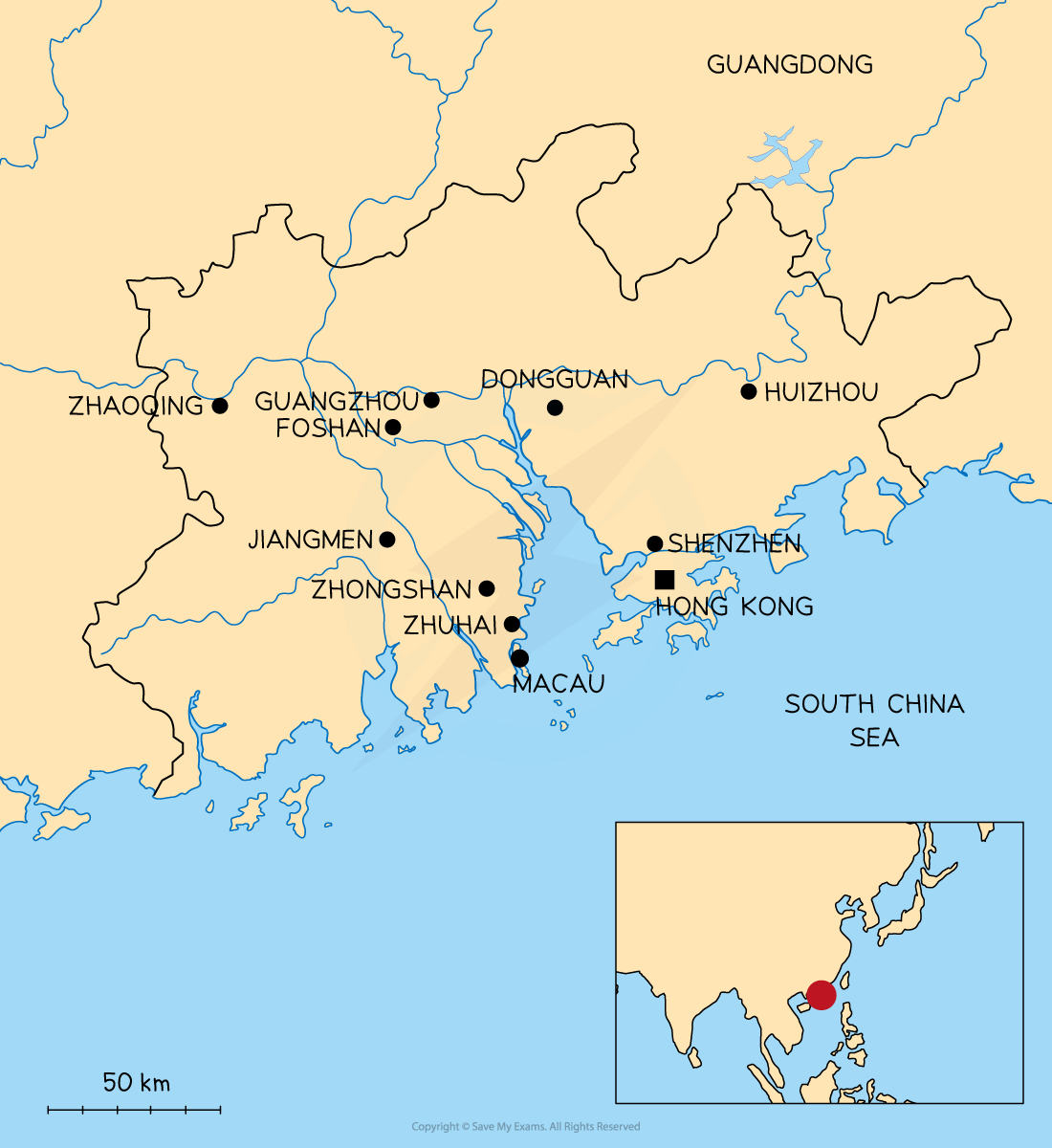
- Located in South-East China, the Pearl River is China's third longest river
- The Pearl River enters the South China Sea to the southeast of Guangzhou
- The area surrounding where the river enters the sea is the Pearl River Delta
The Pearl River Delta is China's largest economic hub, creating over 9% of China's total GDP
It is the largest urban area or megacity in the world
- Over 60 million people live in the region
Pollution sources
Air pollution from power plants
- There are both gas- and coal-fired power stations in the region that emit sulphur dioxide, carbon dioxide and nitrogen oxide
- Emissions lead to smog and acid rain
- They also add to the enhanced greenhouse effect
Toxic waste from factories
Sewage from large populations is released into the rivers
Impacts of pollution
The Pearl River Delta has the highest level of acid rain in China
This leads to acidified groundwater
It also increases heavy metals found in crops and drinking water
- This is linked to increased rates of stomach cancer
Increased heavy metals in river water and river sediments, including lead, zinc, chromium, copper, arsenic and mercury
- Heavy metals are all harmful to humans and wildlife when absorbed in sufficient quantities
- Heavy metals pass through the food chain
- Rice cultivated in the area is contaminated with arsenic and poses a health risk to the people who consume it
Pesticides affect wildlife and accumulate in the food chain, impacting human health
Fertilisers lead to eutrophication
Was this revision note helpful?