Climate Characteristics (Cambridge International IGCSE Geography)
Equatorial Climate Characteristics
Spec point —
2.5.1· Describe & explain the characteristics of the equitorial climate
World climate distribution
-
Climates vary across the world
-
The reasons for these climate types include:
-
Latitude
- Temperatures and sunshine hours decrease with distance from the equator because solar radiation is more dispersed at the poles and has to pass through more of the atmosphere
-
Altitude
- Increases in altitude lead to decreases in temperature
-
Continentality
- Locations further inland heat up more quickly in the summer and cool more quickly in the winter
-
Ocean currents
- Warm and cold currents circulate in the oceans, either warming or cooling the adjacent land
-
Aspect
- In the northern hemisphere, slopes facing south are warmer
-
Prevailing winds
- Winds coming from warmer areas bring warmer air, increasing temperatures
-
Pressure systems
- Low-pressure areas, like the tropics, have rising air, condensation, and cloud formation, which creates more precipitation
- With high pressure, the air sinks, forming dry conditions
-
Equatorial climate distribution
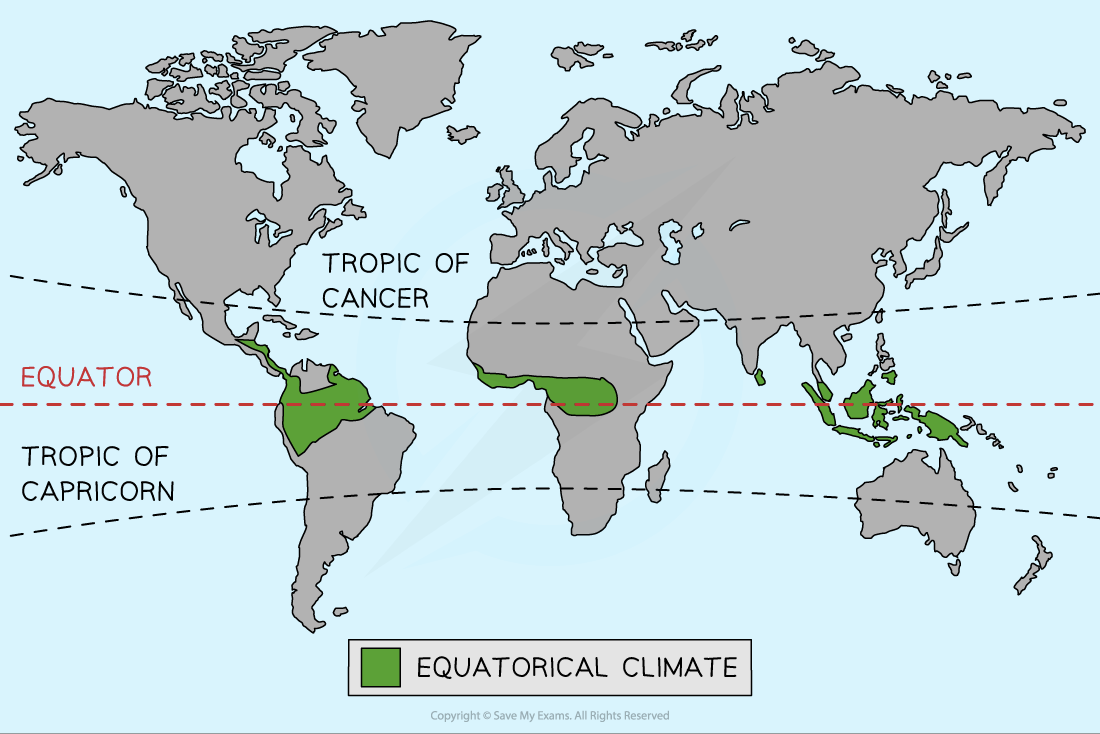
Distribution of the equatorial climate
Equatorial climate characteristics
Location
- Low latitudes
- Within the Tropics, 23.5° north and south of the equator
- Amazon in South America, New Guinea, South-east Asia, and the Zaire Basin
Annual precipitation
- Over 2,000 mm
Temperature range
- Low range of mean monthly temperatures: 26-28 °C
- Constant high temperatures
- Diurnal range is about 7 ºC.
Seasons
- No seasons—hot and wet all year round
Humidity
- High, usually over 75-80%
Prevailing winds
- Winds blow into the equatorial region from high-pressure areas to the north and south.
- The winds from the north blow from the north-east and the winds from the south blow from the south-east.
- The winds are known as the trade winds
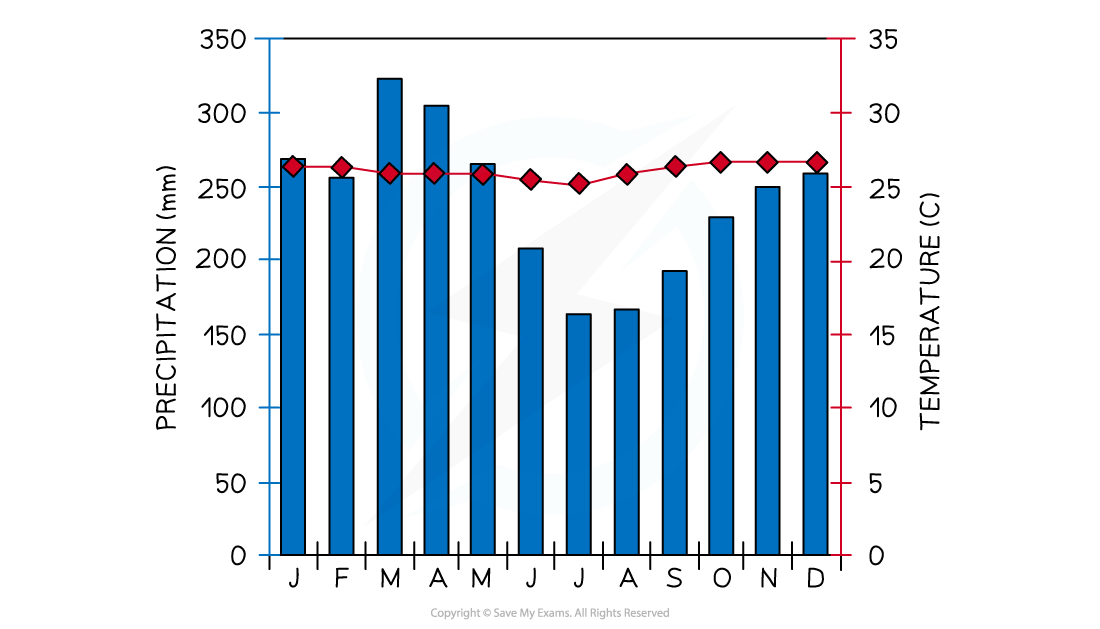
Climate graph for Iquitos, Peru
Factors influencing the equatorial climate
-
There are a range of factors that influence the climate, including:
- The midday sun is almost directly overhead all year, meaning there is maximum insolation
- Low pressure all year leads to rising air, condensation, cloud formation, and high precipitation levels
- Dense vegetation cover leads to high levels of evaporation and transpiration
- The warm air stores large amounts of water vapour until the temperatures start to cool in the late afternoon, which then leads to heavy, daily convectional rainfall
Hot Desert Climate Characteristics
Spec point —
2.5.1· Describe & explain the characteristics of the hot desert climate
Hot desert climate distribution
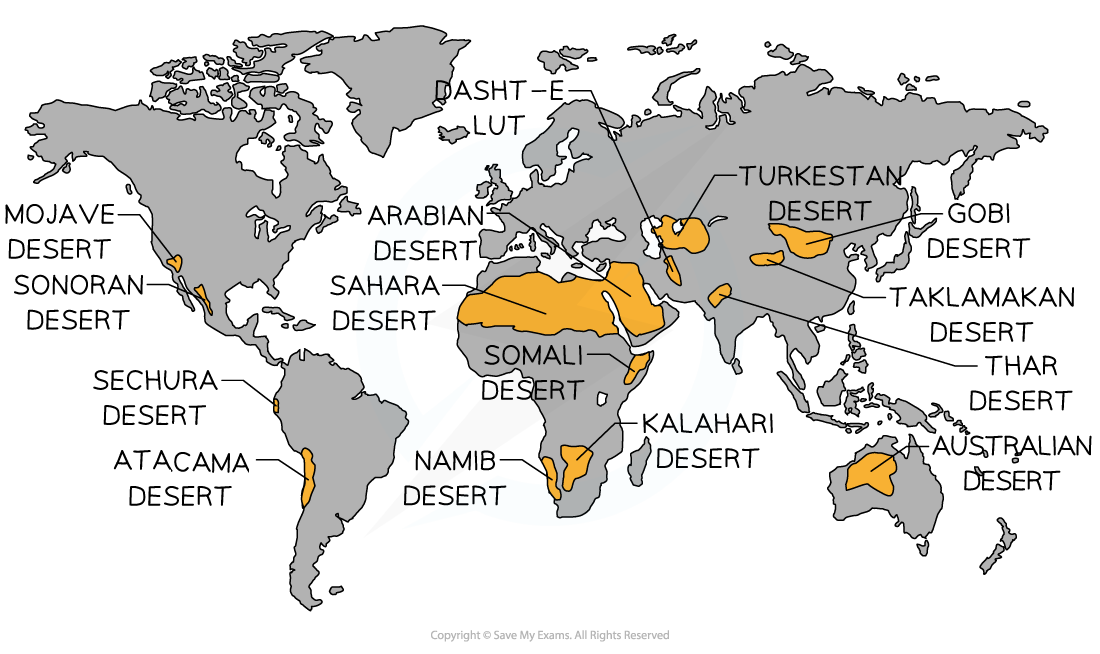
Distribution of the hot desert climate
Hot desert climate characteristics
Location
- 15° - 30° north and south of the equator (tropical and sub-tropical)
- North Africa - Sahara, Southern Africa - Kalahari and Namib, Australia. Middle East
Annual precipitation
- Below 250mm
Temperature range
- Daytime temperatures can reach 50°C but average around 25°C
- Night-time temperatures below 0°C
- The diurnal range is large up to 45°C
- The annual range is around 15°C
Seasons
- Summer and winter
Humidity
- Low often between 10-30%
Prevailing winds
- The winds are offshore blowing from the east across the land, so they do not collect any moisture
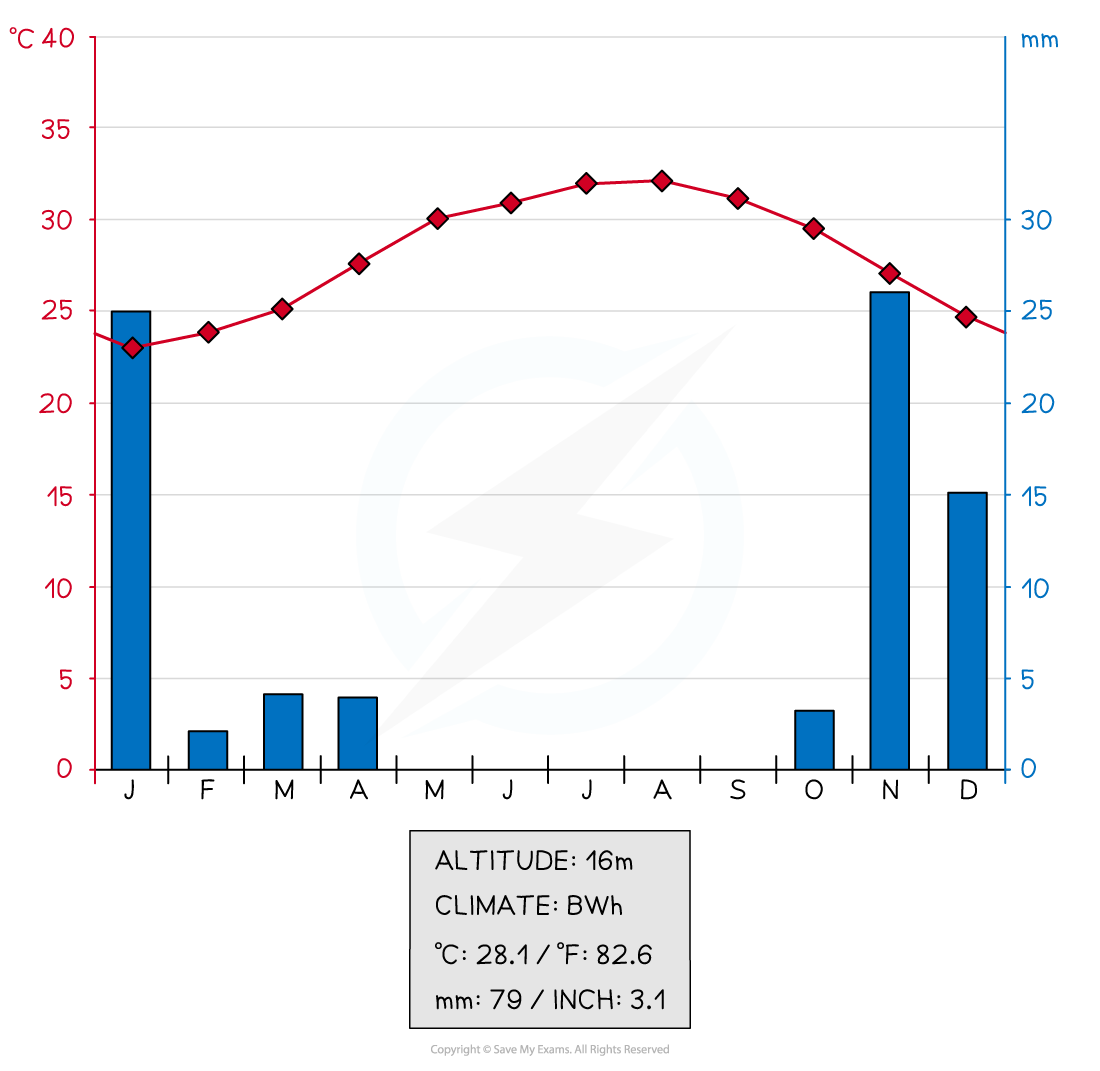
Climate graph for Jeddah, Saudi Arabia
Factors influencing the hot desert climate
-
High pressure all year means the air is descending and warming
- Precipitation does not occur because the air is not rising
-
Prevailing winds are often from over land masses, which means they contain little moisture
-
Some deserts are in a rain shadow so there is little rainfall
-
Cold ocean currents on the west side of continents may reduce summer temperatures due to the cooling effect of the ocean
Influence of pressure systems
-
Hot deserts form between 15° and 30° north and south of the equator as a result of the atmospheric pressure systems
- Air rises at the equator and when it reaches the upper atmosphere, it moves north and south
- The air cools and starts to sink
- This creates a zone of high pressure at about 30° north and south of the equator
- Due to the sinking air, warm air cannot rise, condense, and form clouds. This results in high aridity
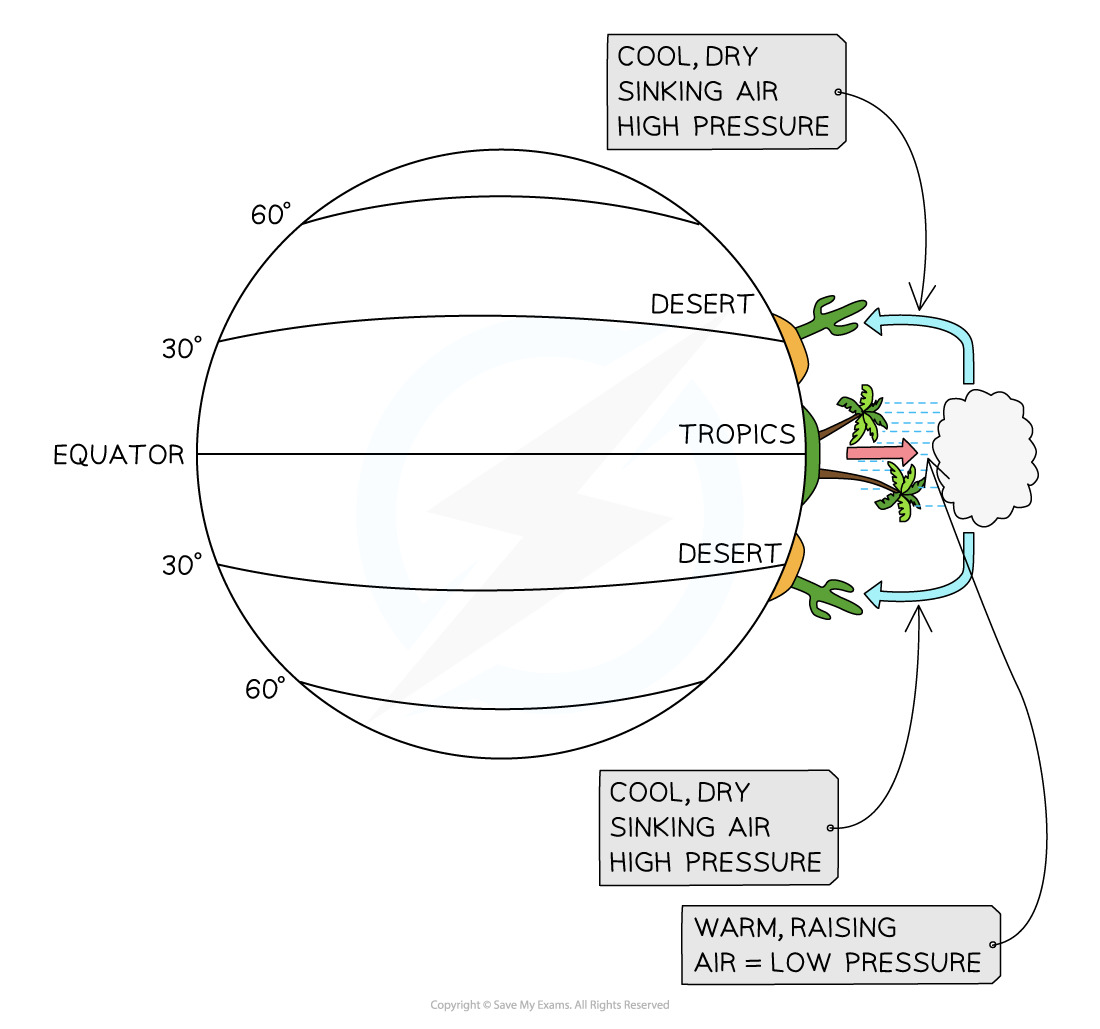
Atmospheric pressure systems
Worked Example Explain how high atmospheric pressure influences the climate of hot deserts.
[3 marks]
Final answer: Answer
- Air is descending [1]
- It heats up/does not cool [1]
- Condensation does not occur/clouds do not form [1]
- Precipitation is low/does not occur/drier/only has e.g. 250 mm per annum, etc [1]
Was this revision note helpful?