Producing Halogenoalkanes (Cambridge International A-Level Chemistry)
Production of Halogenoalkanes: Substitution & Addition Reactions
-
Halogenoalkanes are alkanes that have one or more halogens
-
They can be produced from:
- Free-radical substitution of alkanes
- Electrophilic addition of alkenes
- Substitution of an alcohol
Free-radical substitution of alkanes
-
A free-radical substitution reaction involves three main steps: initiation, propagation, and termination
-
This reaction occurs between an alkane and a halogen, such as chlorine (Cl2) or bromine (Br2), in the presence of ultraviolet (UV) light
-
Initiation:
- UV light provides energy to break the Cl–Cl or Br–Br bond by homolytic fission, producing two identical halogen free radicals (Cl• or Br•)
-
Propagation:
- The halogen radicals react with alkane molecules in a chain reaction, producing new radicals and continuing the substitution of hydrogen atoms with halogen atoms
-
Termination:
- The reaction stops when two free radicals combine to form a stable molecule, ending the chain process
-
Free-radical substitution reactions of alkanes
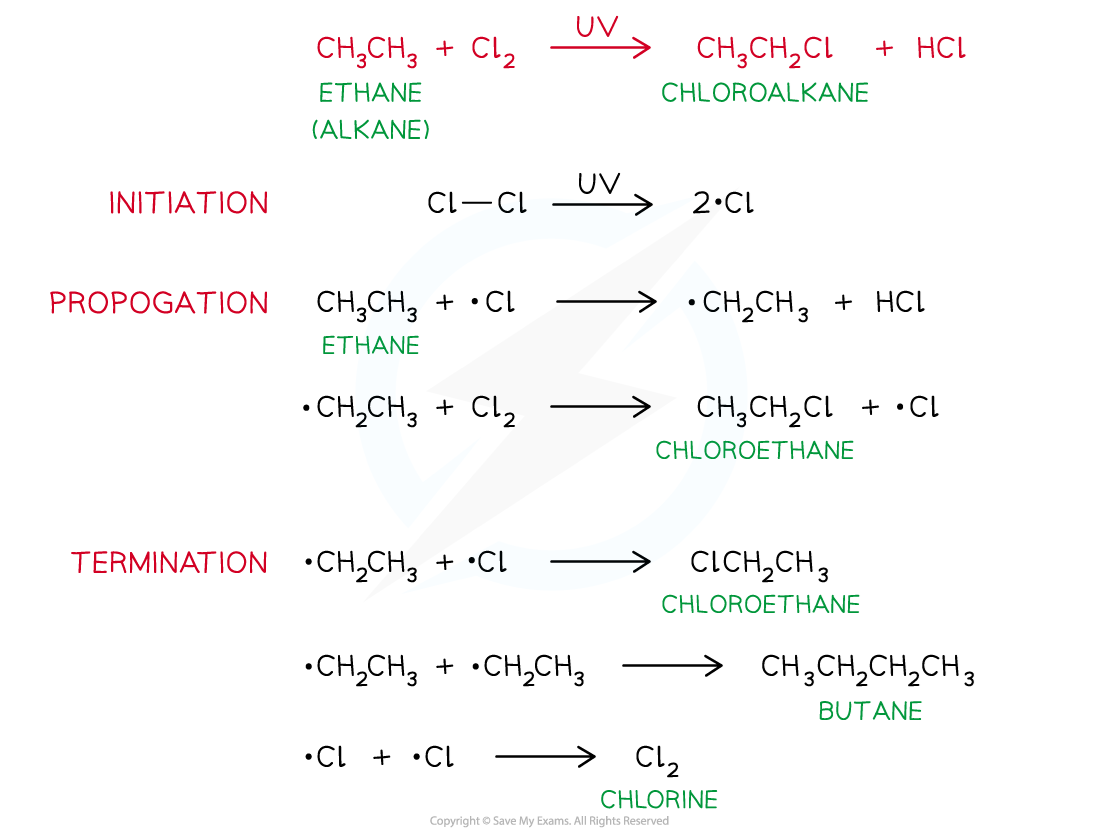
Free-radical substitution reactions of alkanes produce halogenoalkanes
Electrophilic addition
-
Halogenoalkanes can also be produced from the addition of hydrogen halides (HX) or halogens (X2) at room temperature to alkenes
-
In hydrogen halides, the hydrogen acts as the electrophile and accepts a pair of electrons from the C-C bond in the alkene
- The major product is the one in which the halide is bonded to the most substituted carbon atom (Markovnikov’s rule)
-
In the addition of halogens to alkenes, one of the halogen atoms acts as an electrophile and the other as a nucleophile
Electrophilic addition to alkenes
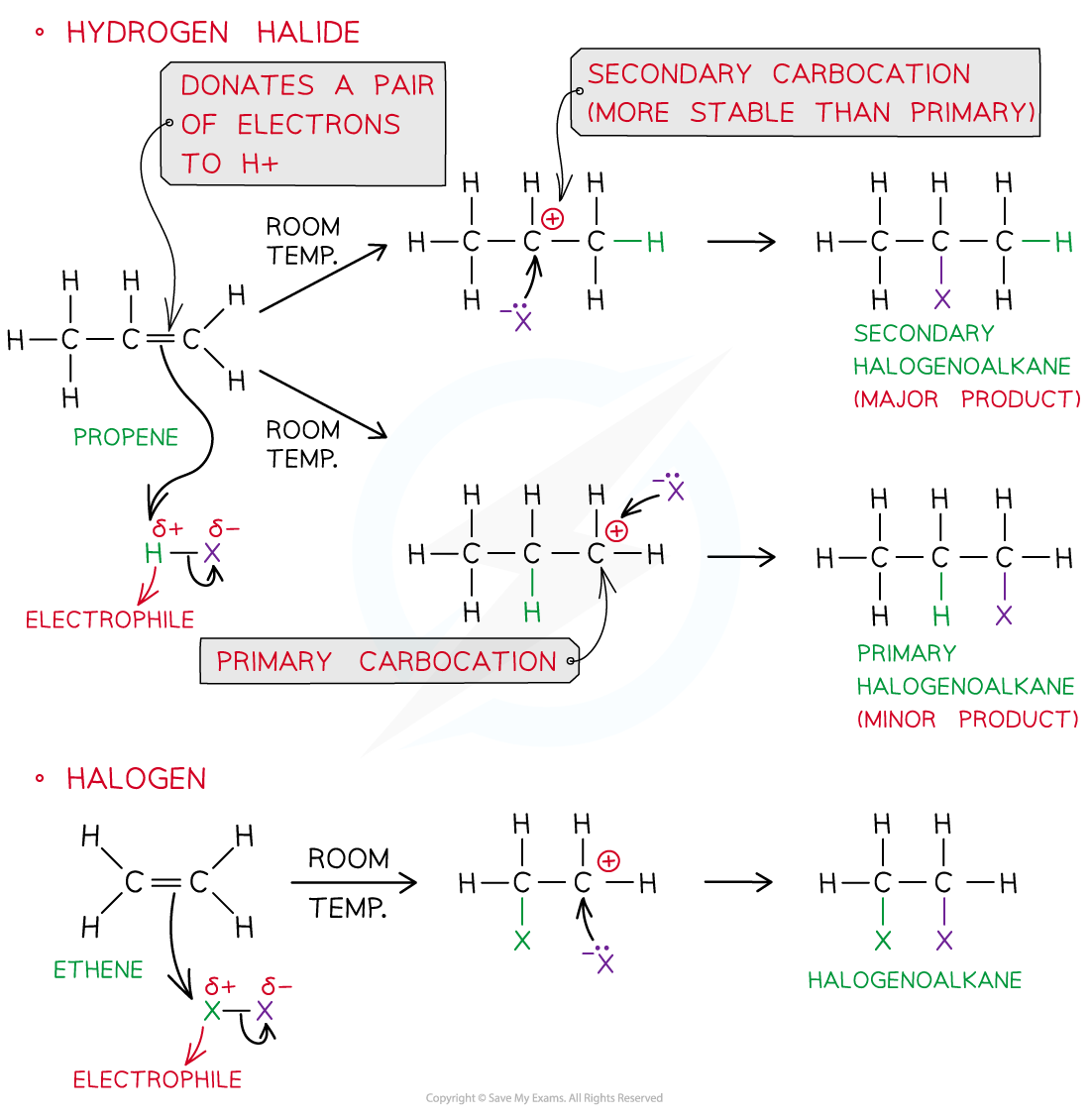
Electrophilic addition of hydrogen halides or hydrogen at room temperatures to alkenes results in the formation of halogenoalkanes
Substitution of alcohols
-
In the substitution of alcohols an alcohol group is replaced by a halogen to form a halogenoalkane
-
The substitution of the alcohol group for a halogen can be achieved by reacting the alcohol with:
- HX (or KBr with H2SO4 or H3PO4 to make HX)
- PCl3 and heat
- PCl5 at room temperature
- SOCl2
Substitution of alcohols
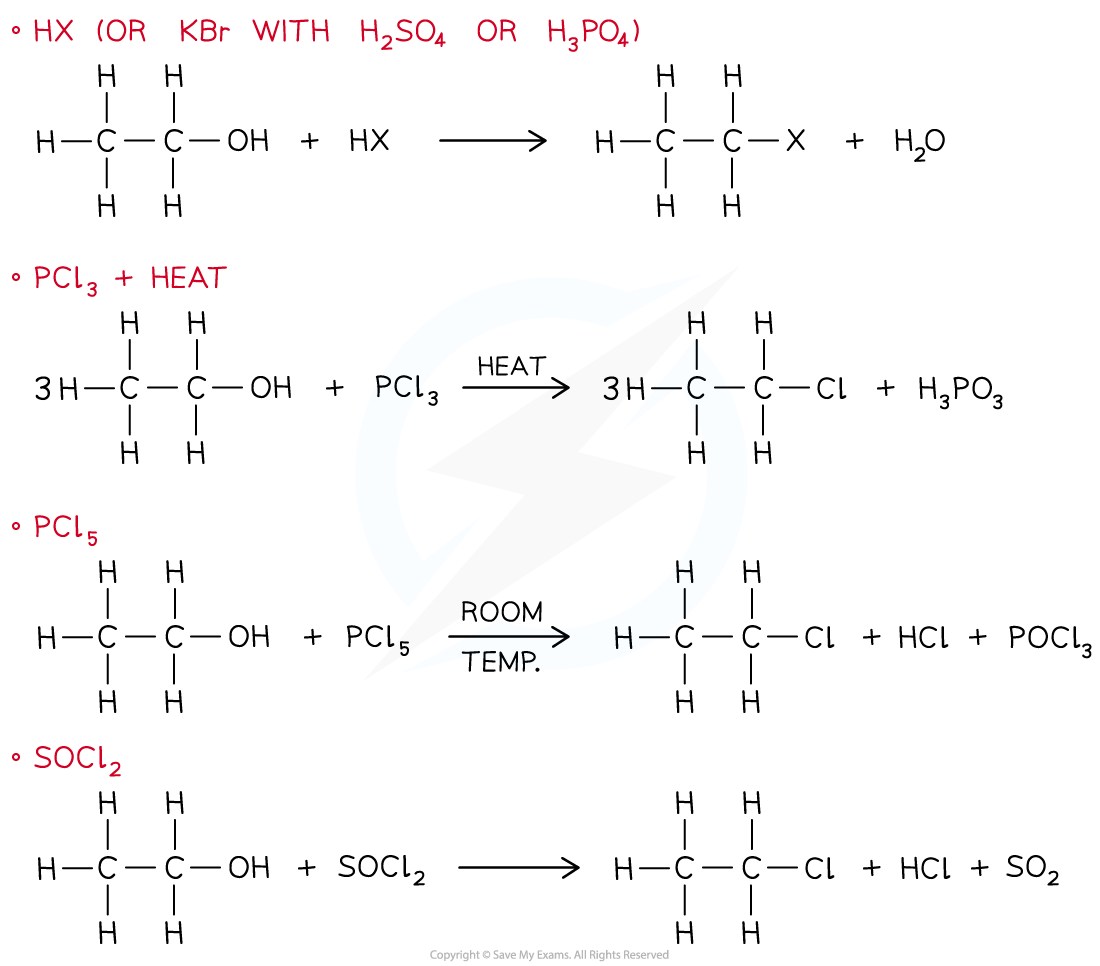
Substitution of alcohols produces halogenoalkanes
Different methods of forming halogenoalkanes
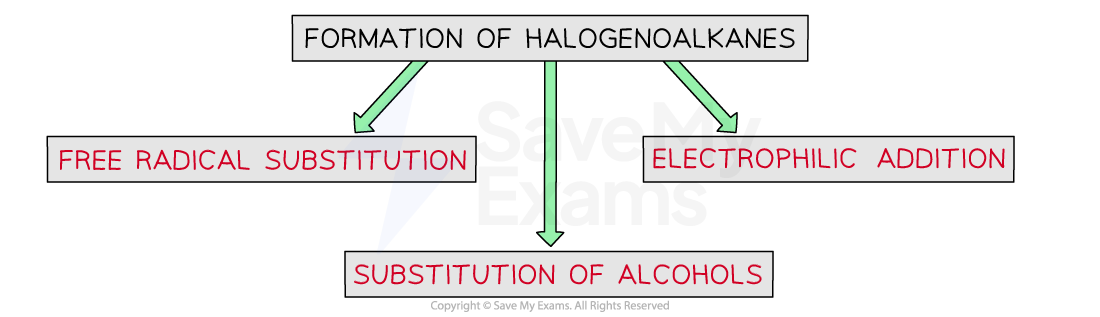
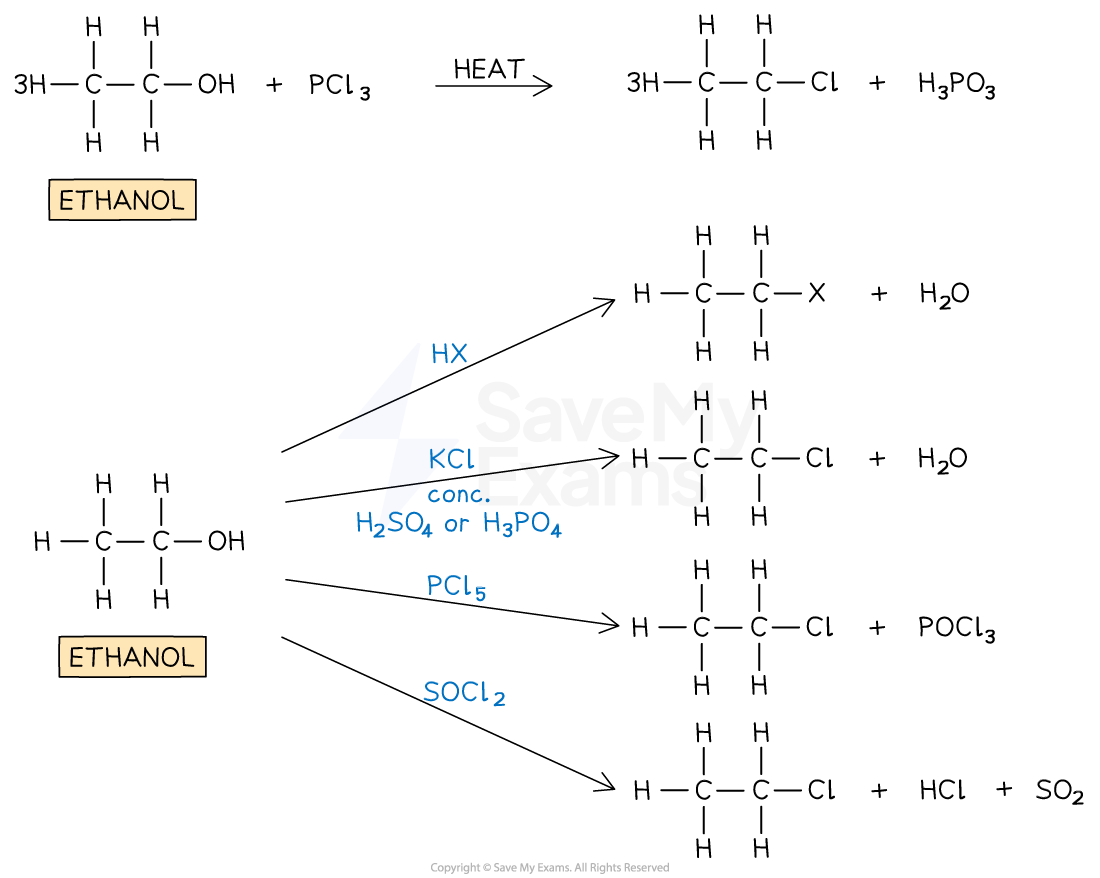
Overview of the different ways to produce halogenoalkanes
Classifying Halogenoalkanes
-
Depending on the carbon atom the halogen is attached to, halogenoalkanes can be classified as primary, secondary and tertiary
- A primary halogenoalkane is when a halogen is attached to a carbon that itself is attached to one other alkyl group
- A secondary halogenoalkane is when a halogen is attached to a carbon that itself is attached to two other alkyl groups
- A tertiary halogenoalkane is when a halogen is attached to a carbon that itself is attached to three other alkyl groups
Primary, secondary and tertiary halogenoalkanes
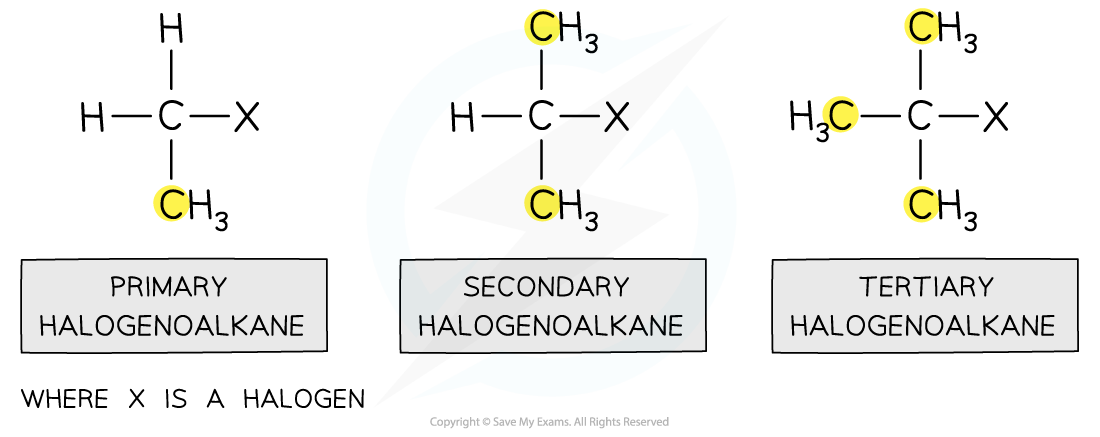
The number of alkyl groups attached determines if the halogenoalkane is primary, secondary or tertiary
Was this revision note helpful?
Build on this topic