Addition-Elimination Reactions of Acyl Chlorides (Cambridge International A-Level Chemistry)
Mechanism of Addition - Elimination in Acyl Chloride Reactions
-
Acyl chlorides undergo addition-elimination reactions such as hydrolysis, esterification reactions to form esters, and condensation reactions to form amides
-
The general mechanism of these addition-elimination reactions involves two steps:
- Step 1 - Addition of a nucleophile across the C=O bond
- Step 2 - Elimination of a small molecule such as HCl or H2O
Mechanism of hydrolysis of acyl chlorides
-
In the hydrolysis of acyl chlorides, the water molecule acts as a nucleophile
- The lone pair of the oxygen atom from water carries out an initial attack on the carbonyl carbon
- This is followed by the elimination of a hydrochloric acid (HCl) molecule
Reaction mechanism of the hydrolysis of acyl chlorides
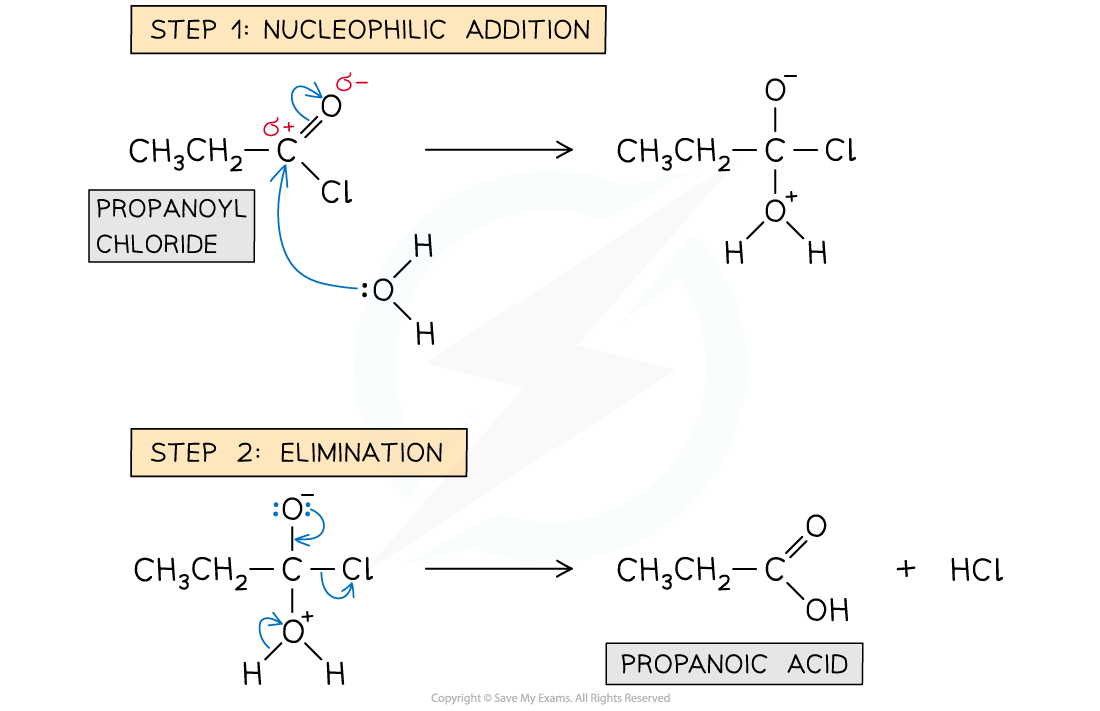
The two-step addition-elimination reaction mechanism of propanoyl chloride to form propanoic acid
Formation of esters: reaction mechanism
-
In the esterification reaction of acyl chlorides, the alcohols or phenols act as a nucleophile
- The lone pair of the alcohol / phenol oxygen atom carries out an initial attack on the carbonyl carbon
- This is again followed by the elimination of an HCl molecule
-
With phenols, the reaction requires heat to proceed and needs to be carried out in the presence of a base
-
The base deprotonates the phenol to form a phenoxide ion which is a better nucleophile than the phenol molecule
- The phenoxide ion carries out an initial attack on the carbonyl carbon
- A small molecule of NaCl is eliminated
Reaction mechanism of the esterification of acyl chlorides with alcohols
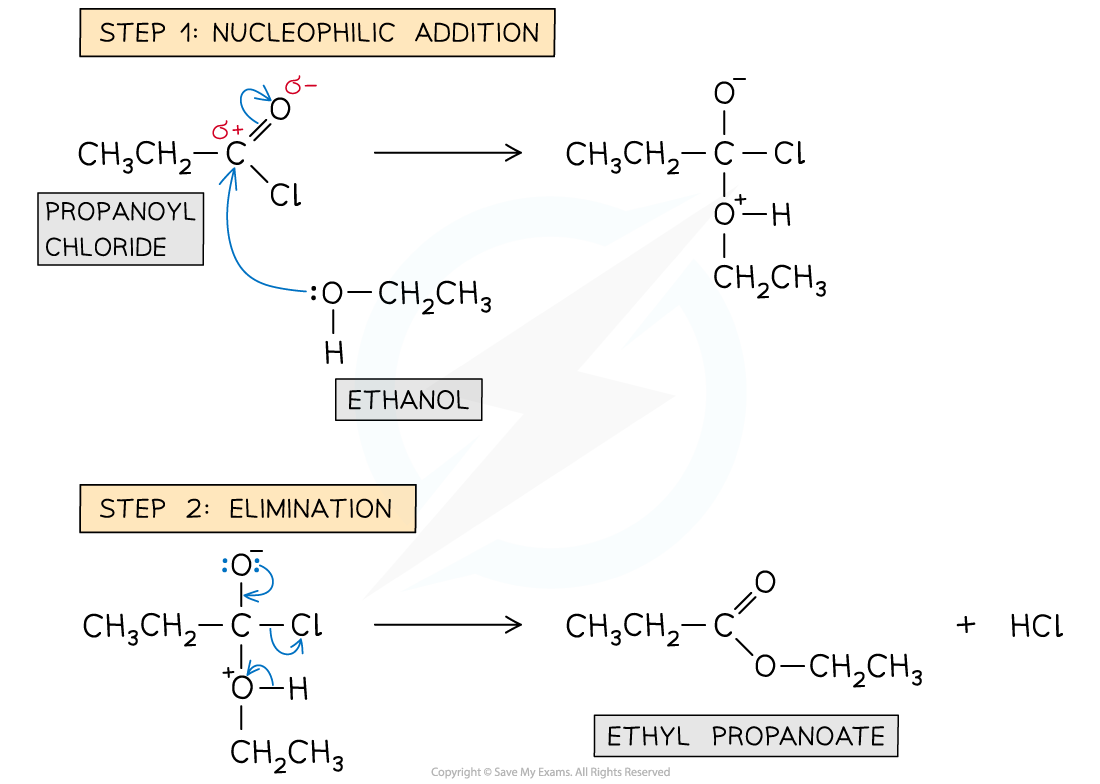
The two-step addition-elimination reaction mechanism of propanoyl chloride and ethanol to form ethyl propanoate and water
Reaction mechanism of the esterification of acyl chlorides with phenols
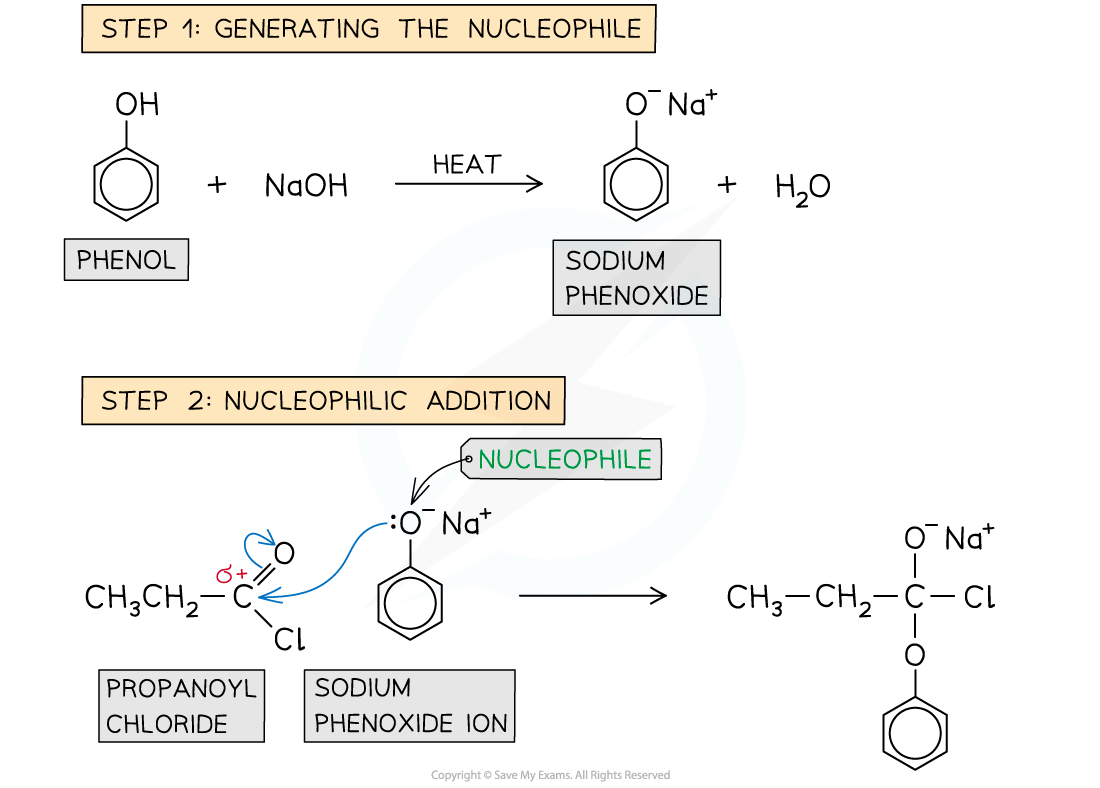
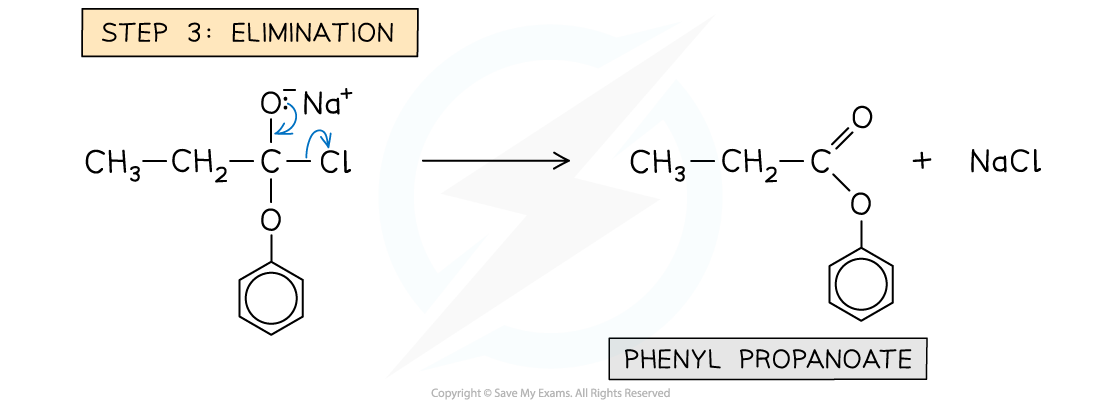
The three-step addition-elimination reaction mechanism of propanoyl chloride with phenol to form phenyl propanoate
Formation of amides: reaction mechanism
-
The nitrogen atom in ammonia and primary/secondary amines act as a nucleophile
- The lone pair of the nitrogen atom carries out an initial attack on the carbonyl carbon
- This is followed by the elimination of an HCl molecule
-
Both reactions of acyl chlorides with ammonia and amines are vigorous however there are also differences
- With ammonia - The product is a non-substituted amide and white fumes of HCl are formed
- With amines - The product is a substituted amide and the HCl formed reacts with the unreacted amine to form a white organic ammonium salt
Reaction mechanism of the formation of amides from acyl chlorides with ammonia
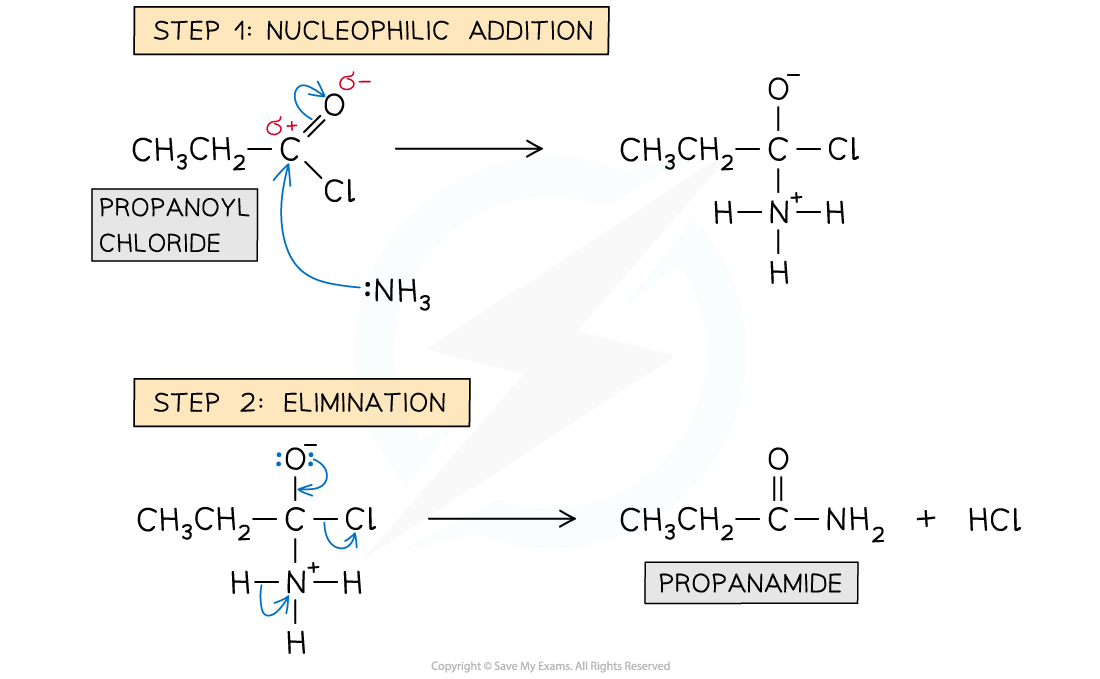
The two-step addition-elimination reaction mechanism of propanoyl chloride and ammonia to form propanamide
Reaction mechanism of the formation of amides from acyl chlorides with primary amines
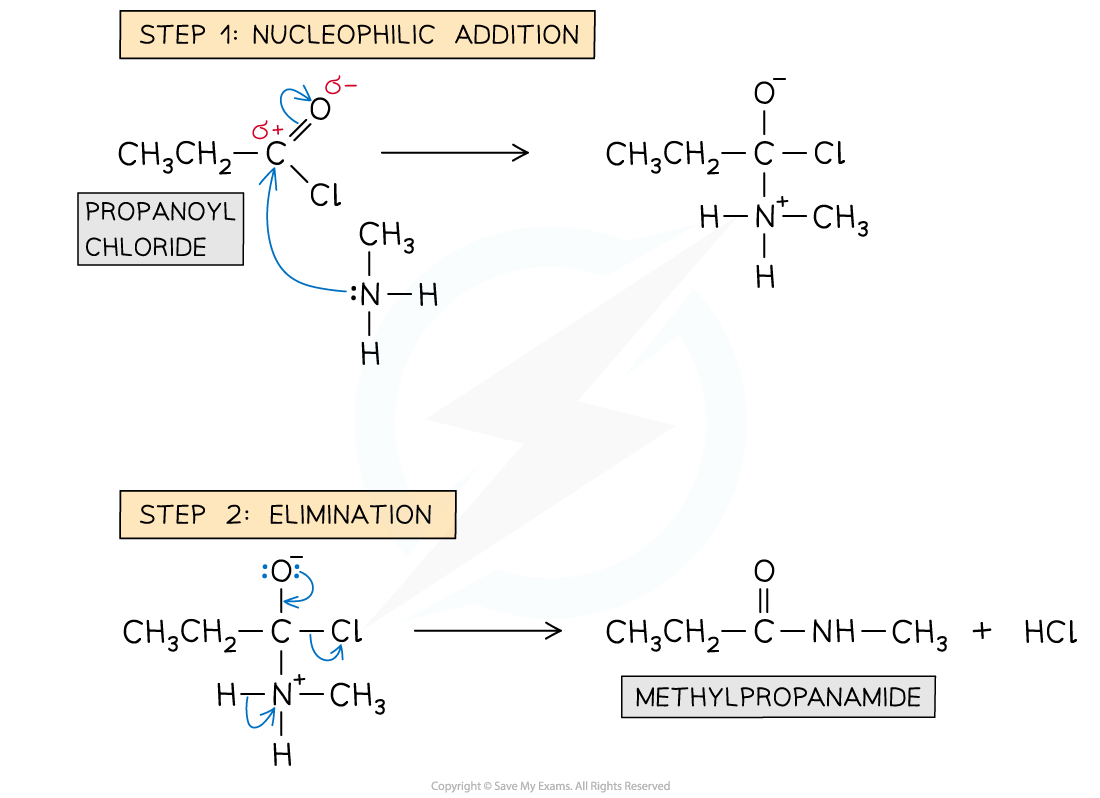
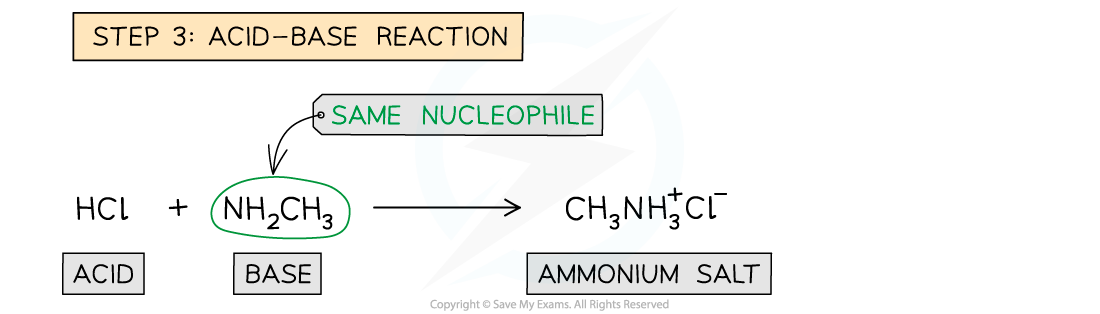
The addition-elimination reaction mechanism of propanoyl chloride and methylamine to form methylpropanamide
Reaction mechanism of the formation of amides from acyl chlorides with secondary amines
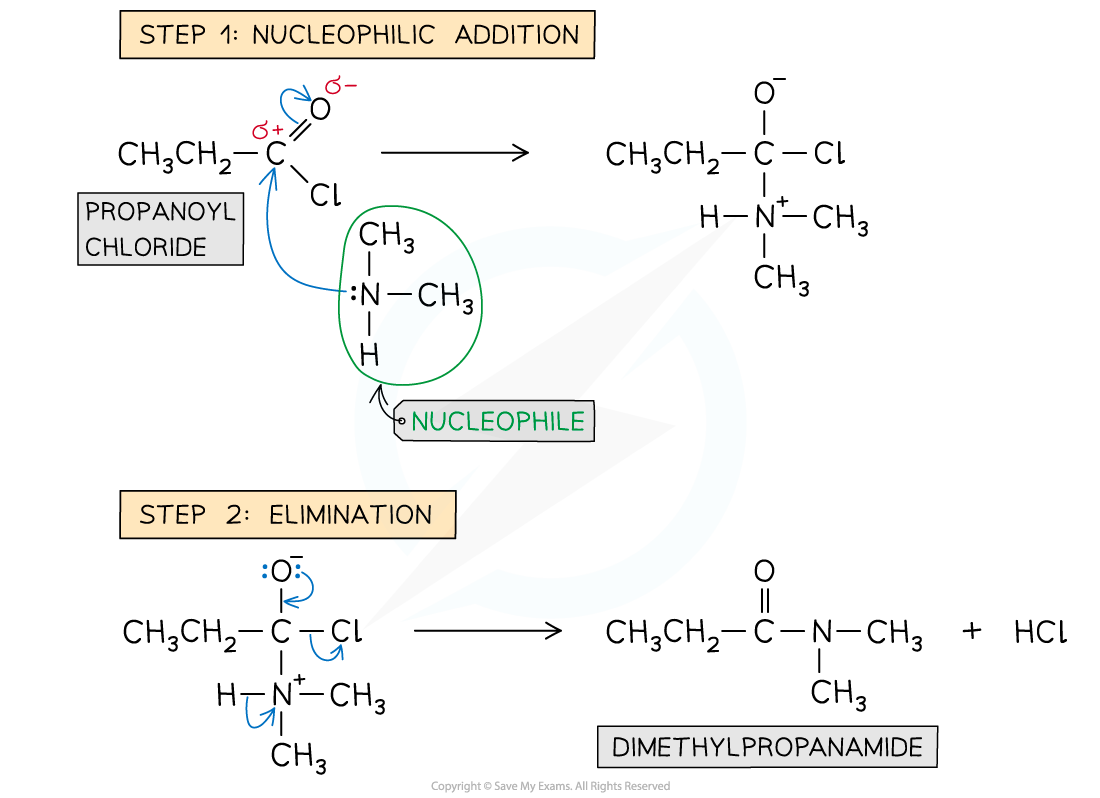
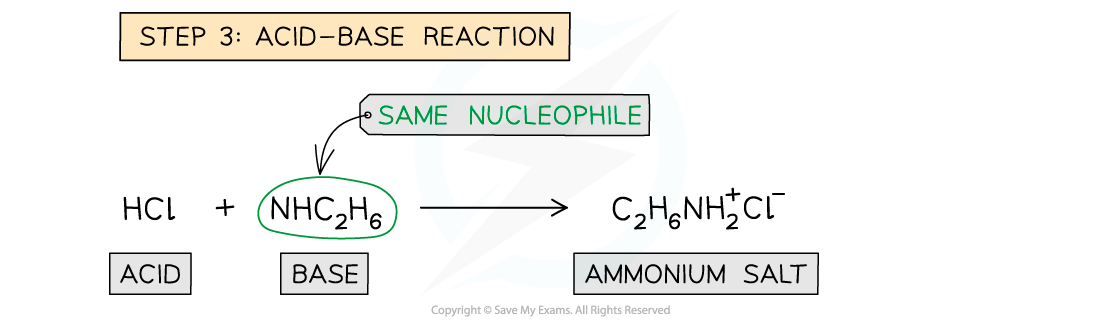
The addition-elimination reaction mechanism of propanoyl chloride and dimethylamine to form dimethylpropanamide
Was this revision note helpful?
Build on this topic