Electronic Structure (Cambridge International A-Level Chemistry)
Basic Electronic Structure
Shells
-
The arrangement of electrons in an atom is called the electronic configuration
-
Electrons are arranged around the nucleus in principal energy levels or principal quantum shells
-
Principal quantum numbers(n) are used to number the energy levels or quantum shells
- The lower the principal quantum number, the closer the shell is to the nucleus
- The higher the principal quantum number, the higher the energy of the shell
-
Each principal quantum number has a fixed number of electrons it can hold
- n = 1 : up to 2 electrons
- n = 2 : up to 8 electrons
- n = 3 : up to 18 electrons
- n = 4 : up to 32 electrons
Principal quantum shells
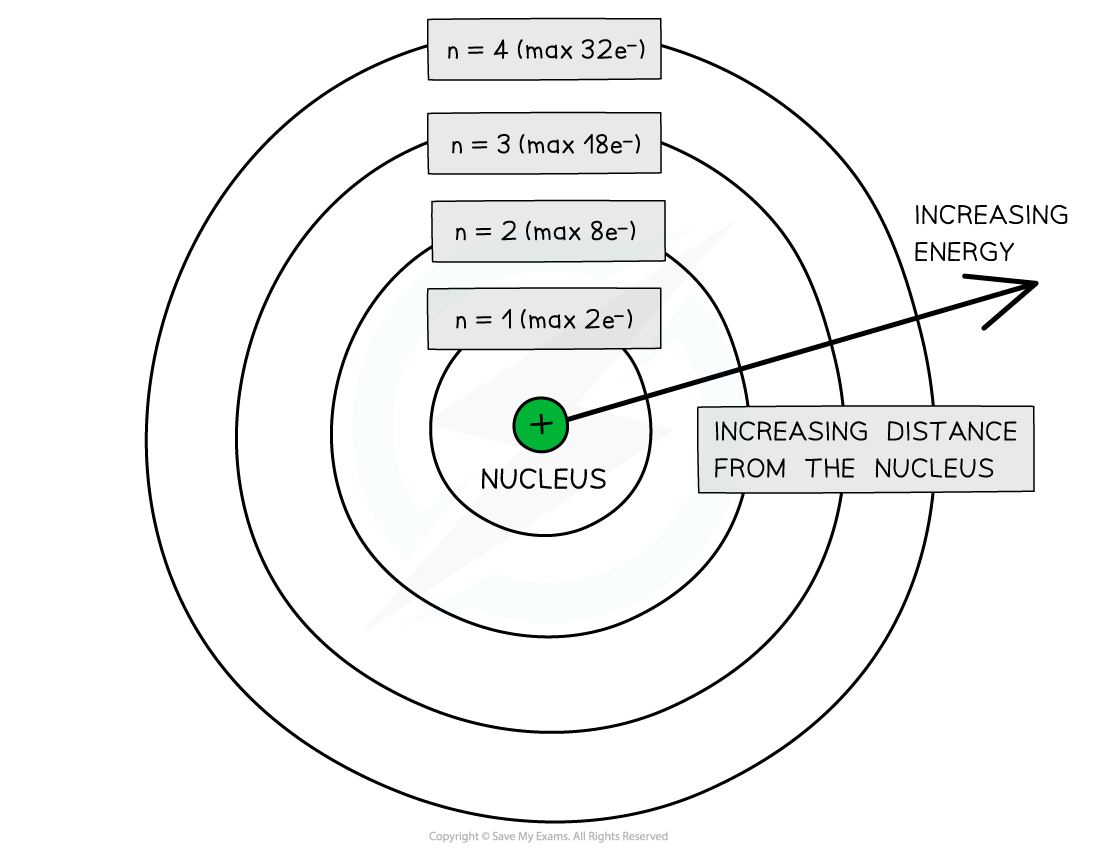
Electrons are arranged in principal quantum shells, which are numbered by principal quantum numbers
Sub-shells
-
The principal quantum shells are split into sub-shells which are given the letters s, p and d
- Elements with more than 57 electrons also have an f shell
- The energy of the electrons in the sub-shells increases in the order s < p < d
-
The order of sub-shells appear to overlap for the higher principal quantum shells as seen in the diagram below:
Energy levels of the quantum shells
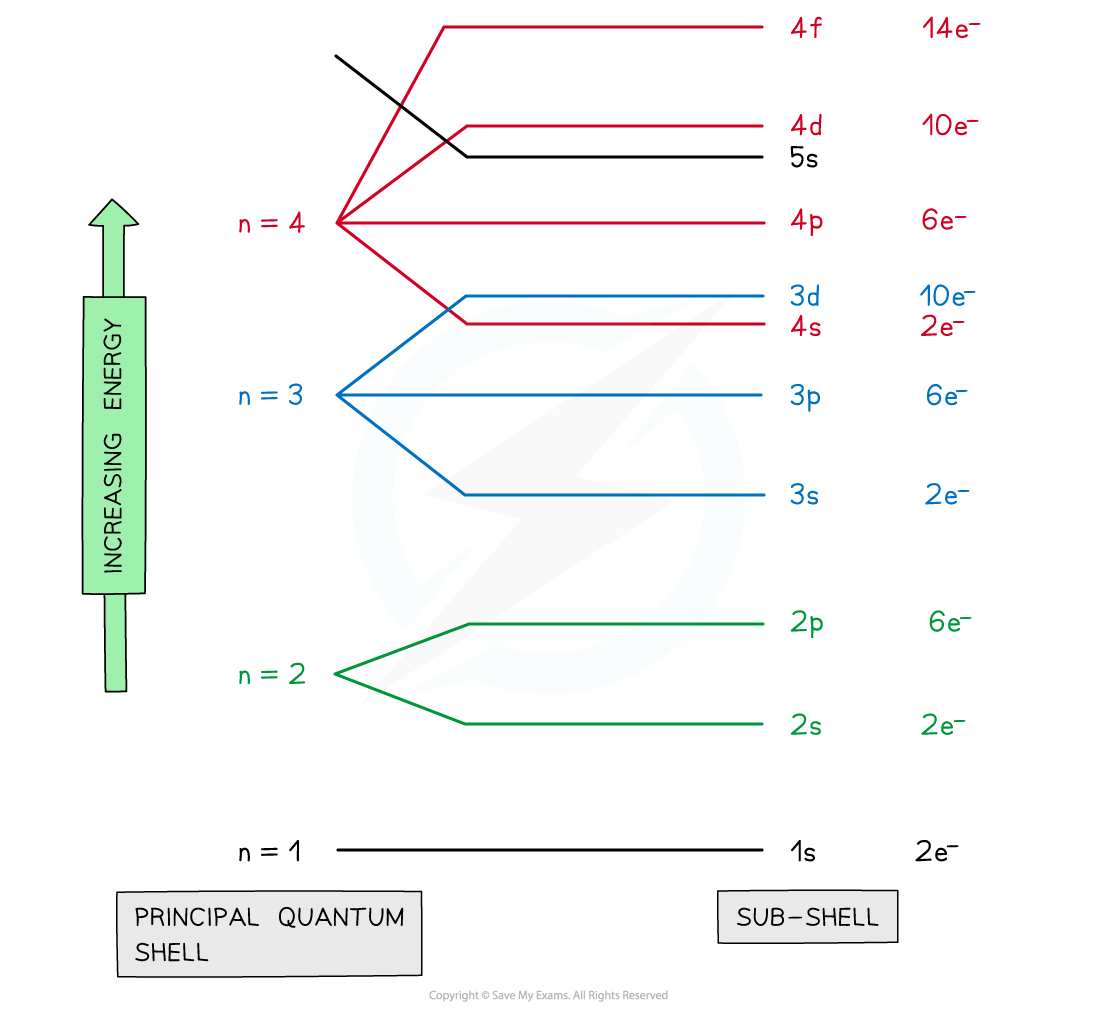
At principal quantum shell n = 3, the energy levels of the sub-shells start to overlap
Orbitals
-
Sub-shells contain one or more atomic orbitals
-
Orbitals exist at specific energy levels and electrons can only be found at these specific levels, not in between them
- Each atomic orbital can be occupied by a maximum of two electrons
-
This means that the number of orbitals in each sub-shell is as follows:
- s : one orbital (1 x 2 = total of 2 electrons)
- p : three orbitals ( 3 x 2 = total of 6 electrons)
- d : five orbitals (5 x 2 = total of 10 electrons)
- f : seven orbitals (7 x 2 = total of 14 electrons)
-
The orbitals have specific 3-D shapes
Shapes of the electron orbitals
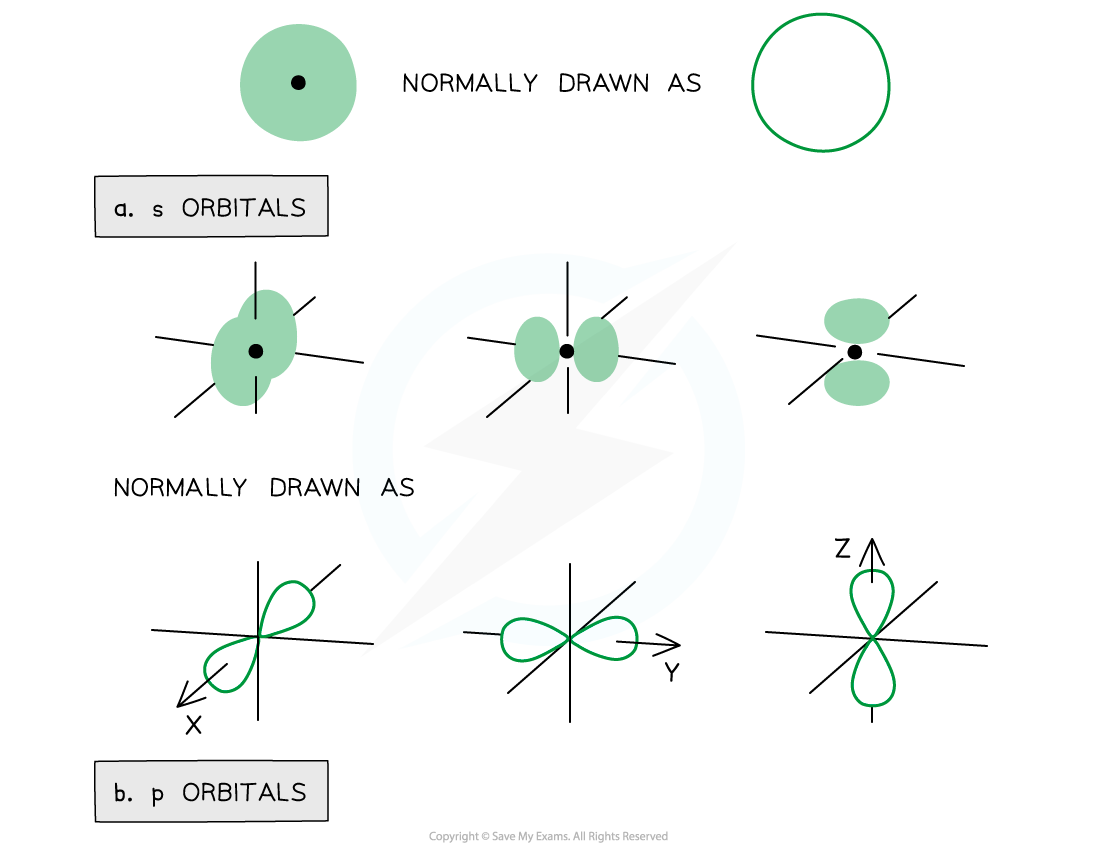
Representation of orbitals (the dot represents the nucleus of the atom) showing (a) spherical s orbitals and (b) p orbitals containing ‘lobes’ along the x, y and z axis
Exam Hint Note that the shape of the d orbitals is not required at AS Level
An overview of the shells, sub-shells and orbitals in an atom
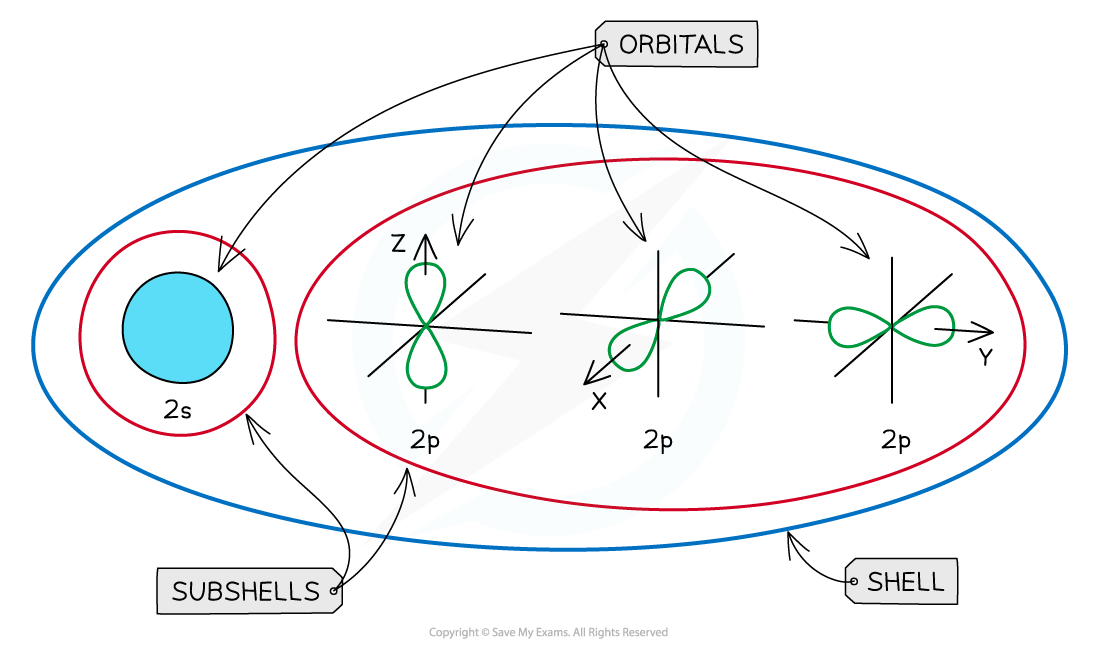
s and p orbitals have different shapes
Ground state
- The ground state is the most stable electronic configuration of an atom which has the lowest amount of energy
- This is achieved by filling the sub-shells with the lowest energy first (1s)
- The order of the sub-shells in terms of increasing energy does not follow a regular pattern at n = 3 and higher
Summary of filling sub-shells
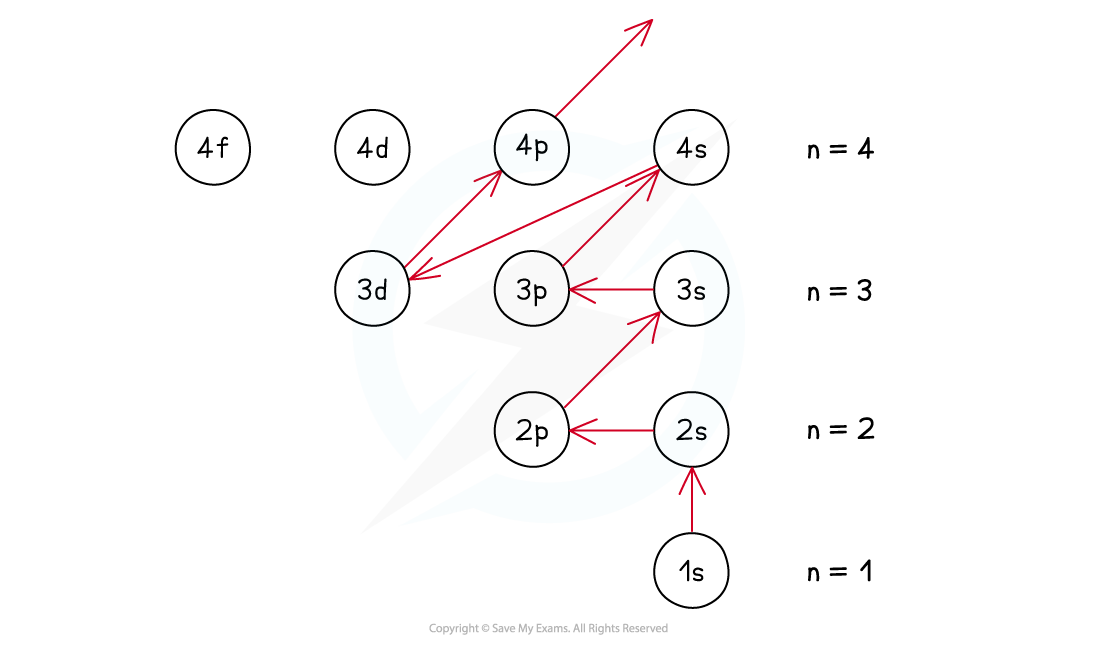
The ground state of an atom is achieved by filling the lowest energy sub-shells first
Was this revision note helpful?
Build on this topic