Gas Pressure (Cambridge International A-Level Chemistry)
Gas Pressure
- Gases in a container exert a pressure as the gas molecules are constantly colliding with the wall of the container
Illustration of gas pressure
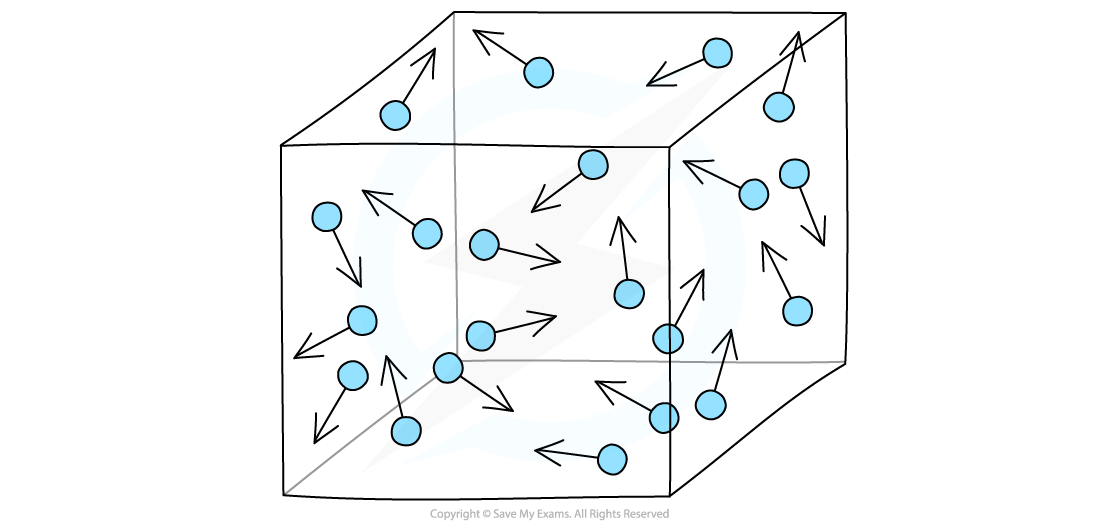
Gas particles exert a pressure by constantly colliding with the walls of the container
Changing gas volume
-
Decreasing the volume(at constant temperature) of the container causes the molecules to be squashed together which results in more frequent collisions with the container wall
-
The pressure of the gas increases
-
The volume is therefore inversely proportional to the pressure(at constant temperature)
- A graph of the volume of gas plotted against 1/pressure gives a straight line
How decreasing the volume of a gas affects collision frequency
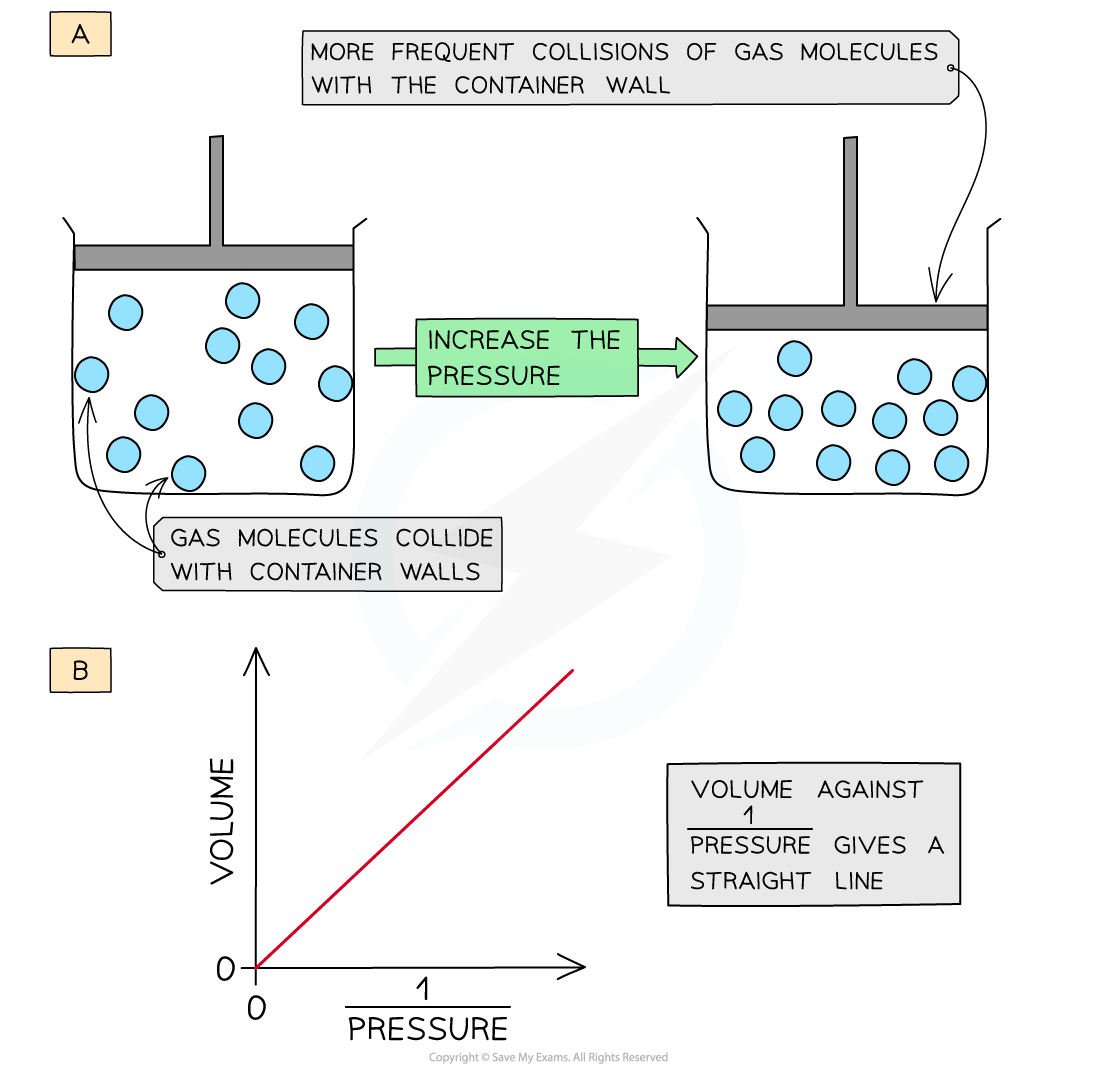
Decreasing the volume of a gas causes an increased collision frequency of the gas particles with the container wall (a); volume is inversely proportional to the pressure (b)
Changing gas temperature
-
Increasing the temperature(at constant volume) of the gas causes the molecules to gain more kinetic energy
-
This means that the particles will move faster and collide with the container walls more frequently
-
The pressure of the gas increases
-
The temperature is therefore directly proportional to the pressure(at constant volume)
- A graph of the temperature of gas plotted against pressure gives a straight line
How increasing the temperature of a gas affects collision frequency
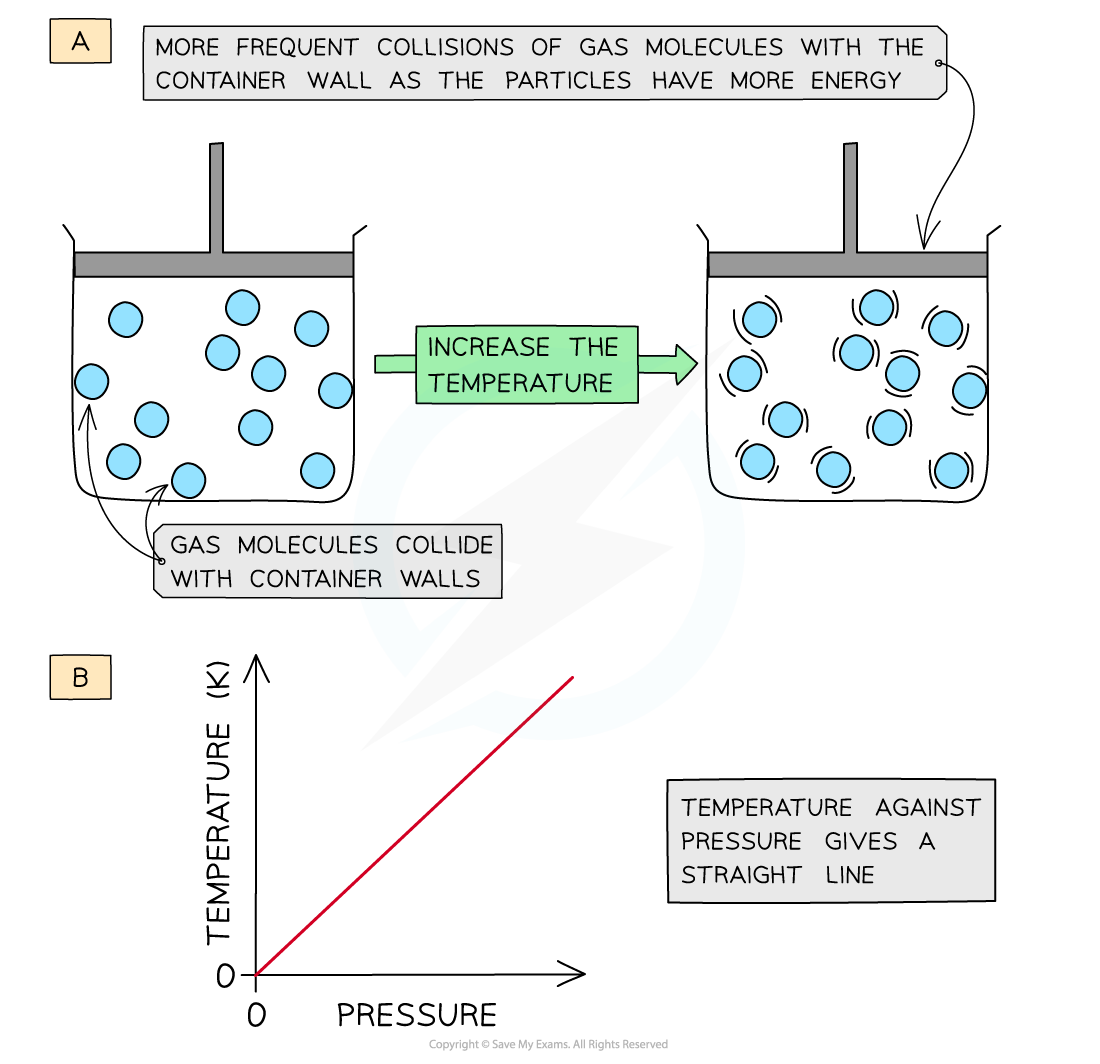
Increasing the temperature of a gas causes an increased collision frequency of the gas particles with the container wall (a); temperature is directly proportional to the pressure (b)
Was this revision note helpful?
Build on this topic