Recruitment (Cambridge International A-Level Business)
The recruitment process
Spec point — The recruitment process
-
Recruitment is the process of attracting and identifying potential job candidates who are suitable for a particular role
- Recruitment activities include job advertising, job fairs, social media outreach, and referrals from current employees
-
Selection is the process of choosing the best candidate
- Selection activities often involve reviewing CVs and conducting interviews or assessment tasks
The recruitment and selection process
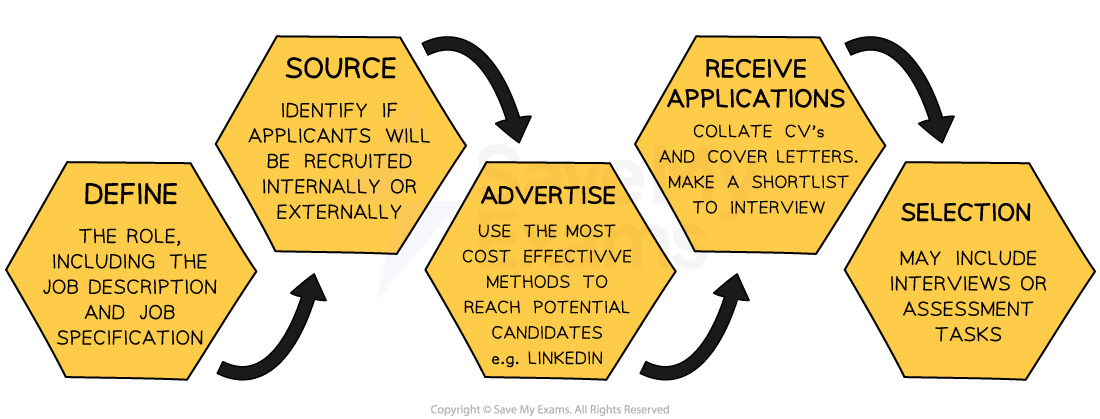
The recruitment and selection process involves defining, sourcing, advertising roles and selecting a suitable candidate
- Define the role
-
This involves determining exactly what is required in a job and of suitable candidates
- A **job specification **outlines the qualifications, skills, experience and personal qualities required from a candidate for a specific job, e.g. problem-solving, good communication, able to code in Java
- A** job description** outlines the duties, responsibilities and requirements of a particular job
- Determine the best source of candidates
-
This involves deciding whether to advertise the role internally, externally or using a combination of both
-
Internal recruitment is the process of hiring employees from within the organisation
- Internal recruitment can be beneficial as it encourages employee development, builds morale and can save time and money on training
-
External recruitment is the process of hiring employees from outside the organisation
- External recruitment can bring fresh ideas, experiences and perspectives to the organisation
-
- Advertise
- Businesses with a strong social media presence can use platforms such as Facebook, LinkedIn or TikTok to advertise cost-effectively
- Adverts can be placed on specialist recruitment portals, such as the Times Educational Supplement (TES), one of the main publications used to recruit teachers
- Receive applications
-
This stage involves collecting information from potential candidates
-
Someone within the business manages this application process
-
A shortlist of candidates from the many applications received is drawn up
- The shortlist contains candidates whose applications closely match the job description and job specification
-
A selection of candidates on the shortlist are invited to interview *or take part in the next round of selection activities
-
- The selection process
- This process varies significantly between organisations
- Common methods of selection include interviews, testing and presentations
Internal and external recruitment
-
Internal recruitment is the process of hiring employees from within the organisation
- It can involve the promotion or redeployment *of staff to fill a vacant post
- Vacancies are advertised internally on staff notice boards, in newsletters or via in-house electronic communications
Evaluating internal recruitment
| Advantages | Disadvantages |
|---|---|
| - Internal candidates are already familiar with business culture and processes - Can adapt to the role quickly - Little need for induction training - Business has a good understanding of the candidate's strengths, weaknesses, skills and aptitudes - Opportunities to progress can be motivating for existing employees - Cheaper and quicker **to promote or redeploy existing staff rather than recruit externally | - Can lead to** conflict or resentment - May affect motivation and working relationships between successful and rejected internal candidates - A further vacancy is created when an employee is promoted/redeployed - A limited number of suitable applicants may be available internally - Missed opportunity to inject new ideas, experience or skills into the business |
-
External recruitment is the process of hiring employees from outside the organisation
- External recruitment can bring fresh ideas, experiences and perspectives to the organisation
- However, it is often more expensive than internal recruitment
- There is also a greater degree of uncertainty as external candidates are unknown to the business
Recruitment methods
- Recruiting the right employees is crucial for any business aiming to achieve its objectives effectively
- Recruitment methods include traditional newspaper advertisements to modern online platforms, as well as specialist recruitment agencies
1. Job advertisements
- Publishing job openings through newspapers, magazines or noticeboards
| Advantages | Disadvantages |
|---|---|
| - Many potential applicants - Can target specific audiences (local, regional, or national) - Relatively low cost | - May attract a high volume of unsuitable applicants - Time-consuming to sort through many responses - Limited engagement compared to interactive methods |
2. Employment agencies
- External firms specialising in recruiting staff for other businesses
| Advantages | Disadvantages |
|---|---|
| - Expertise in matching candidates to roles - Saves time and resources in the recruitment process - Useful for filling specialist or senior positions | - Can be expensive due to agency fees - Limited control over the initial selection process - Potential mismatch if the agency lacks understanding of business needs |
3. Online recruitment
- Advertising job openings on the internet via company websites or recruitment platforms
| Advantages | Disadvantages |
|---|---|
| - Cost-effective and fast distribution - Access to a large and diverse applicant pool of applicants - Easy to manage applications electronically | - Risk of receiving large numbers of irrelevant applications - Might exclude applicants with limited internet access - Potential security and privacy concerns over online data handling |
Was this revision note helpful?