The Gas Laws (Cambridge International IGCSE Science)
The gas laws
Extended Tier Only
Pressure & volume (constant temperature)
-
If the temperature of a gas remains constant, the pressure of the gas changes when it is:
- Compressed – decreases the volume which increases the pressure
- Expanded – increases the volume which decreases the pressure
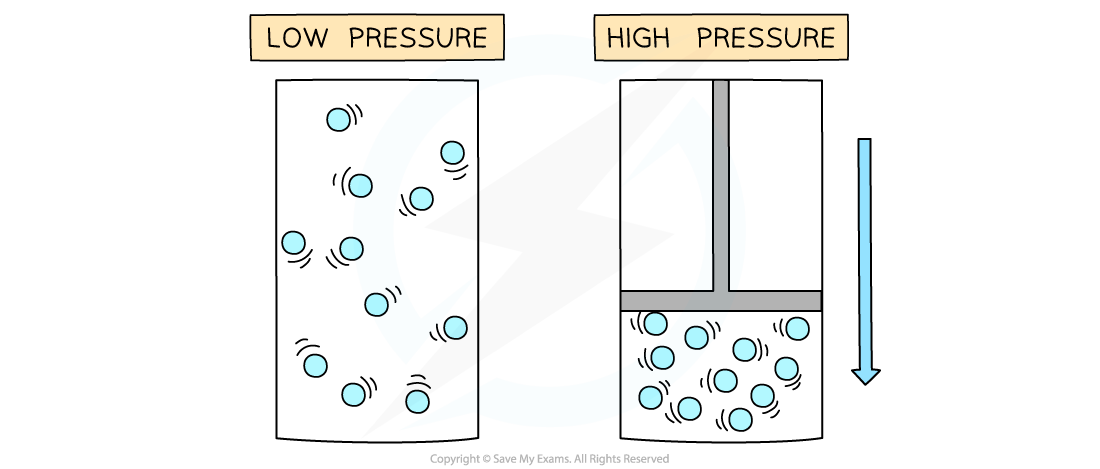
At constant temperature, changing the volume changes the pressure
- Similarly, a change in pressure can cause a change in volume
- A vacuum pump can be used to remove the air from a sealed container
- The diagram below shows the change in volume to a tied up balloon when the pressure of the air around it decreases:
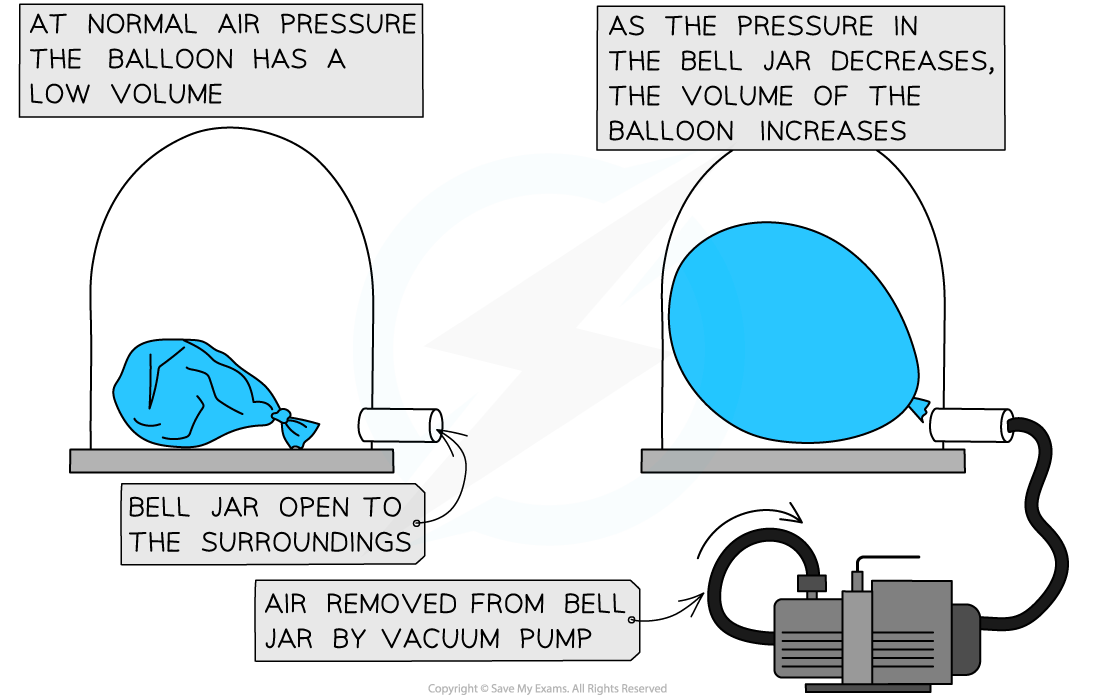
At constant temperature, changing the pressure changes the volume
-
When a gas is compressed, the molecules will hit the walls of the container more frequently
- This creates a larger overall net force on the walls which increases the pressure
Pressure & temperature (constant volume)
-
Increasing temperature increases the pressure of a gas which is kept at a constant volume
-
The average speed of molecules increases when the temperature increases (and vice versa)
-
As the gas heats up, the molecules will travel at a higher speed
- They collide with the walls more often and with greater force, increasing the pressure
-
Therefore, at a constant volume, an increase in temperature increases the pressure of a gas and vice versa
- Diagram A shows molecules in the same volume collide with the walls of the container more as the temperature increases
- Diagram B shows that since the temperature is directly proportional to the pressure (at constant volume), the graph is a straight line
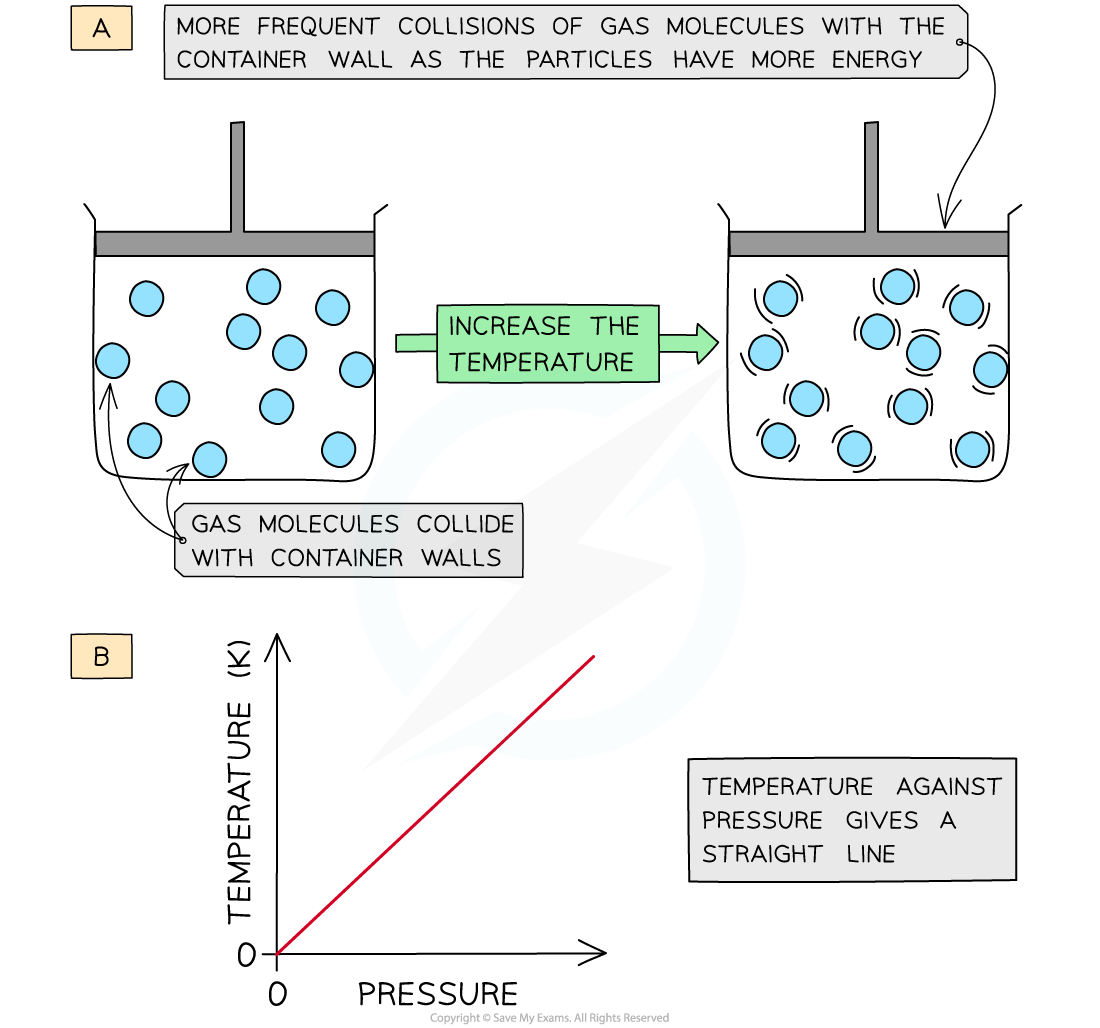
At constant volume, an increase in the temperature of the gas increases the pressure due to more collisions on the container walls
Was this revision note helpful?
Build on this topic