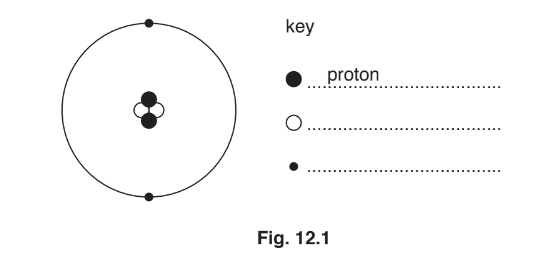
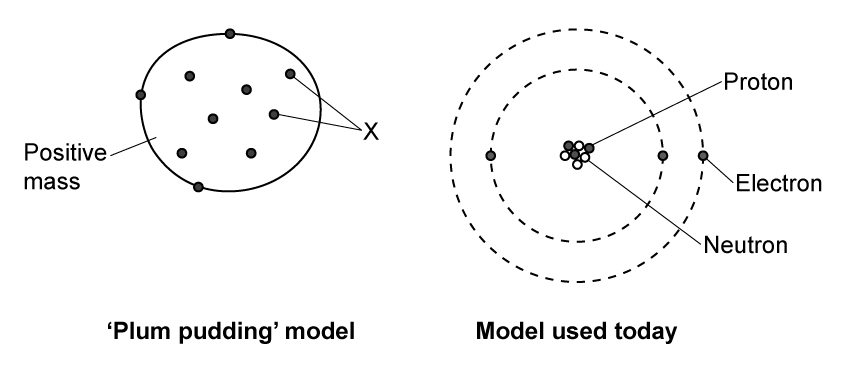
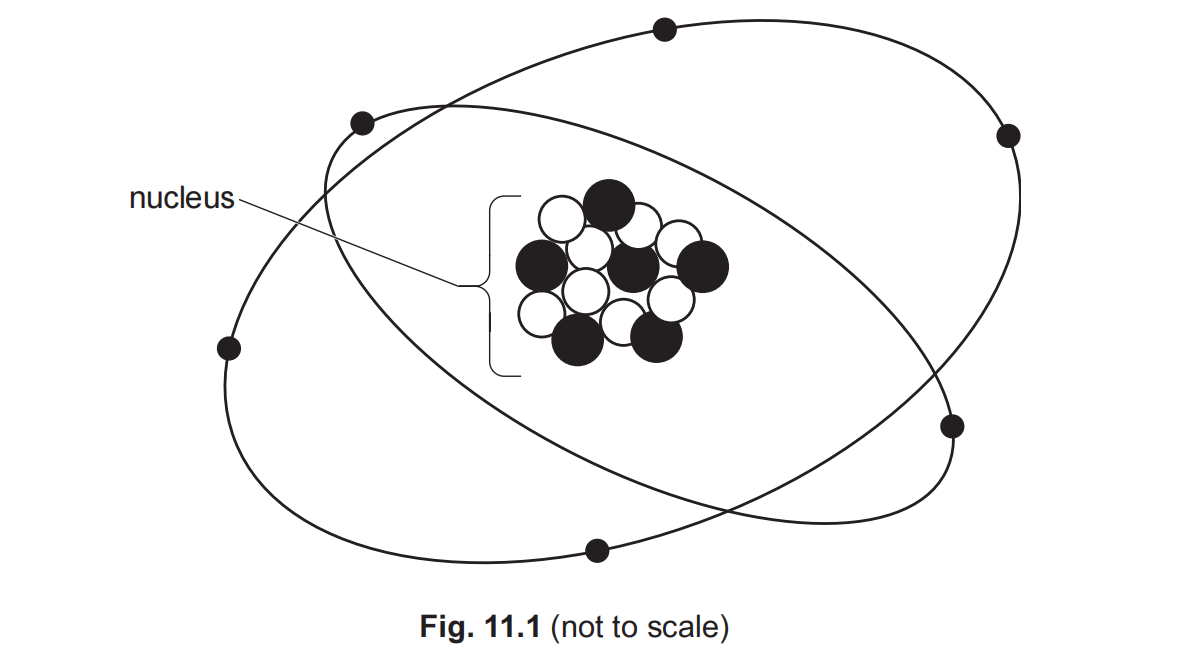
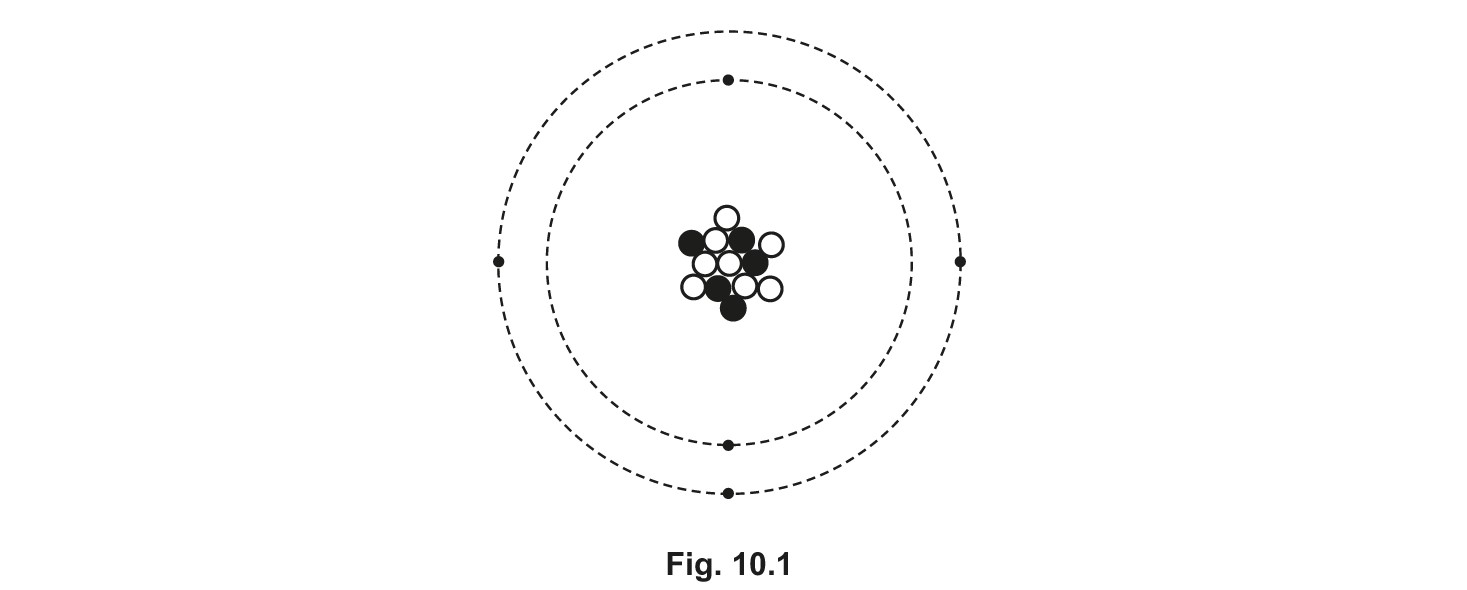
State the term used to describe nuclides which have the same number of protons but different numbers of neutrons.
Table 1.1 describes four nuclides. The nuclide notation for lead-206 is missing.
| name of nuclide | radium-222 | radon-222 | lead-216 | lead-206 |
|---|---|---|---|---|
| nuclide notation |
Table 1.1
(i) State which two nuclides have the same number of protons.
(1 mark)
(ii) Complete the table by filling in the nuclide notation for lead-206.
(1 mark)
Extract:
| name of nuclide | radium-222 | radon-222 | lead-216 | lead-206 | | nuclide notation | Ra 88 222 | Rn 86 222 | Pb 82 216 | Pb 82 206 |
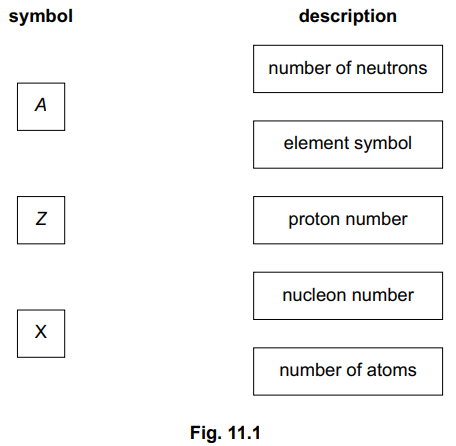
- Number of protons = bottom number
- Number of nucleons = top number
- Number of neutrons = nucleon number − atomic number A neutral atom is one with the same number of protons and electrons (so the overall charge is 0). The nuclide notation above does not show the number of electrons directly, but remember, that for a neutral atom this is just the same as the number of protons!
Using the information from Table 1.1
(i) State which two nuclides have the same number of nucleons.
(1 mark)
(ii) State which two nuclides have the same number of neutrons.
(1 mark)
(iii) State which one of the four nuclides has the most electrons orbiting when it is in a neutral atom.
(1 mark)