Competitive Markets (Cambridge International IGCSE Economics)
An introduction to competitive and monopoly markets
Spec point — An introduction to competitive and monopoly markets
-
Each firm operates in a specific market
-
The conditions in different markets can vary significantly and are determined by the market structure in which the firm operates
- Competitive markets are those with an extremely high degree of competition
- A monopoly is a market structure in which one firm dominates the market and has significant market power
Characteristics that determine if a firm is in a competitive or monopoly market
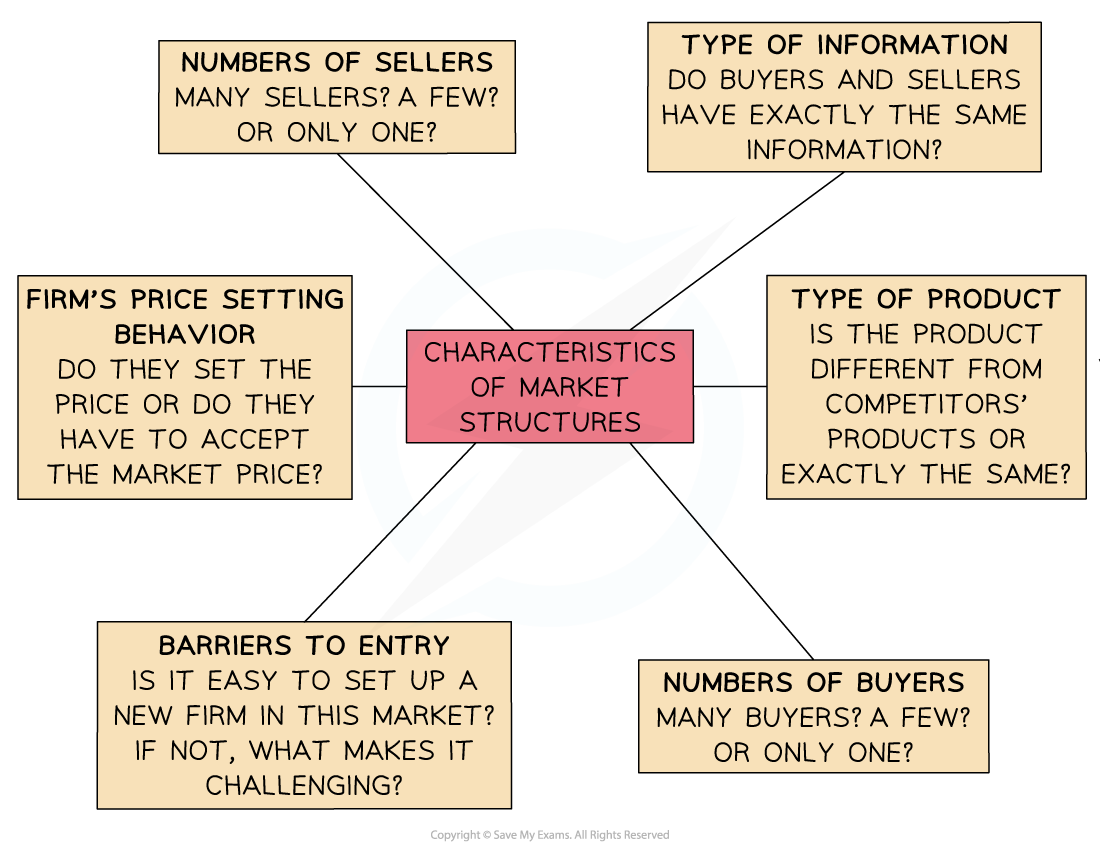
The six characteristics which determine the type of market structure a firm operates in - competitive or monopoly
-
The answers to the questions above determine the type of market structure in which a firm is operating in
- If a firm is selling a unique product (e.g. handmade car) it is likely operating in a monopoly market and setting high prices
Exam Hint There are a range of market structures; however, your syllabus only requires you to know the characteristics of two – competitive markets and monopolies
Characteristics of competitive markets
Spec point — Advantages and disadvantages of competitive markets; The effects of competitive markets on price, quality, choice and profit
- A competitive market is a market structure where a large number of buyers and sellers trade similar or identical products, and no single buyer or seller can influence the market price
1. Many buyers and sellers
-
There are many sellers, as it is easy to set up businesses in a competitive market structure
- Often, low capital or specialist knowledge is required
-
There are many buyers; competitive markets often sell mass-produced goods such as t-shirts
2. No barriers to entry and exit from the industry
- Barriers to entry are conditions that make it difficult or expensive for a firm to enter a market to compete with the existing suppliers, e.g., high start-up costs
- Firms can start-up or leave the industry with relative ease, which increases the level of competition
3. Buyers and sellers possess perfect knowledge of prices
- This assumption presupposes perfect information, e.g., if one seller lowers their price then all buyers will know about it
4. The products are homogenous
-
Homogeneous products mean that products sold by competing firms are identical and indistinguishable from each other
- This means firms are unable to build brand loyalty, as perfect substitutes exist and any price changes will result in losing customers
5. Price takers
- Individual firms cannot influence market price; they must accept the market price set by demand and supply forces
Advantages and disadvantages of competitive markets
| Advantages | Disadvantages |
|---|---|
| - Lower prices for consumers due to high competition - Better quality as firms innovate to attract customers - Greater efficiency: firms must minimise costs to survive - Wider choice for consumers as firms differentiate through service or extra features | - Lower profit margins for firms may limit investment in research and development - Risk of short-termism: firms may focus on survival rather than long-term growth - Duplication of resources: many firms producing similar products can lead to waste - Market instability: prices can fluctuate with changes in demand and supply |
Effect of a high number of firms
- Price: More competition drives prices down towards the cost of production
- Quality: Firms must improve quality or service to stand out
- Choice: Consumers benefit from a wide range of suppliers and product variations
- Profit: Individual firm profits are likely to be lower, especially in the long run, as competition erodes abnormal profits
Was this revision note helpful?
Build on this topic