Air (Cambridge International IGCSE Chemistry)
The composition of air
Spec point —
10.2.1· State the composition of clean, dry air as approximately 78% nitrogen, N2 , 21% oxygen, O2 and the remainder as a mixture of noble gases and carbon dioxide, CO2
-
The composition of gases in the atmosphere has not changed much in 200 million years
-
The composition of clean, dry air is approximately:
- 78% nitrogen
- 21% oxygen
- The remaining gases include carbon dioxide and trace quantities of the noble gases
Pie chart of the current atmosphere
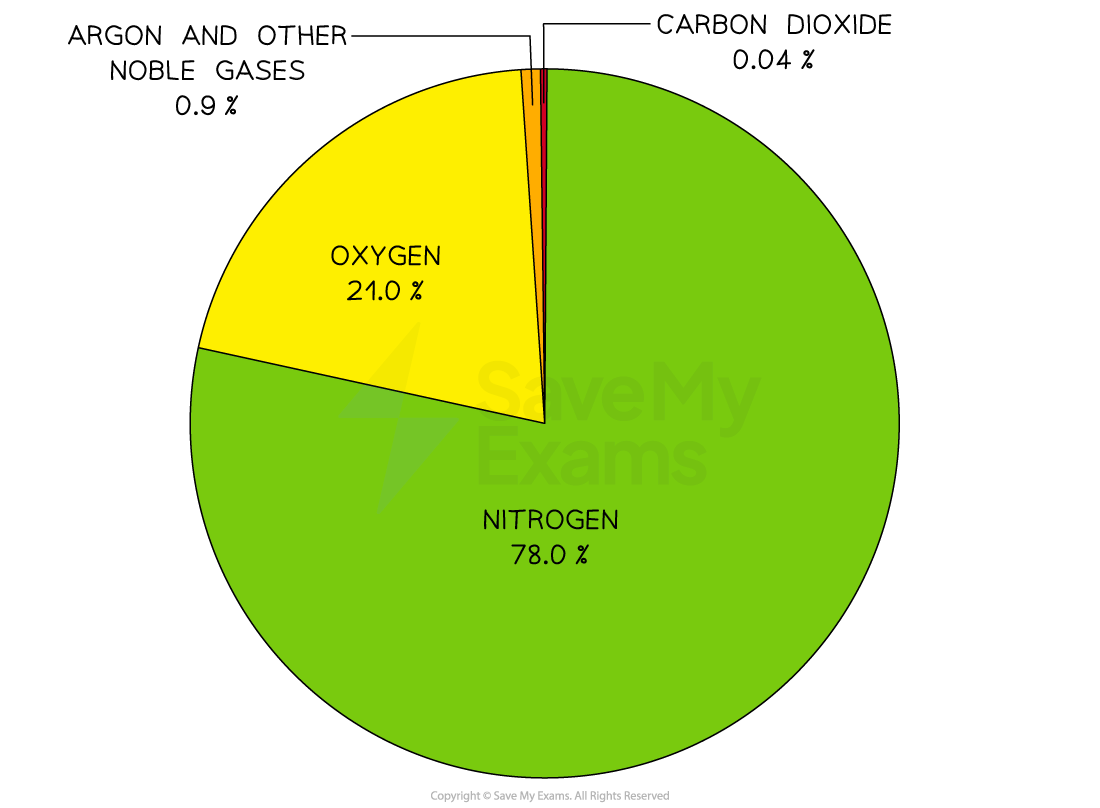
The two main gases in the air are nitrogen and oxygen
Air pollution
Spec point —
10.2.1· State the source of each of these air pollutants, limited to: carbon dioxide from the complete combustion of carbon-containing fuels carbon monoxide and particulates from the incomplete combustion of carbon-containing fuels methane from the decomposition of vegetation and waste gases from digestion in animals oxides of nitrogen from car engines sulfur dioxide from the combustion of fossil fuels which contain sulfur compounds
- State the adverse effect of these air pollutants, limited to: carbon dioxide: higher levels of carbon dioxide leading to increased global warming, which leads to climate change carbon monoxide: toxic gas particulates: increased risk of respiratory problems and cancer methane: higher levels of methane leading to increased global warming, which leads to climate change oxides of nitrogen: acid rain, photochemical smog and respiratory problems sulfur dioxide: acid rain
Air pollution
- In addition to the gases present naturally in our atmosphere, other gases are present due to human activities and are classed as air pollutants
Carbon dioxide
-
Sources:
- Complete combustion of carbon-containing fuels such as fossil fuels
- For example, the complete combustion of methane:
CH4+ 2O2→ CO2+ 2H2O
-
Adverse effects:
- Increases global warming, which leads to climate change
Carbon monoxide
-
Sources:
- Incomplete combustion of carbon-containing fuels such as fossil fuels
- For example, the incomplete combustion of gasoline / octane:
C8H18+ 10O2→ 5CO + 3CO2+ 9H2O
-
Adverse effects:
- Toxic / poisonous
- It combines with haemoglobin in the blood and prevents it from carrying oxygen
Particulates
-
Sources:
- Incomplete combustion of carbon-containing fuels such as fossil fuels can also produce particulates of carbon (soot)
- For example, the incomplete combustion of methane can produce CO and C:
2CH4 + 3O2→ 2CO + 4H2O
CH4 + O2→ C + 2H2O
-
Adverse effects:
- Respiratory problems
- Cancer
Methane
-
Sources:
- Waste gases from digestive processes of animals
- Decomposition of vegetation
- Bacterial action in swamps, rice paddy fields and landfill sites
-
Adverse effects:
- Increases global warming, which leads to climate change
Oxides of nitrogen
-
Sources:
- Reaction of nitrogen with oxygen in the presence of high temperatures, e.g. in car engines, high-temperature furnaces and when lightning occurs
- It is also a product of bacterial action in the soil
-
Adverse effects:
- Produces photochemical smog
- Dissolves in rain to form acid rain which causes corrosion to metal structures, buildings and statues made of carbonate rocks, damage to aquatic organisms
- Pollutes crops and water supplies
- Irritates lungs, throats and eyes and causes respiratory problems
Sulfur dioxide
-
Sources:
- Combustion of fossil fuels containing sulfur compounds:
S + O2→ SO2
-
Power stations are a major source of sulfur dioxide
-
Adverse effects:
- Dissolves in rain to form acid rain with similar effects as the acid rain caused by oxides of nitrogen
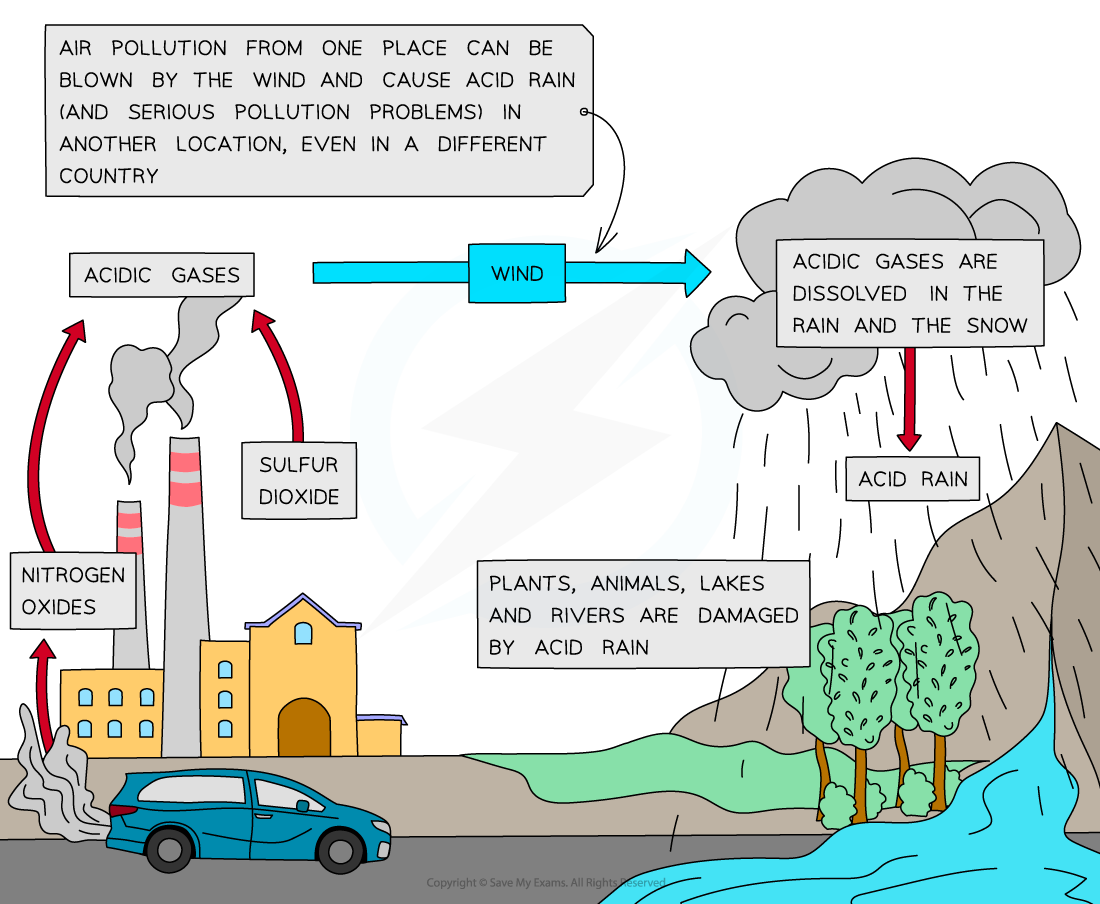
How acid rain is produced
Exam Hint Complete and incomplete combustion of hydrocarbons produce different products.
- Complete combustion occurs in excess oxygen and produces CO2 and H2O.
- Incomplete combustion occurs in oxygen-deficient conditions and produces CO, H2O and sometimes particulates of carbon(soot).
Was this revision note helpful?
Build on this topic