Ethanoic Acid & Esterification Reactions (Cambridge International IGCSE Chemistry)
Formation of ethanoic acid
Spec point —
11.7.2· Describe the formation of ethanoic acid by the oxidation of ethanol: (a) with acidified aqueous potassium manganate(VII) (b) by bacterial oxidation during vinegar production
Formation of ethanoic acid
Extended tier only
-
Two methods used to make carboxylic acids are:
- Oxidation by fermentation
- Using oxidising agents
-
The microbial oxidation (fermentation) of ethanol will produce a weak solution of vinegar (ethanoic acid)
-
This occurs when a bottle of wine is opened as bacteria in the air (acetobacter) will use atmospheric oxygen from air to oxidise the ethanol in the wine
C2H5OH (aq) + O2 (g) → CH3COOH (aq)+ H2O (l)
- The acidic, vinegary taste of wine which has been left open for several days is due to the presence of ethanoic acid
- Alternatively, oxidising agent potassium manganate(VII) can be used
- This involves heating ethanol with acidified potassium manganate(VII) in the presence of an acid
- The heating is performed under reflux which involves heating the reaction mixture in a vessel with a condenser attached to the top
- The condenser prevents the volatile alcohol from escaping the reaction vessel as alcohols have low boiling points
- The equation for the reaction is:
CH3CH2OH (aq) + 2[O] → CH3COOH (aq) + H2O (l)
- The solution will change from purple to colourless
- The oxidising agent is represented by the symbol for oxygen in square brackets
Diagram showing the experimental setup for the oxidation with KMnO4 using reflux apparatus
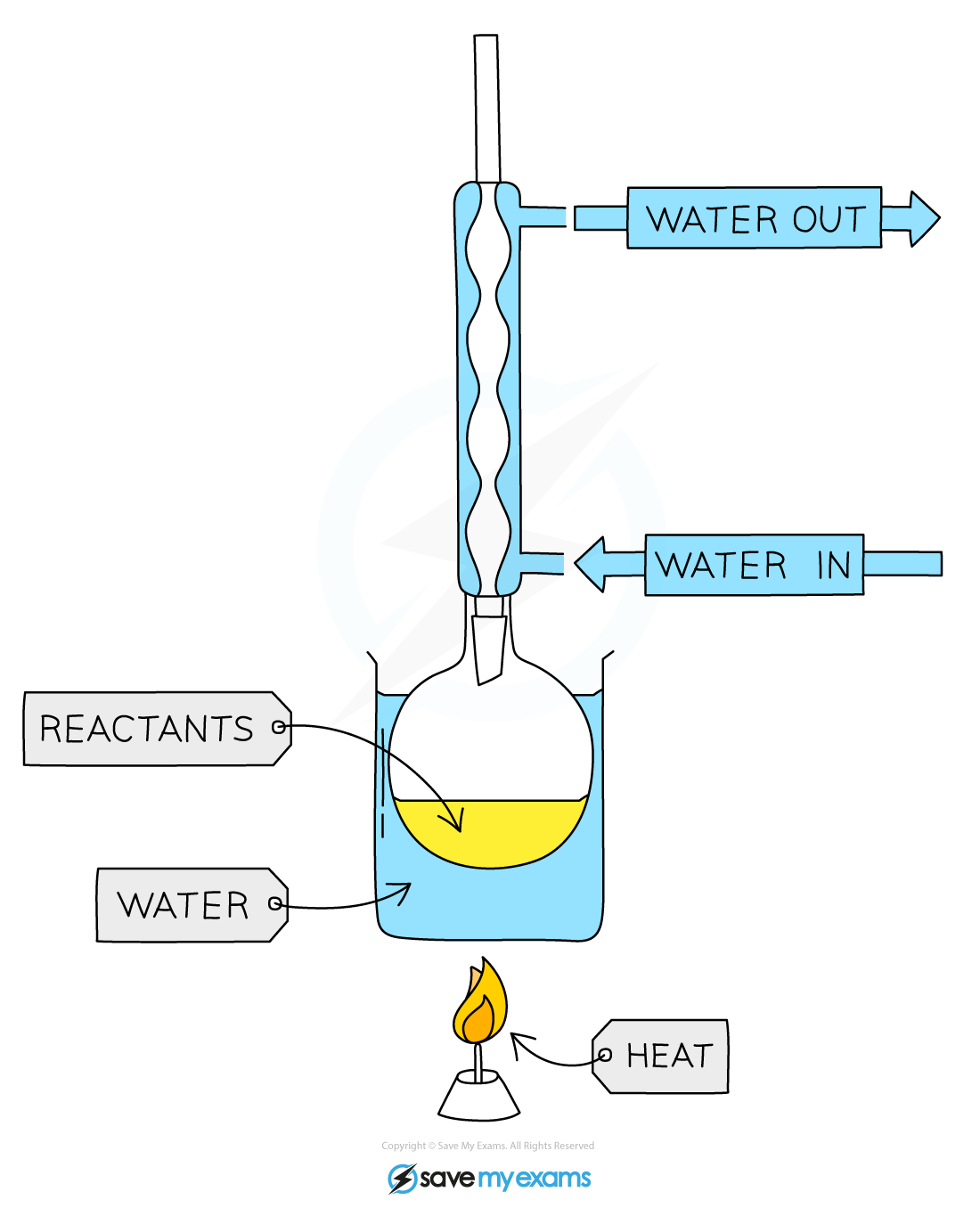
Ethanol is heated with acidified potassium manganate(VII) in the presence of an acid
Esterification
Spec point —
11.7.3· Describe the reaction of a carboxylic acid with an alcohol using an acid catalyst to form an ester
Extended tier only
- Alcohols and carboxylic acids react to make esters in esterification reactions
- Esters are compounds with the functional group R-COO-R

- Esters are sweet-smelling oily liquids used in food flavourings and perfumes
- An acid catalyst is required for an esterification reaction
- Ethanoic acid will react with ethanol in the presence of concentrated sulfuric acid (catalyst) to form ethyl ethanoate:
CH3COOH (aq) + C2H5OH (aq) ⇌ CH3COOC2H5 (aq) + H2O (l)
Diagram showing the formation of ethyl ethanoate
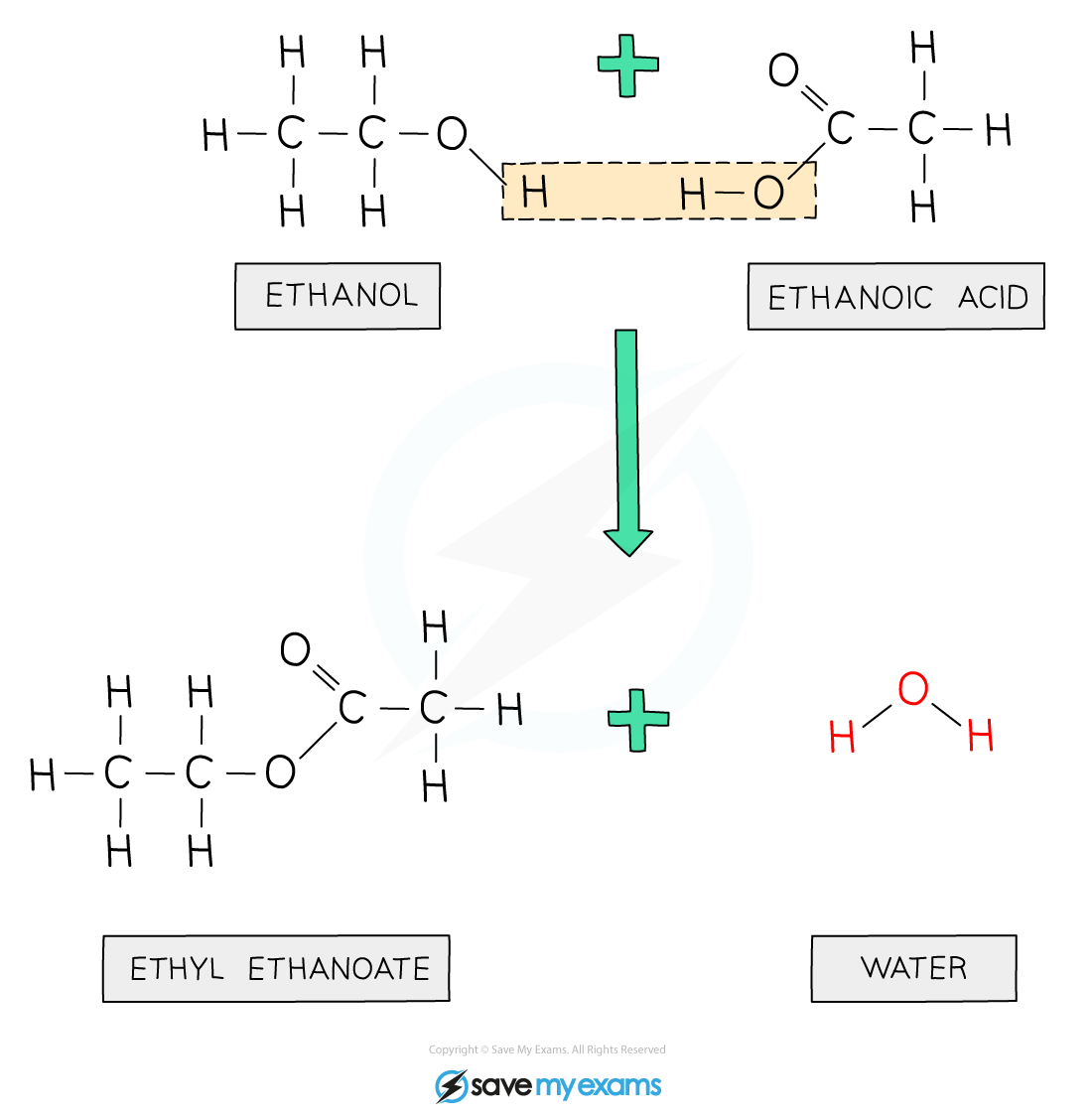
During this esterification reaction, a molecule of water is also produced
Naming Esters
-
An ester is made from an alcohol and carboxylic acid
-
The first part of the name indicates the length of the carbon chain in the alcohol, and it ends with the letters ‘- yl’
-
The second part of the name indicates the length of the carbon chain in the carboxylic acid, and it ends with the letters ‘- oate’
- E.g. the ester formed from pent anol and butanoic acid is called pentyl butanoate
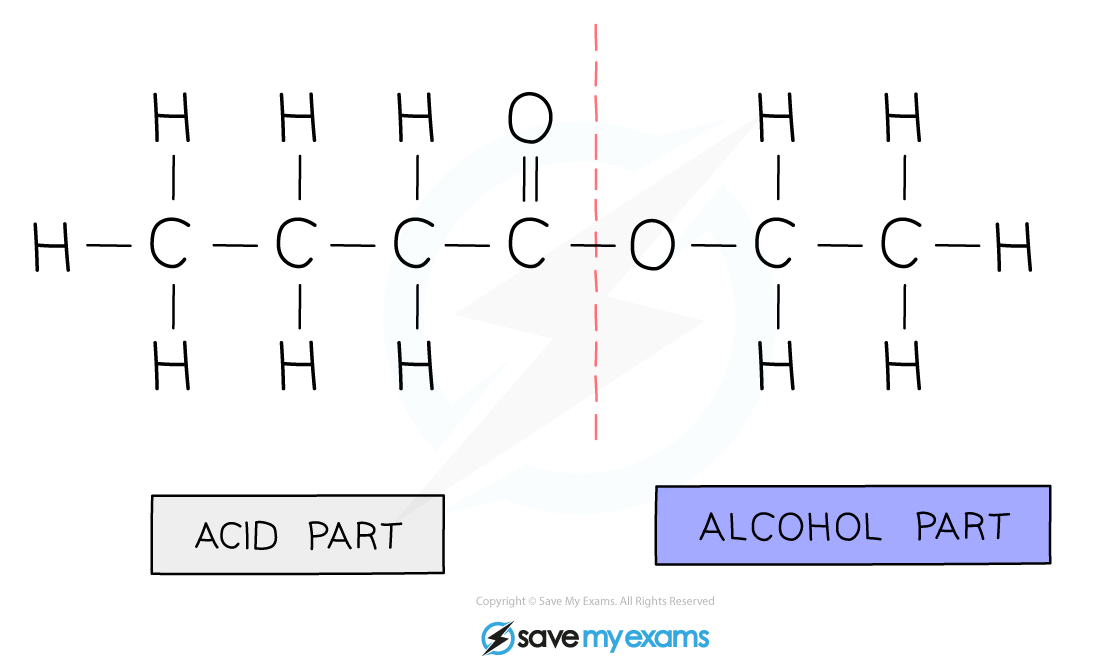
Diagram showing the origin of each carbon chain in ester; this ester is ethyl butanoate
Summary table of some esters and the compounds they are formed from
| Name of ester | Alcohol and carboxylic acid it is formed from |
|---|---|
| propyl methanoate | propanol and methanoic acid |
| methyl butanoate | methanol and butanoic acid |
| ethyl propanoate | ethanol and propanoic acid |
Was this revision note helpful?
Build on this topic