Addition Reactions (Cambridge International IGCSE Chemistry)
Spec point —
11.2.4· State that in an addition reaction only one product is formed Describe the properties of alkenes in terms of addition reactions with: bromine or aqueous bromine hydrogen in the presence of a nickel catalyst steam in the presence of an acid catalyst and draw the structural or displayed formulae of the products
Addition reactions
Extended tier only
-
Alkenes undergo addition reactions, where atoms from a small molecule add across the C=C double bond
-
In an addition reaction:
- The C=C bond breaks
- New single bonds form
- Only one product is formed
Alkenes and bromine
-
The reaction between an alkene and bromine is an addition reaction.
- Bromine atoms add across the C=C double bond
- A saturated compound is formed
-
Aqueous bromine is orange and is used as a test for alkenes.
- When bromine water is added to an alkene, it is decolourised (orange → colourless)
- This happens because bromine reacts with the C=C bond and is no longer in solution
-
Example:
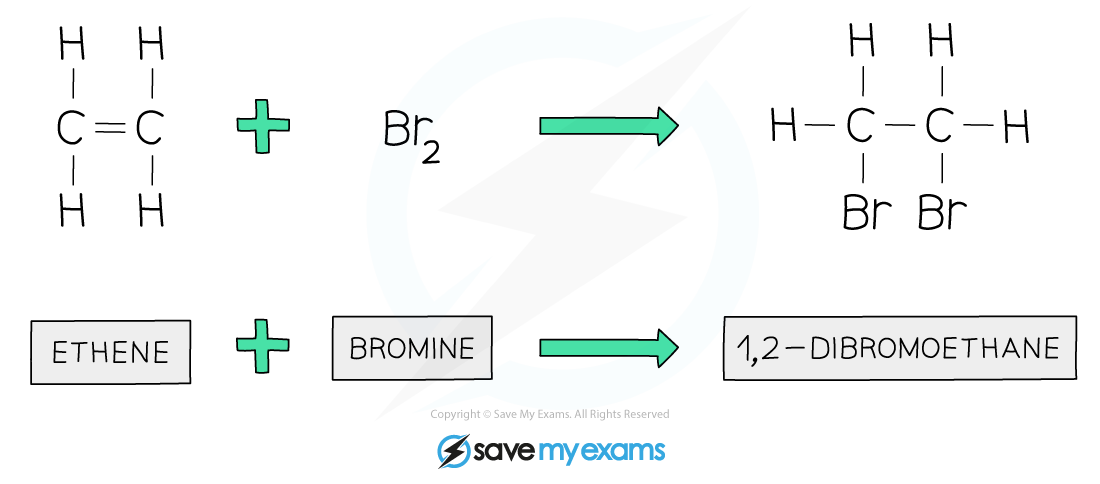
Bromine atoms add across the C=C in the addition reaction of ethene and bromine
Alkenes and hydrogen
-
When alkenes react with hydrogen, an alkane is formed
- This is an addition reaction
- A nickel catalyst is required
-
Examples:
- Ethene + hydrogen → ethane
- Propene + hydrogen → propane
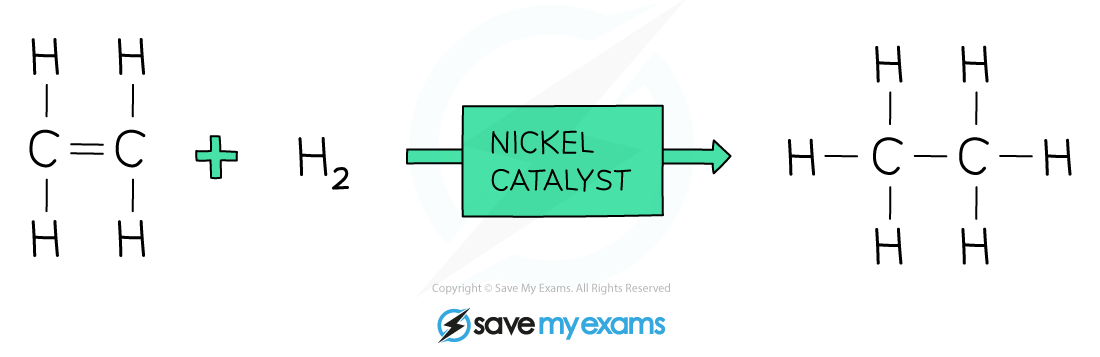
Hydrogen atoms add across the C=C in the addition reaction of ethene and hydrogen
Alkenes and steam
-
When alkenes react with steam, an alcohol is formed
- This is an addition reaction
- It is also called a hydration reaction
- An acid catalyst is required
-
Examples:
- Ethene + steam → ethanol
- Propene + steam → propanol
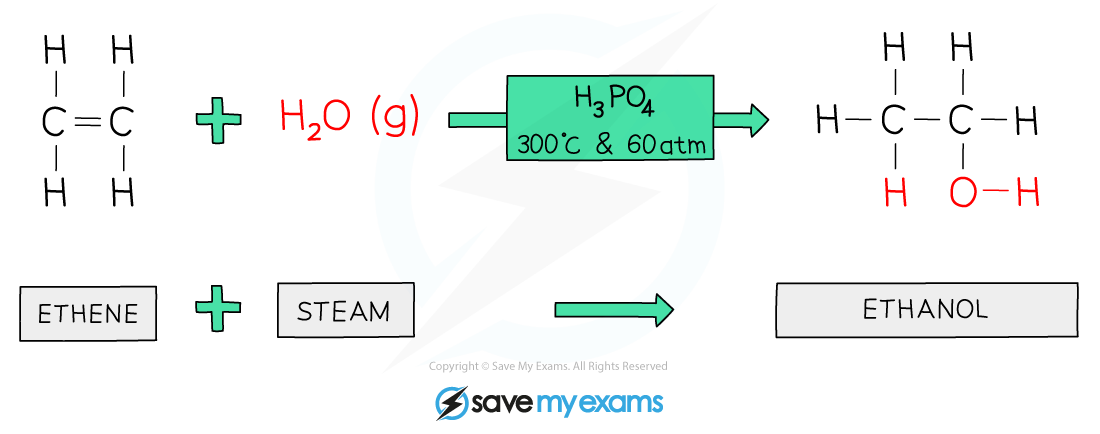
A water molecule adds across the C=C in the addition reaction (hydration) of ethene with water to produce ethanol
Exam Hint You need to be able to draw the structural and displayed formulae of the products of alkenes with steam, hydrogen and bromine.
Was this revision note helpful?
Build on this topic