Market Segmentation (Cambridge International IGCSE Business)
Why businesses segment the market
-
Market segmentation is where a single market is divided into submarkets, or 'segments'
-
Each segment represents a slightly different set of customer characteristics
-
This allows businesses to tailor products to suit specific groups, making customers more likely to buy
- For example, a skincare company can offer different products for teenagers and older adults, who have different skin concerns
-
-
Marketing messages can be designed to appeal directly to each segment, making advertising clearer and persuasive
- For example, a fitness brand may use social media to target young adults, but email newsletters for older gym-goers
-
Focusing on specific segments helps businesses avoid wasting time and money advertising to people who are unlikely to be interested
- For example, a luxury brand avoids promoting its products to low-income customers who are unlikely to buy
How markets can be segmented
Spec point — age, income, location, gender, lifestyle
Ways to segment a market
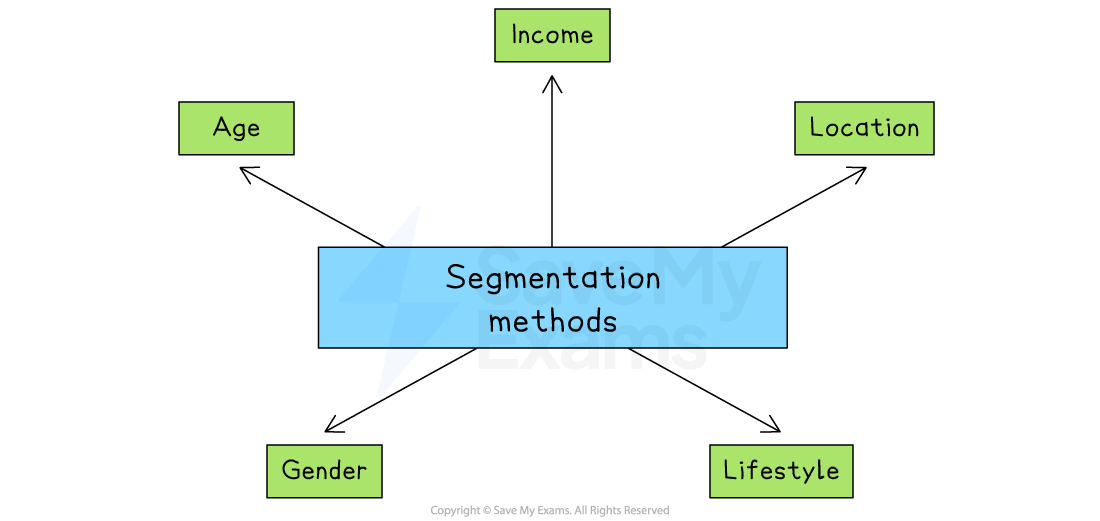
Markets can be segmented by age, income, location, gender and lifestyle
1. Age
-
Businesses group customers by age, as different age groups tend to have different interests, needs, and spending habits
- For example, a toy retailer targets products like Lego at children aged 6–12, while mobile phone brands may market to teens using social media platforms like TikTok
2. Income
-
Customers are grouped based on how much money they earn. Some products are aimed at budget-conscious buyers, while others target higher-income customers willing to pay more
- For example, Primark sells low-cost clothing for price-sensitive shoppers, while brands like Gucci or Rolex target high-income luxury buyers
3. Location
-
This involves targeting customers based on where they live. Products and promotions may change depending on local tastes, climate, or culture
- For example, a surfwear brand might advertise more heavily in coastal areas, while supermarkets in colder regions may stock more winter foods during certain months
4. Gender
-
Some products are marketed differently to men and women based on preferences or roles in society, though this is now approached more carefully to avoid stereotypes
- For example, razor brands often sell separate product ranges for men and women, with different colours, packaging and advertising styles
5. Lifestyle
-
Lifestyle segmentation focuses on people's interests, hobbies, values, or how they spend their time
- For example, a supermarkt may target protein shakes at people who are fitness-focused, while promoting eco-friendly cleaning products to environmentally conscious consumers
Case Study Segmentation in the crisps market
The crisp market is not one single market
- It is divided into distinct market segments, based on customer needs, preferences, income levels, and lifestyles
Different crisp brands target different segments
Segment Description Example brands Health-conscious consumers - Targeted at people looking for low-fat, low-calorie, or baked alternatives as part of a healthier lifestyle - Walkers Baked
- Popchips
- Eat Real
- Snack a JacksPremium buyers - Targeted at higher-income or more brand-conscious consumers
- They want a premium product with unique flavours or artisanal packaging- Kettle Chips
- Tyrrells
- Walkers Sensations
- BurtsValue-seeking families - Aimed at the mass market, especially families buying in bulk for packed lunches or general snacking at an affordable price - Walkers multipacks
- Hula Hoops
- Space Raiders
- Pom BearYouth and casual snackers - Designed to appeal to children, teens, and younger adults through bold flavours, fun shapes or branding - Monster Munch
- Quavers
- WotsitsEvent and sharing occasions - Larger packs or stackable tubs intended for social situations such as parties or movie nights - Pringles
- Walkers Max Share Bags
Advantages and disadvantages of market segmentation
| Advantages | Disadvantages |
|---|---|
| - Recognises that consumers are not all identical; consumer groups do not all share the same tastes and preferences - Products and marketing activities can be altered to meet different needs of different groups of consumers and targeted more precisely - Less expensive and wasteful than marketing products at wide market segments - It may increase loyalty if the consumer feels that their **needs are being met, which can lead to repeat purchases ** | - Not everyone within a segment will behave in the same way - It may be** difficult to identify a segment and consumers can belong to multiple segments at the same time - Segmentation requires more detailed market research, which can prove costly but beneficial to the business - A segment may be** identified but it may be too small and unprofitable to cater to |
Exam Hint Don’t just list ways to segment a market – examiners reward answers that explain why segmentation helps a business target customers more effectively
Was this revision note helpful?
Build on this topic