Product (Cambridge International IGCSE Business)
The importance of brand image
-
Developing a strong brand involves creating a unique and identifiable name, design, symbol or other feature that differentiates a product or service or company from its competitors
- This can help a business to add value, as customers are often willing to pay higher prices for brands they recognise and trust
-
Branding helps businesses create awareness, develop strong customer relationships, generate loyalty and sets them apart from competitors
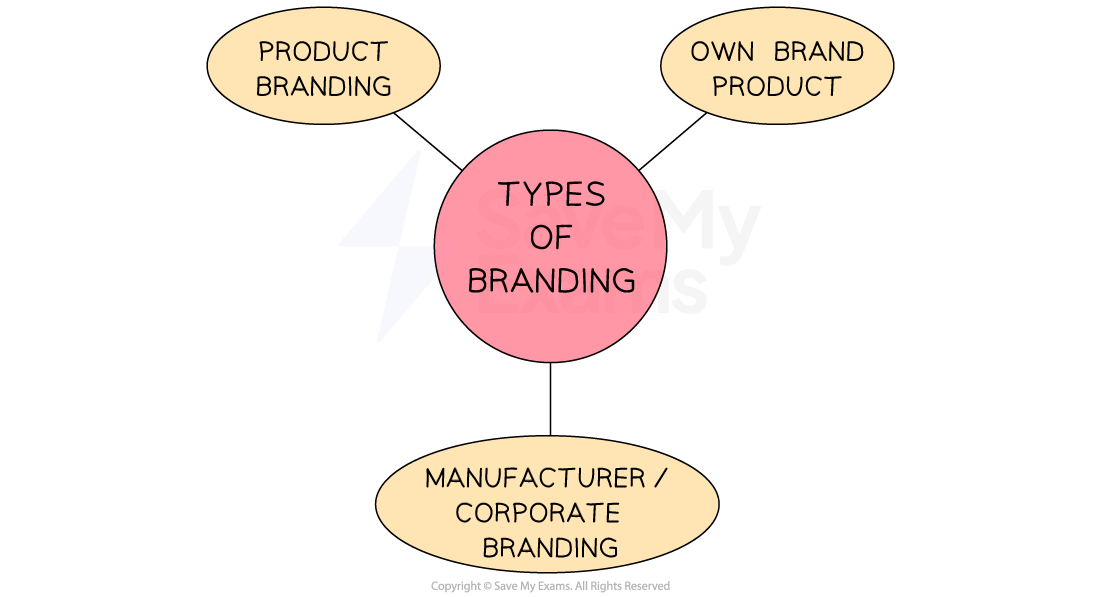
Building a brand using one of these three methods, or all of them, will help a business to develop a strong and loyal customer base
The three main types of branding
Manufacturer or corporate branding
-
Manufacturer or corporate branding refers to the use of a company name or logo to promote all the products or services offered by a company
- This type of branding is used by companies like Nestlé, Nike, and Apple
Product branding
-
Product branding refers to the use of a unique name,design or symbol to promote a specific product
- For example, KitKat, Coca-Cola, and McDonald's Big Mac
Own-brand product
-
Own brand or private label branding refers to the use of a retailer's name to promote a specific product or service and is often used by supermarkets
- For example, ASDA chocolate, Tesco's Finest range, and Sainsbury's Basics range
Examples of the ways that brands have been built
| Method | Explanation | Example |
|---|---|---|
| Unique selling points (USPs) | - USPs are features that make a product or service stand out from competitors - Brands highlight these to build a strong image. | - Apple is known for sleek design and high-quality materials. This USP supports its premium brand image |
| Advertising | - Effective adverts help raise brand awareness and connect emotionally with customers | - Coca-Cola’s “Share a Coke” campaign used personalised bottles to drive sales and brand loyalty |
| Sponsorship | - Partnering with events or people links the brand to positive values and increases visibility | - Nike sponsors major athletes and global events like the Olympics, reinforcing its image of excellence |
| Social media | - A good social media strategy builds a loyal community and boosts brand engagement | - Glossier uses Instagram and shares content from users, helping it grow a loyal following |
| Emotional branding | - Brands create emotional bonds by connecting with customer values and beliefs | - Patagonia focuses on social and environmental issues, attracting like-minded customers. |
Benefits of branding to a business
1. Differentiation
-
Branding differentiates a business from its competitors
- This supports marketing and advertising efforts to build memorable promotional materials and campaigns
2. Reduced price elasticity of demand
-
Customers are less sensitive to price changes of products with strong and appealing branding
- Customers who are loyal to a brand are more likely to continue purchasing the product even if the price increases
3. Ability to charge premium prices
-
Customers may be willing to pay more for a product that is associated with a well-established brand
- They often perceive products with strong branding to be of higher quality and therefore worth the extra cost
4. Brand recognition and identity
-
Strong branding helps to build trust and credibility
- This can create an emotional connection with customers, which helps generate repeat purchases
The role of packaging
-
Packaging is the physical container or wrapping for a product
-
It is also used for promotion and selling appeal
-
Packaging is normally designed to
- **Present **products in the most practical yet attractive way
- Communicate the quality of the product
- Catch the customer's eye when they shop
- Provide** key information to customers**
- **Establish the business's brand image
-
To stand out from the competition, brands are investing more money than ever before in** creative and environmentally friendly packaging designs
- For example, Lush Cosmetics packages gift boxes with popcorn, which can be composted by the end user and uses less energy than plastic alternatives
An example of popcorn used for packaging Lush's cosmetic products
Exam Hint When discussing products, remember that brand image and packaging can add value just as much as the product’s features – examiners often credit this wider view of “product”
Developing new products
- One way to stay ahead of the competition is by developing new products and innovating existing ones
- The process of new product development involves a number of important stages
The new product development process
- Generate ideas
- New product concepts are discussed and brainstormed using customer suggestions, ideas from competitors’ products, employees’ ideas and information collected through market and technical research
- Select the best idea
- Ideas are weighed up with some dropped and others chosen for further research
- This decision relates closely to costs and likely demand
- Research includes looking into forecast sales, size of market share and cost-benefit analysis for each product idea
- Develop a prototype
- This allows the operations department to see how the product can be manufactured, any problems or difficulties arising from its production and how to fix them
- Computer simulations are often used to produce 3D prototypes on screen
- Test launch
- The developed product is sold to on a small scale to a limited market to see how well it sells before its full launch
- Changes may be needed prior to an expensive, large-scale launch
- Digital products like apps and software run beta versions, which is a method of test-launching
- Full launch of the product
- The finalised version of the product is launched to the entire target market
Evaluating new product development
| Advantages | Disadvantages |
|---|---|
| - Businesses can sell more to existing customers, which is cheaper than attracting new ones - New products help spread fixed costs, such as rent and salaries, across a wider range - Offering more products reduces reliance on specific customers or markets - Creating an innovative product can give a unique selling point that helps charge higher prices and improves advertising - Innovative products can use pricing strategies like price skimming to maximise early profits | - Collecting and analysing market research for a new product can take a lot of time - Research, development and design can be very expensive - Producing trial products can waste costly materials, especially when using new or complex components - If the product is not right for the market, sales may be low and research may be wasted - A failed product can damage the business’s reputation and brand image |
Was this revision note helpful?
Build on this topic