Features of Organisms (Cambridge International IGCSE Biology)
The five kingdoms
Spec point —
1.3.1· State the main features used to place animals and plants into the appropriate kingdoms
Kingdoms: animals & plants
-
All living organisms share characteristics. Organisms can be grouped together based on common features they share
-
All living organisms can be grouped into one of five kingdoms
-
Animals and plants are both kingdoms within this grouping system
-
Main features of all animals:
- they are multicellular
- their cells contain a nucleus but no cell walls or chloroplasts
- they feed on organic substances made by other living things
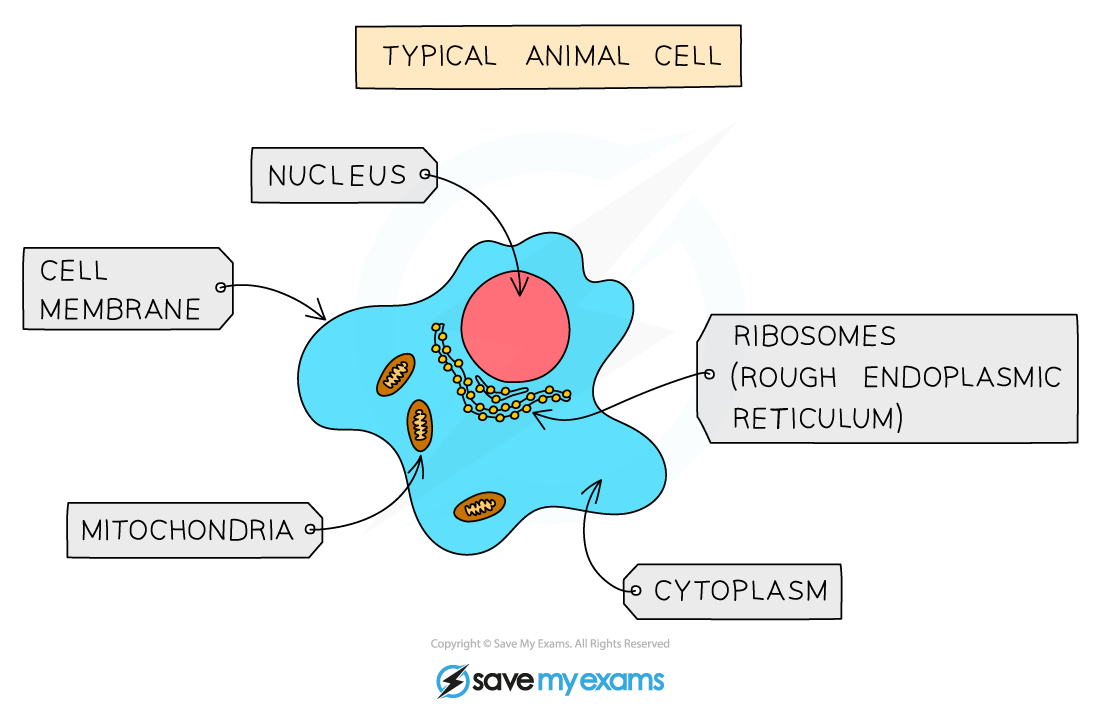
A typical animal cell
-
Main features of all plants:
- they are multicellular
- their cells contain a nucleus, chloroplasts and cellulose cell walls
- they all feed by photosynthesis
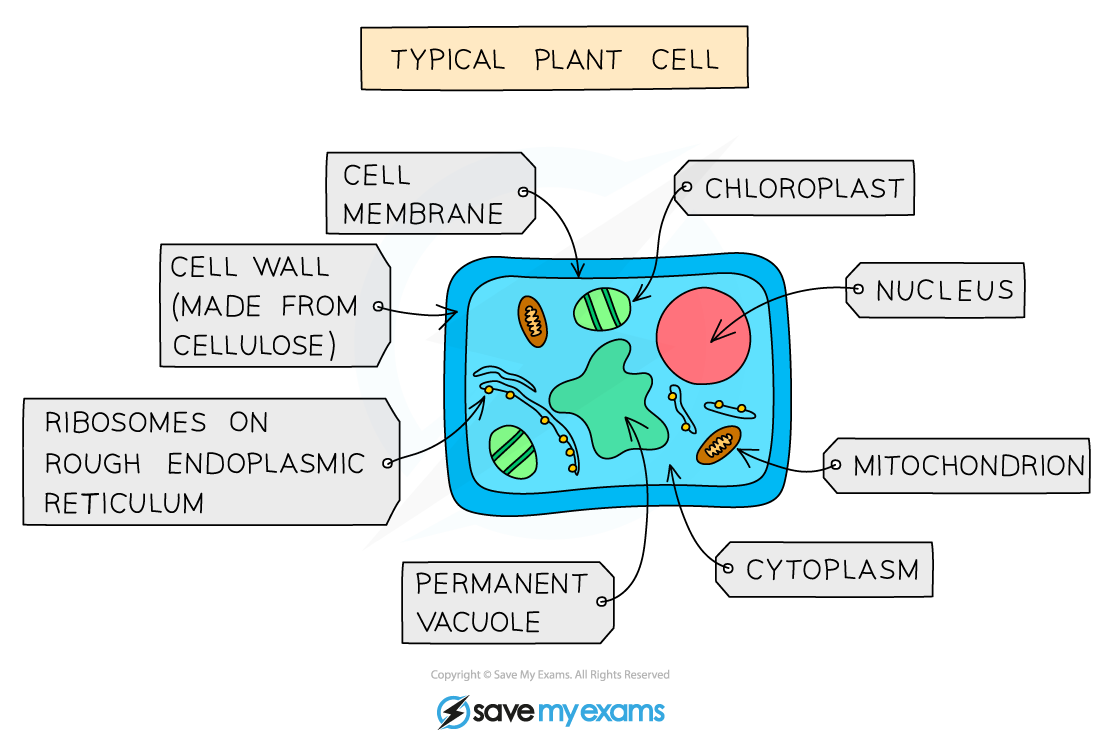
A typical plant cell
The animal kingdom
Spec point —
1.3.2· State the main features used to place organisms into groups within the animal kingdom, limited to: (a) the main groups of vertebrates: mammals, birds, reptiles, amphibians, fish (b) the main groups of arthropods: myriapods, insects, arachnids, crustaceans Classify organisms using the features identified
The animal kingdom
- Several main features are used to place organisms into groups within the animal kingdom
Vertebrates
-
All vertebrates have a backbone
- There are five classes of vertebrates
Vertebrate table
| Class | Main features | Examples |
|---|---|---|
| Mammals | - Fur/hair on skin - Have a placenta - Young feed on milk from mammary glands - External ears (pinna) visible - Endothermic | Horse, dog, squirrel, human |
| Birds | - Skin covered in feathers - Have 2 legs and 2 wings instead of forelimbs - Lay eggs with hard shells on land - Have a beak - Endothermic | Parrot, blue tit, eagle |
| Reptiles | - Dry, fixed scales on skin - Lay eggs with rubbery shells on land | Snake, turtle, iguana |
| Amphibians | - Smooth, moist skin - Adults usually live on land (and so have lungs) - Larvae live in water (and so have gills) - Lay eggs without shells in water | Frog, toad, newt |
| Fish | - Loose, wet scales on skin - Use gills to breathe - Lay eggs without shells in water | Flounder, grouper |
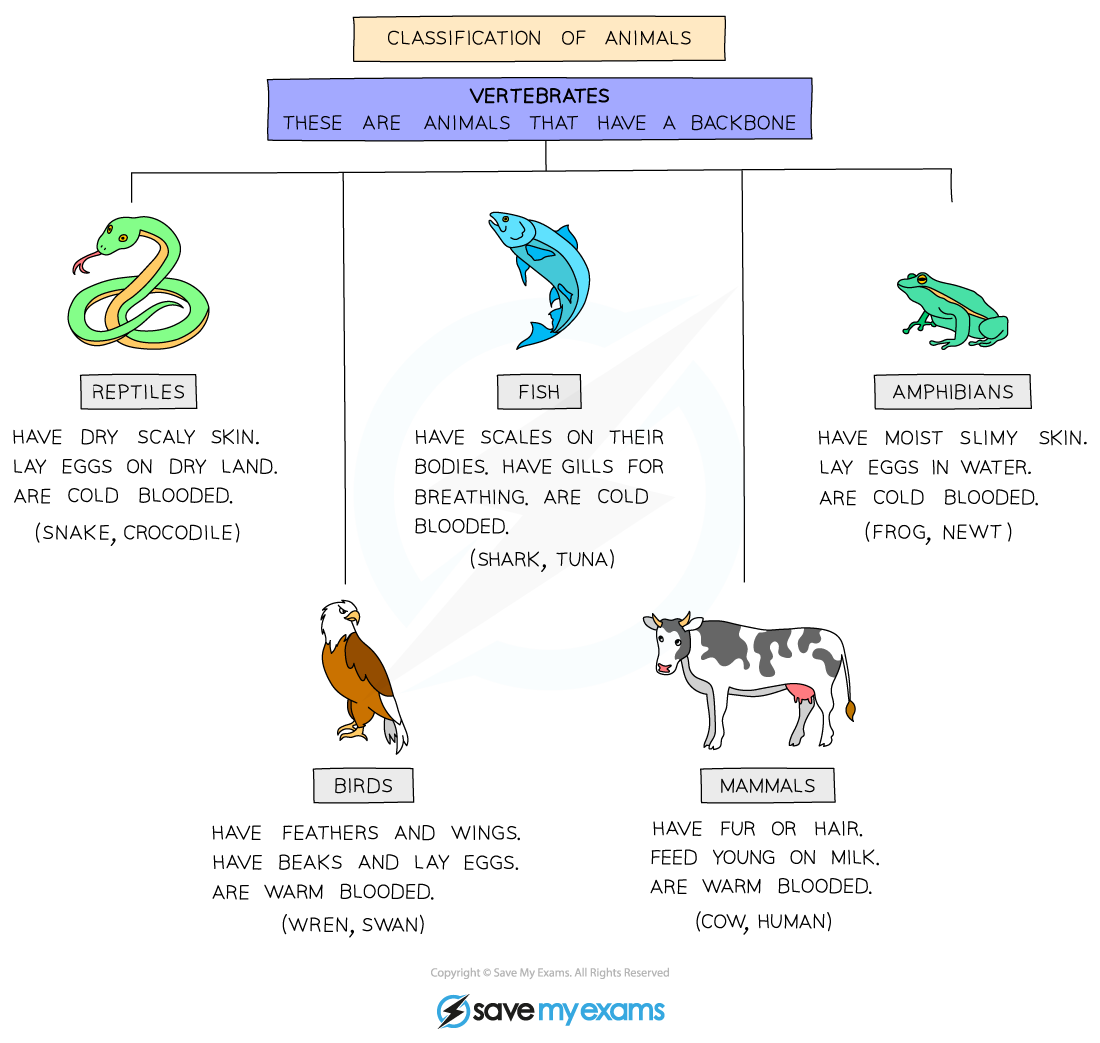
Vertebrate classification
Invertebrates
-
Invertebrates do not possess a backbone
-
One of the morphological characteristics used to classify invertebrates is whether they have legs or not
-
All invertebrates with jointed legs are part of the arthropod phylum
-
All arthropods share the following visible features:
- They have an exoskeleton
- They have a segmented body
- They have jointed legs
-
They are classified further into the following groups:
Arthropod groups table
| Class | Main features | Examples |
|---|---|---|
| Myriapods | - Body consists of many segments - Each segment contains at least one pair of jointed legs - One pair of antennae | Centipede |
| Insects | - Three-part body: head, thorax and abdomen - Adults have six jointed legs - Two pairs of wings (one or both pairs may be vestigial, meaning non-functional and undeveloped) - One pair of antennae | Butterfly |
| Arachnids | - Two-part body: cephalothorax and abdomen - Four pairs of jointed legs - No antennae | Spider |
| Crustaceans | - More than four pairs of jointed legs - Chalky exoskeleton formed from calcium - Use gills to breathe - Two pairs of antennae | Crab |
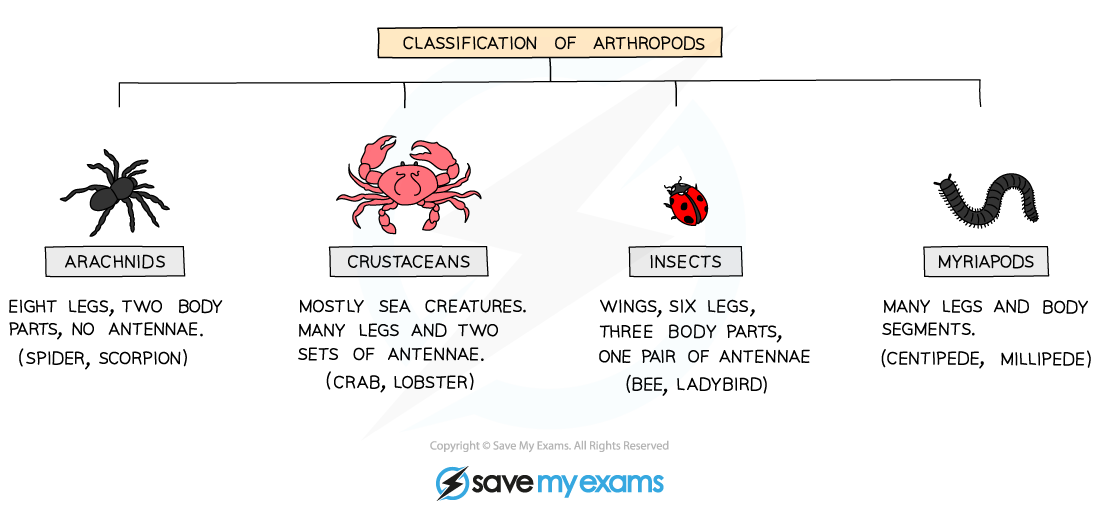
Arthropod classification
Exam Hint
Make sure that you are aware of the distinction between the main features of a group of organisms and the defining features of a group:
An exam question might ask you to state the main features of a group of organisms; these are given above, and some of these main features are shared between the groups
- E.g. all of the vertebrates have a backbone, and all of the arthropods have segmented bodies
It is also possible that an exam question might ask you to give a defining visible feature of any one of these groups, i.e. a feature that sets a group apart from the other groups
- E.g. mammals have fur while the other vertebrates do not, and crustaceans have two pairs of antennae while this is not the case for the other groups of arthropods
It is common for students to confuse arachnids with crustaceans, and to not be able to state a visible feature identifying an organism as an arthropod, any one of "exoskeleton, jointed legs or segmented body" would be an appropriate answer
Was this revision note helpful?
Build on this topic