Adaptations of the Small Intestine (Cambridge International IGCSE Biology)
Exam board Cambridge International · IGCSEUpdated 2026-08-27
Adaptations of the small intestine: Extended
Spec point — Explain the significance of villi and microvilli in increasing the internal surface area of the small intestine Describe the structure of a villus Describe the roles of capillaries and lacteals in villi
Adaptations of the small intestine: Extended
Extended Tier Only
- The ileum is adapted for absorption as it is very long and has a highly folded surface with millions of villi (tiny, finger like projections)
- These adaptations massively increase the surface area of the ileum, allowing absorption to take place faster and more efficiently
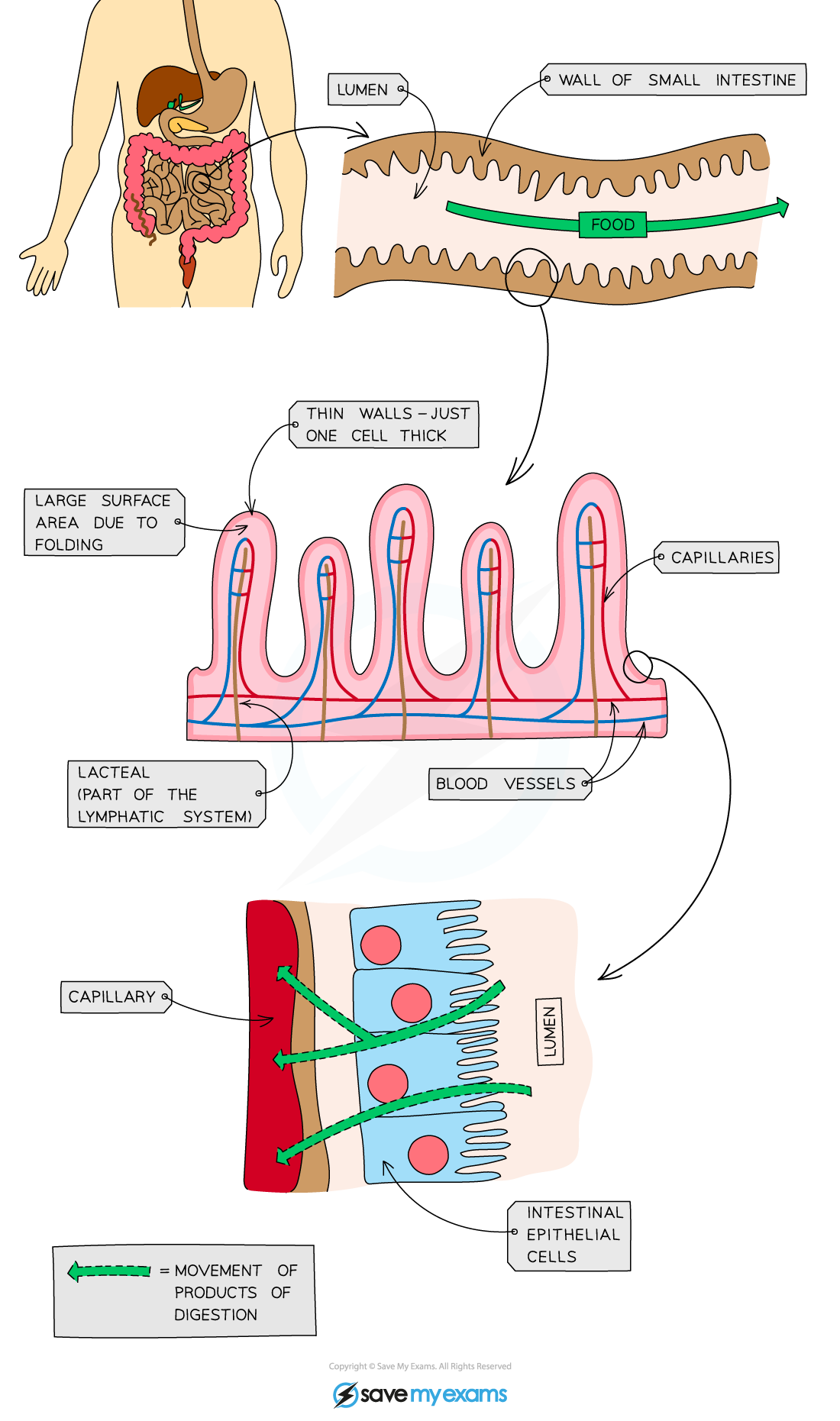
Adaptations of the small intestine
- Microvilli on the surface of the villus further increase surface area for faster absorption of nutrients
- Wall of the villus is one cell thick meaning that there is only a short distance for absorption to happen by diffusion and active transport
- Well supplied with a network of blood capillaries that transport glucose and amino acids away from the small intestine in the blood
- Lacteal runs through the centre of the villus to transport fatty acids and glycerol away from the small intestine in the lymph
Exam Hint The way in which the structure of a villus is related to its function comes up frequently in exam questions so it is worth ensuring you have learned these adaptations.
Was this revision note helpful?
Build on this topic