Converting Between Units (Cambridge International IGCSE Biology)
Converting between units: Extended
Spec point —
2.1.4· Convert measurements between millimetres (mm) and micrometres (μm)
Extended Tier Only
Using millimetres and micrometres as units
- The table below shows how millimetres are related to two other measures of length
| Unit | Length in mm |
|---|---|
| 1 centimetre (cm) | 10 |
| 1 millimetre (mm) | 1 |
| 1 micrometre (μm) | 0.001 |
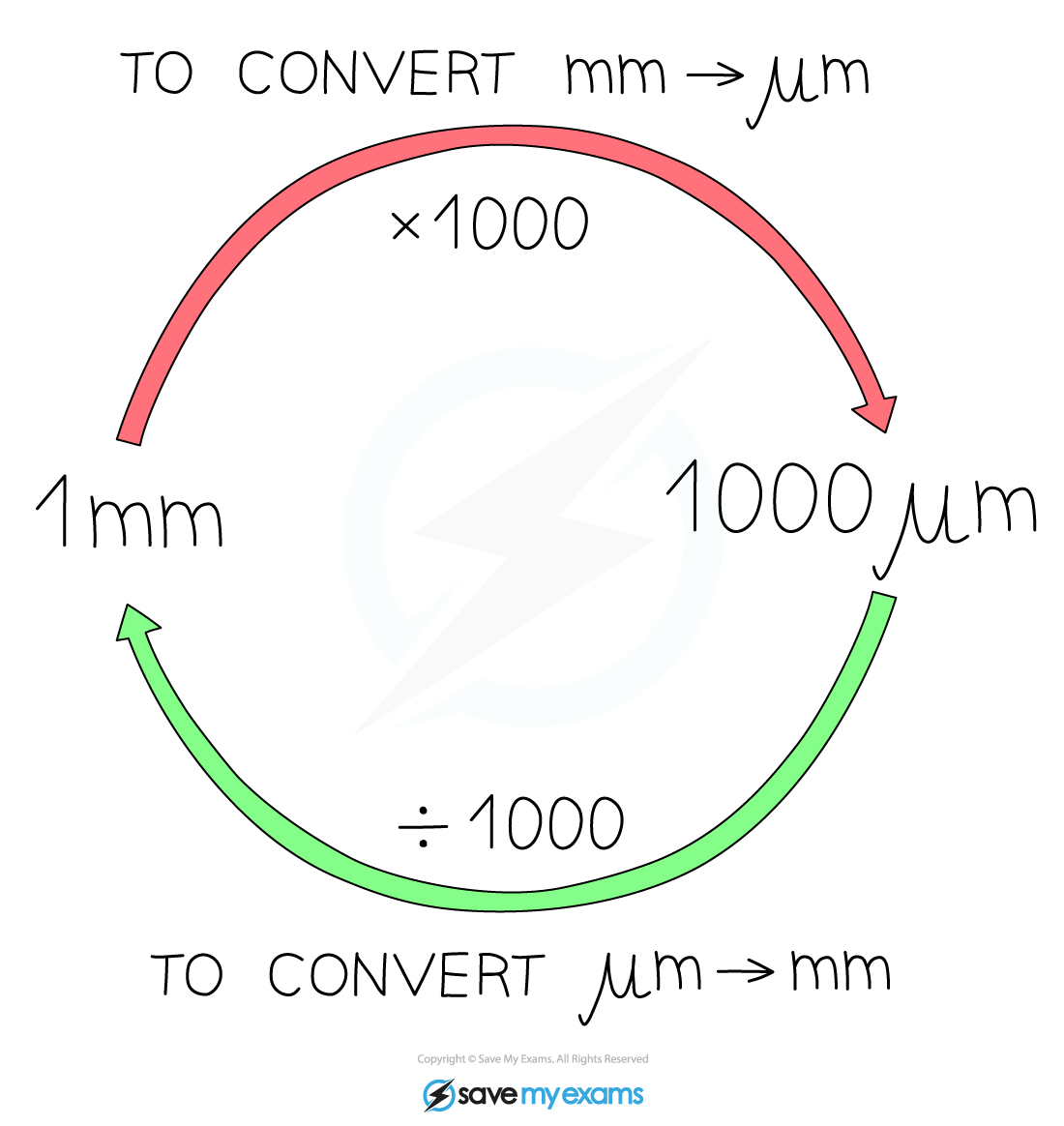
- What this basically means is that 1 mm = 1000 µm and 1 cm = 10 000µm
- Unit conversion is necessary in calculation questions where two values are given in different units. Both need converting into the same unit before the calculation can be carried out
Worked Example
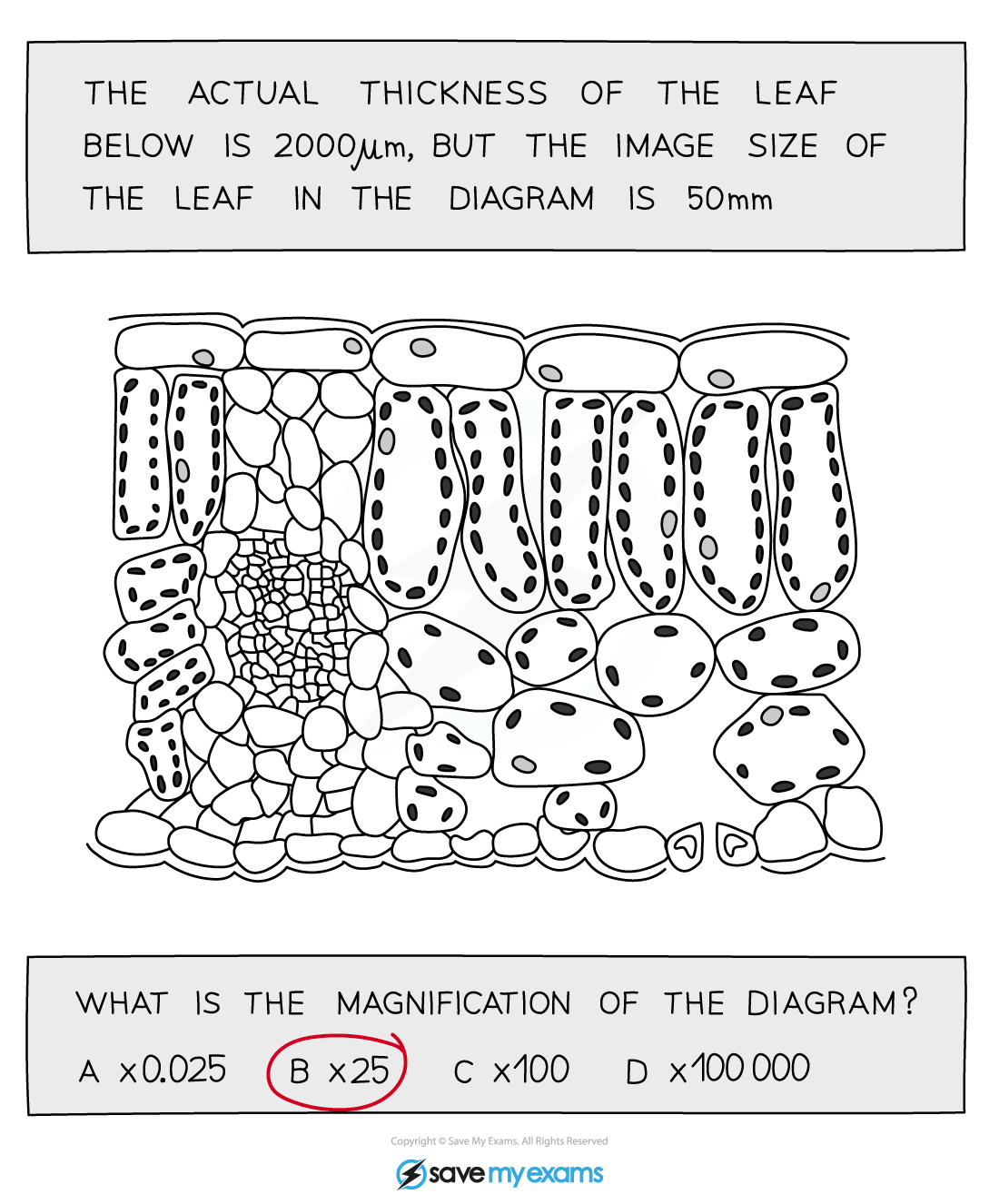
Both values (2000 μm and 50 mm) have different units, so one value needs to be converted so that they have the same units
- It doesn't matter which value is converted
2000 μm can be converted into 50 mm
- Remember 1000 µm = 1 mm, so divide 2000 by 1000 to convert the leaf thickness from μm into mm
- 2000 / 1000 = 2
- So the actual thickness of the leaf is 2 mm and the drawing thickness is 50 mm
Magnification = image size / actual size = 50 / 2 = 25
So the correct answer is a magnification is x 25
- Remember there are no units for magnification!
Exam Hint If you are given a question with two different units in it, make sure you convert them to the same unit before doing your calculation. If you don’t there is a good chance that your answer will be the same as one of the incorrect options in a multiple choice question so you may think you got it correct when, in fact, you haven’t!
The following diagram may help with unit conversion between mm and µm:
Converting units between millimetres and micrometres
Was this revision note helpful?
Build on this topic