Variations in Atomic & Ionic Radius (Cambridge International AS Chemistry)
Atomic & Ionic Radius
Atomic radius
- The atomic radius of an element is a measure of the size of an atom
- It is half the distance between the two nuclei of two covalently bonded atoms of the same type
Diagram showing the atomic radius of hydrogen
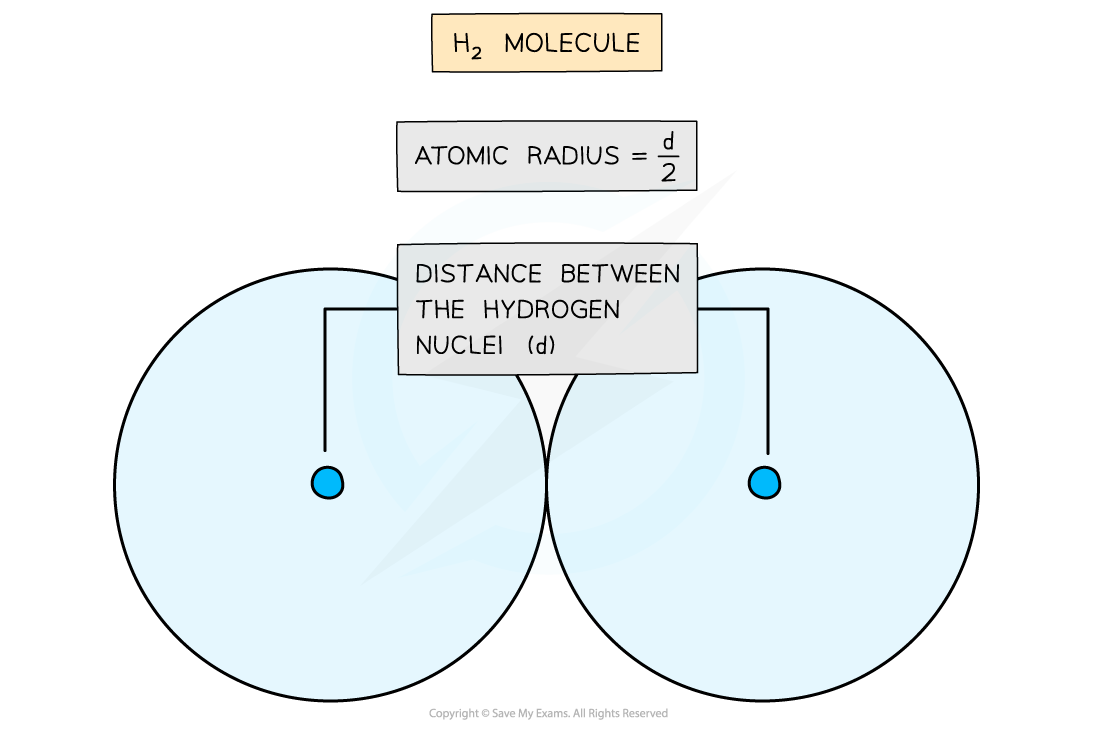
The atomic radius of a hydrogen atom is determined by halving the distance between the nuclei of two hydrogen atoms covalently bonded
-
Atomic radii show predictable patterns across the Periodic Table
- They generally decrease across each period
- They generally increase down each group
-
These trends can be explained by the electron shell theory
-
Atomic radii decrease as you move across a Period as the atomic number increases (increased positive nuclear charge) but at the same time extra electrons are added to the same principal quantum shell
-
The larger the nuclear charge, the greater the pull of the nuclei on the electrons
- This results in smaller atoms
-
Atomic radii increase moving down a group as there is an increased number of shells going down the group
-
The electrons in the inner shells repel the electrons in the outermost shells, shielding them from the positive nuclear charge
-
This weakens the pull of the nuclei on the electrons, resulting in larger atoms
-
Summary of atomic radii
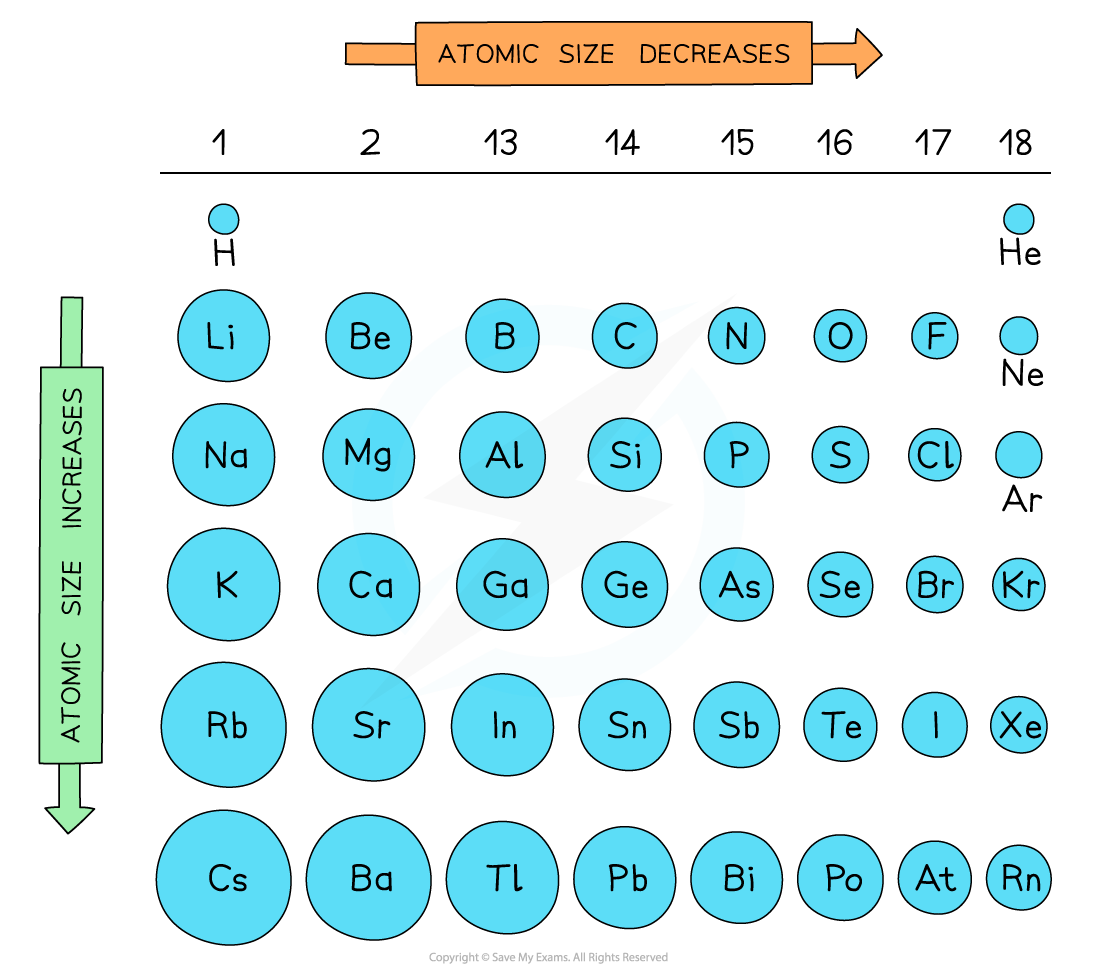
Atomic radius increases down a group and decreases across a period
-
The diagram shows that the atomic radius increases sharply between the noble gas at the end of each period and the alkali metal at the beginning of the next period
-
This is because the alkali metals at the beginning of the next period have one extra principal quantum shell
- This increases shielding of the outermost electrons and therefore increases the atomic radius
Ionic radius
-
The ionic radius of an element is a measure of the size of an ion
-
Ionic radii show predictable patterns
- Ionic radii increase with increasing negative charge
- Ionic radii decrease with increasing positive charge
Negative ions
-
These trends can also be explained by the electron shell theory
- Ions with negative charges are formed by atoms accepting extra electrons while the nuclear charge remains the same
- The outermost electrons are further away from the positively charged nucleus and are therefore held only weakly to the nucleus which increases the ionic radius
- For ions with the same electron arrangement, the greater the negative charge, the larger the ionic radius (for example O2- 126 pm > F- 119 pm)
Positive ions
- Positively charged ions are formed by atoms losing electrons
- The nuclear charge remains the same but there are now fewer electrons which undergo a greater electrostatic force of attraction to the nucleus which decreases the ionic radius
- For ions with the same electron arrangement, the greater the positive charge, the smaller the ionic radius (for example Na+ 116 pm > Mg2+ 86 pm > Al3+ 68 pm)
Summary of atom and ion sizes
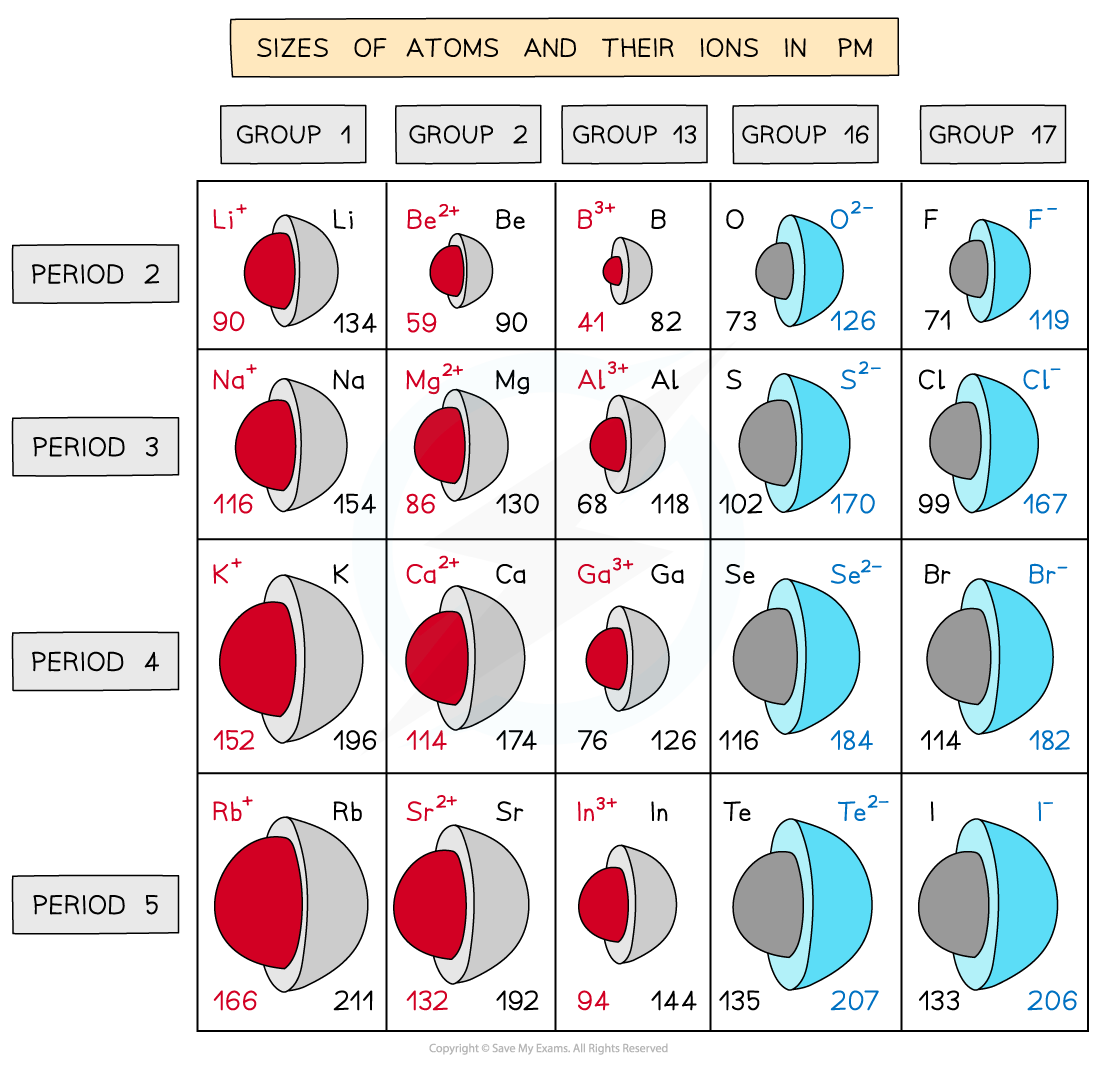
Trends in the ionic radii across a period and down a group
Was this revision note helpful?
Build on this topic