Capacity Utilisation & Outsourcing (Cambridge International A-Level Business)
Measuring capacity utilisation
-
Capacity utilisation measures how effectively a business uses its assets to produce output
- It compares current output to the maximum possible output a business can produce using all of its assets
-
Capacity utilisation is calculated using the following formula and expressed as a percentage
Worked Example Bäkkerei Lola produces specialist Indian and Bangladeshi breads, which are sold to restaurants in the Munich area
Batch production is used in the factory to manufacture the range of breads and the factory can produce a maximum of 68,400 units per month
In May factory output was 51,420 units
Calculate Bäkkerei Lola's capacity utilisation in May.
(2)
Step 1: Divide the current output by the maximum output
(1 mark)
Step 2: Multiple the outcome by 100 to obtain the percentage capacity utilisation
equals space 0.75 space straight x space 100
equals space 75 percent sign (1 mark)
Exam Hint In your exam, you may need to rearrange the capacity utilisation formula. You may be given the percentage of capacity utilisation and have to calculate the volume of output.
The impact of under capacity utilisation
The impact of under-capacity utilisation
-
Low capacity utilisation means resources are being underused
- This may lead to inefficiencies and lost potential output
Positive and negative impacts of under-capacity utilisation
| Positive impacts | Negative impacts |
|---|---|
| - The business is not working at full stretch, so it can easily increase production if needed or take on unexpected orders - Spare time can be used for important jobs like checking and fixing machinery, helping to prevent breakdowns in the future | - Unit costs are likely to be higher because fixed costs are spread over fewer units of output - Workers are under-deployed, leading to fears of redundancy - If staff are not fully occupied, they may worry about losing their jobs, which can affect morale and motivation |
Improving capacity utilisation
-
High capacity utilisation means a business is making the most of its resources, such as staff, machines, and buildings
- This helps to lower unit costs, improve efficiency, and increase profits
Ways to increase capacity utilisation
Outsourcing offers a range of benefits to businesses, including cost savings and increased flexibility
-
Increase customer demand
- Boost sales through marketing, special offers, or new products so more output is needed
-
Make better use of staff and equipment
- Improve planning and scheduling to ensure that workers and machines are kept busy and productive
-
Accept more orders, even at lower profit margins
- Taking on additional work, like bulk or discounted orders, can help fill unused capacity and reduce unit costs
-
Use spare capacity to produce for other businesses
- If a business has too much capacity, a business could offer manufacturing services to other companies
-
Launch products or services at different times of year
- Spreading demand across the year avoids quiet periods and helps keep production steady
-
Close under-used parts of the business
- If some facilities are regularly unused, shutting them down can cut costs and improve overall efficiency
The impact of operating over maximum capacity
-
High capacity utilisation may mean flexibility to respond to new orders is lost
- Staff are under pressure to increase output
- Overworked staff may leave, increasing staff turnover
- Machinery operates at its limit and is more prone to breakdowns, which disrupts production
-
High capacity utilisation minimises unit costs and increases competitiveness
- Busy workers feel secure in their employment
- A busy business is likely to be well thought-of and attract customers who are willing to wait for products to be delivered
Outsourcing
-
Outsourcing is the process where a business delegates specific business activities (IT, customer support, HR etc) to external service providers
- Businesses choose to outsource these functions to reduce costs, access specialised expertise, or focus on core competencies
Advantages of outsourcing
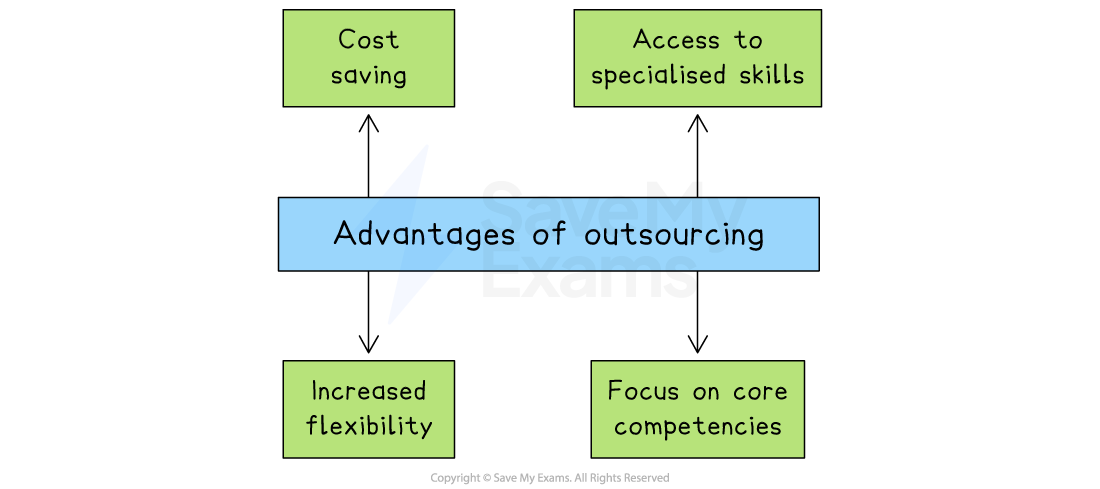
Outsourcing offers a range of benefits to businesses, including cost savings and increased flexibility
-
Cost savings
- Businesses can often reduce expenses associated with operations such as hiring and training employees, maintaining infrastructure and managing IT systems
-
Access to specialised skills
- External specialists have resources that the business lacks internally, which allows it to benefit from the knowledge and experience of industry specialists when required
-
Increased flexibility
- Outsourcing provides greater flexibility to scale operations up or down based on demand fluctuations, which is particularly valuable in industries with seasonal or unpredictable demand
-
Focus on core competencies
- Businesses can concentrate their resources and efforts on their core competencies, where they can add value
Disadvantages of outsourcing
-
Quality control
- Outsourcing makes it harder to ensure consistent quality and adherence to company standards
-
Loss of control
- Handing direct control over those activities to others outside of the business may be risky
- Companies must carefully select reliable partners and establish clear contractual terms to protect their interests
-
Data security and confidentiality
- Sharing sensitive information outside of the business introduces risks to data security and confidentiality
Was this revision note helpful?