Working Capital (Cambridge International A-Level Business)
The meaning and importance of working capital
- Working capital is the money that a business has available to fund its day-to-day activities
- It is described as the lifeblood of a business because a lack of working capital can quickly lead to business failure if it cannot meet its immediate financial obligations
- Working capital is a monetary value and is calculated using the formula
Worked Example Rondat Components is a heating components business based in Malmö. It has been struggling to control its level of stock
Its customers are Scandinavia’s leading gas boiler manufacturers, who require Rondat Components to supply products ‘just in time’. As a result, Rondat must hold large amounts of varied stock to ensure that customer needs can be met
Rondat Components offers its customers 90-days trade credit
Financial Information for Rondat Components
2024
€m2023
€mStock 8.1 7.2 Debtors 2.2 3.1 Cash 0.9 1.2 Short-term loan 6.4 4.4 Creditors 5.1 5.9 Calculate Rondat Components’ working capital in 2023 and 2024.
(3)
Step 1: Identify and calculate current assets and current liabilities for 2024 and 2023
Current assets [1]
Current liabilities [1]
Step 2: Subtract current liabilities from current assets for 2024 and 2023
[1]
Why is working capital important?
-
Cash is the most liquid of a business's current assets and can be used to settle debts immediately
-
Effective management of working capital involves careful cash management
- Debtors and stock are less liquid
- Businesses that are struggling with a lack of working capital may look to convert these current assets into cash as quickly as possible by, for example, selling stock at lower prices or purposefully chasing payment from customers
-
A business can have too much working capital
- If a business is holding large amounts of cash, it is likely to be missing out on the benefits of investing it in fixed assets or investments
-
This may represent a significant opportunity cost, especially when interest rates are high
- If a business is holding large amounts of stock it may incur extra storage costs, such as security and insurance costs, and could use the cash ‘tied up’ in this stock for other purposes
Managing trade receivables and trade payables
- Trade receivables is money owed to a business by its customers for goods or services already delivered but not yet paid for
- Trade payables is money a business owes to its suppliers for goods or services received but not yet paid for
- Maintaining the right balance between trade receivables and trade payables is essential for maintaining sufficient working capital
Managing trade receivables effectively
-
Effective management of trade receivables helps get cash into the business quickly, improving liquidity and reducing the risk of bad debt
-
Ways to manage trade receivables effectively include
- Set clear payment terms (e.g. 30 days) to avoid long delays in receiving money
- Send **invoices promptly and follow up on late payments with reminders
- Offer early payment incentives such as small discounts to encourage customers to pay faster
- Check customer creditworthiness** before offering credit, especially to new buyers
- Limit credit to high-risk customers or require deposits upfront
Managing trade payables effectively
-
Managing payables well allows the business to keep more cash on hand while meeting its obligations on time
-
Ways to manage trade payables effectively include
- Take full advantage of credit periods without paying late or damaging relationships
- Avoid paying too early unless there’s a benefit, like a discount for early payment
- Maintain good relationships with suppliers to possibly negotiate longer payment terms
- Track upcoming payments to avoid missed deadlines and late payment fees
Capital and revenue expenditure
-
Capital expenditure is business spending on non-current assets
- These are assets which will be used many times and for more than one year
Capital expenditure uses
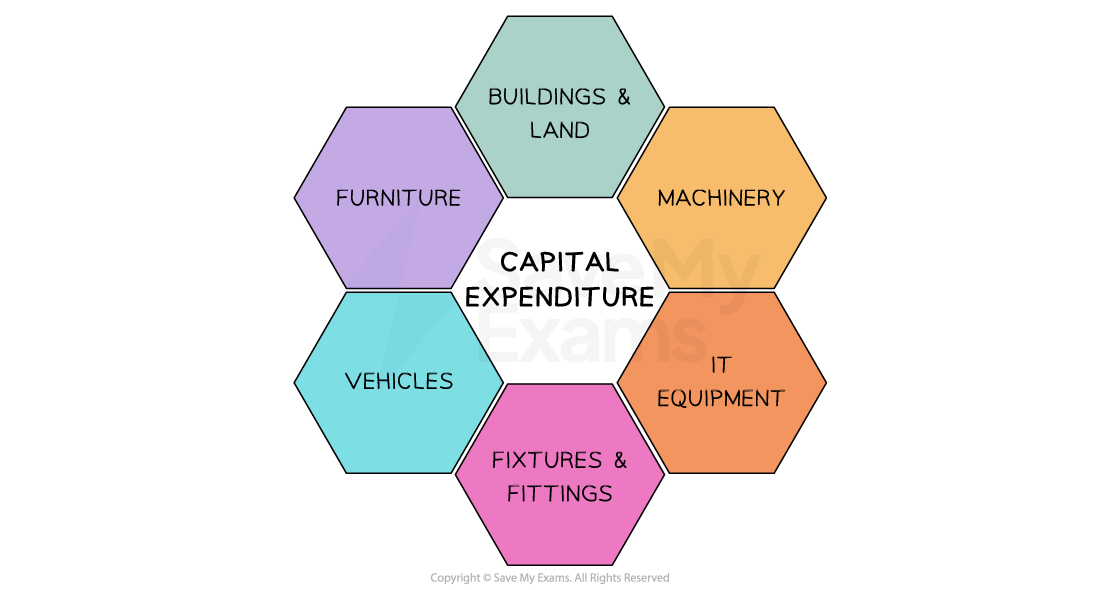
Examples of current assets for which capital expenditure is required
- Revenue expenditure is spending on goods and services that a business uses in the short-term as part of its normal trading activities
Revenue expenditure uses
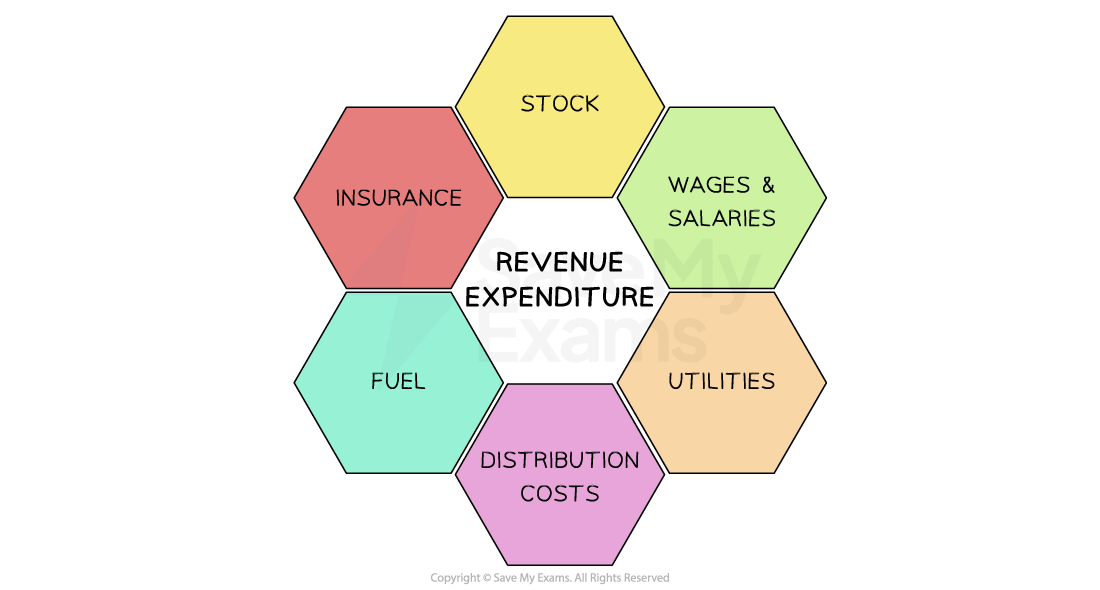
Examples of day to day costs for which revenue expenditure is required
Was this revision note helpful?
Build on this topic