Ansoff Matrix (Cambridge International A-Level Business)
An introduction to the Ansoff Matrix
-
Ansoff’s Matrix is a tool for businesses who want to grow quickly and have a growth objective
-
It is used to identify an appropriate strategic direction and identify the level of risk associated with the chosen strategy
-
The model considers four elements, which are broken down into two categories
- The market- existing and new markets
- The product - existing and new products
Ansoff's strategic matrix
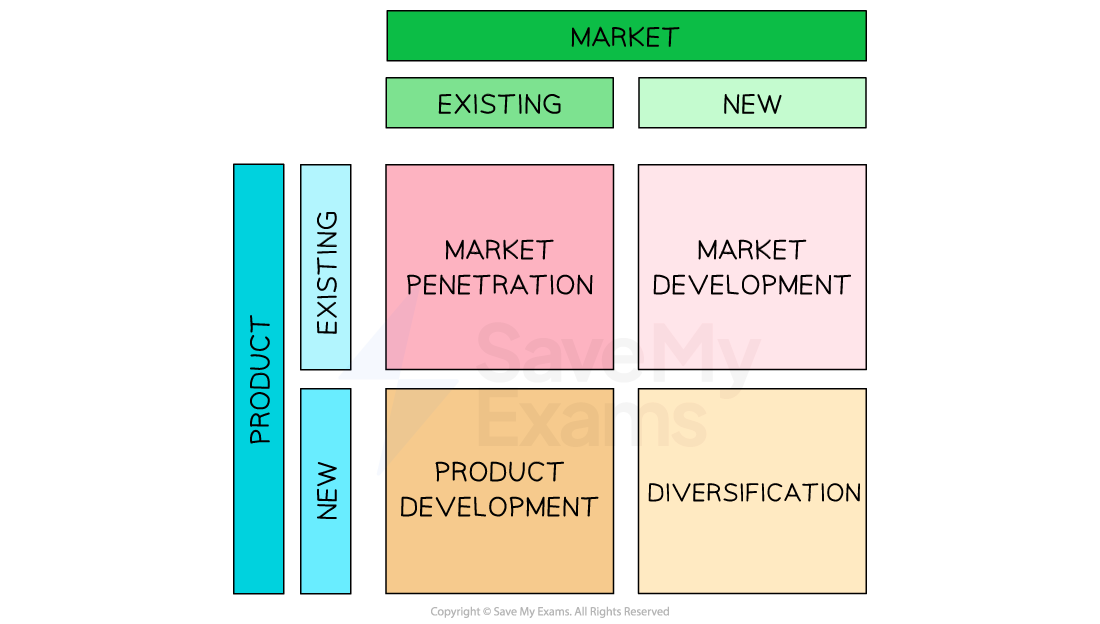
Ansoff’s strategic matrix identifies strategies for growth, depending on whether the product and market already exist or are new
Market penetration
-
Market penetration is the least risky strategy to achieve growth
-
It involves selling more products to existing customers by encouraging
- More regular use of the product
- Increased usage of the product
- Brand loyalty of customers
-
Case Study Coca-Cola’s 'Share a Coke' campaign
Instead of launching a new drink, Coca-Cola ran its “Share a Coke” campaign in existing markets (e.g. the USA, UK, Australia) which involved printing popular first names on Coke bottles
Why it worked
Increased purchase frequency
- Customers looked for bottles with their own name or their friends’ names, so they bought more Coke than before
Free publicity and excitement
- People shared pictures of personalised bottles on social media, drawing in even more buyers without extra advertising costs
Stronger brand loyalty
- Customers felt a personal connection to the brand, which made them choose Coke over other drinks more often
Outcome
- Coca-Cola achieved double-digit growth in mature markets
Market development
-
Market development involves finding and exploiting new market opportunities for existing products by
-
Entering new markets abroad
-
Repositioning the product by selling to different customer profiles (selling to other businesses as well as direct to consumers)
-
Seeking complementary locations
- E.g. M&S Food has achieved significant growth since teaming up with fuel retailers such as BP and Applegreen and providing express retail outlets
-
Case Study Netflix expanding into new countries
In 2016, Netflix launched its video-streaming service in over 130 new countries at once, using the same platform and content library it had in the US
Why it worked
Known brand and proven model
- Customers in new markets trusted a familiar name and understood how streaming worked
Local partnerships
- Netflix struck deals to use regional payment systems and worked with local internet providers to ensure smooth playback
Subtitle and dubbing
- By adding subtitles and voice-overs in many languages, Netflix made its existing shows accessible to viewers around the world
Outcome
- Within a year, Netflix gained millions of subscribers outside the US, turning international customers into a major source of revenue with limited changes to its product
Product development
-
Product Development involves selling new or improved products to existing customers by
-
Developing new versions or upgrades of existing successful products
-
Redesigning packaging and aesthetic features
-
Relaunching heritage products at commercially convenient intervals
- E.g. Lindt relaunches Christmas-themed products each year, often with a subtle design change, to recapture the interest of customers
-
Case Study Lego launches Lego Boost
After many families already bought classic Lego bricks, Lego introduced a robotics kit that lets children build and programme moving models using the familiar Lego system
Why it worked
Existing customer base
- Parents and children who already own Lego sets were eager to try a new, technology-driven Lego product
Complementary features
- Boost combines traditional building with coding lessons, making it both a toy and an educational tool
Brand trust
- Lego’s reputation for quality and creativity encouraged buyers to choose Boost over other robotics kits
Outcome
- Lego Boost sold strongly to families who already purchased standard Lego sets, increasing overall revenue without needing to find new customers
Diversification
-
Diversification is the most risky growth strategy as it involves targeting new customers with entirely new or redeveloped products
-
Examples of diversification include
- UK supermarket Tesco launching a range of financial products including current accounts and credit cards
- Café chain Greggs launching a range of themed clothing products
-
Case Study Tesco goes mobile
In 2003, after becoming a leading supermarket chain, Tesco created Tesco Mobile, a mobile phone network that offers pay-as-you-go and contract plans
Why it worked
Trusted brand
- Shoppers who already liked Tesco felt comfortable signing up for a mobile service under the same name
Convenience for customers
- Tesco Mobile bills and top‐ups can be managed online or at any Tesco store
- This made it easy for customers to handle both groceries and phone service in one place
Cross‐promotion
- Tesco used Clubcard points to reward mobile customers, encouraging supermarket shoppers to try its phone plans
Outcome
- Tesco Mobile attracted millions of subscribers in the UK and became a successful new income stream from its existing customer base
Was this revision note helpful?
Build on this topic