Location (Cambridge International A-Level Business)
Factors determining location and relocation
- Choosing a good production location can have significant impacts on a business.
- A range of factors influence the location a business chooses for production or where it chooses to relocate
Factors affecting business location
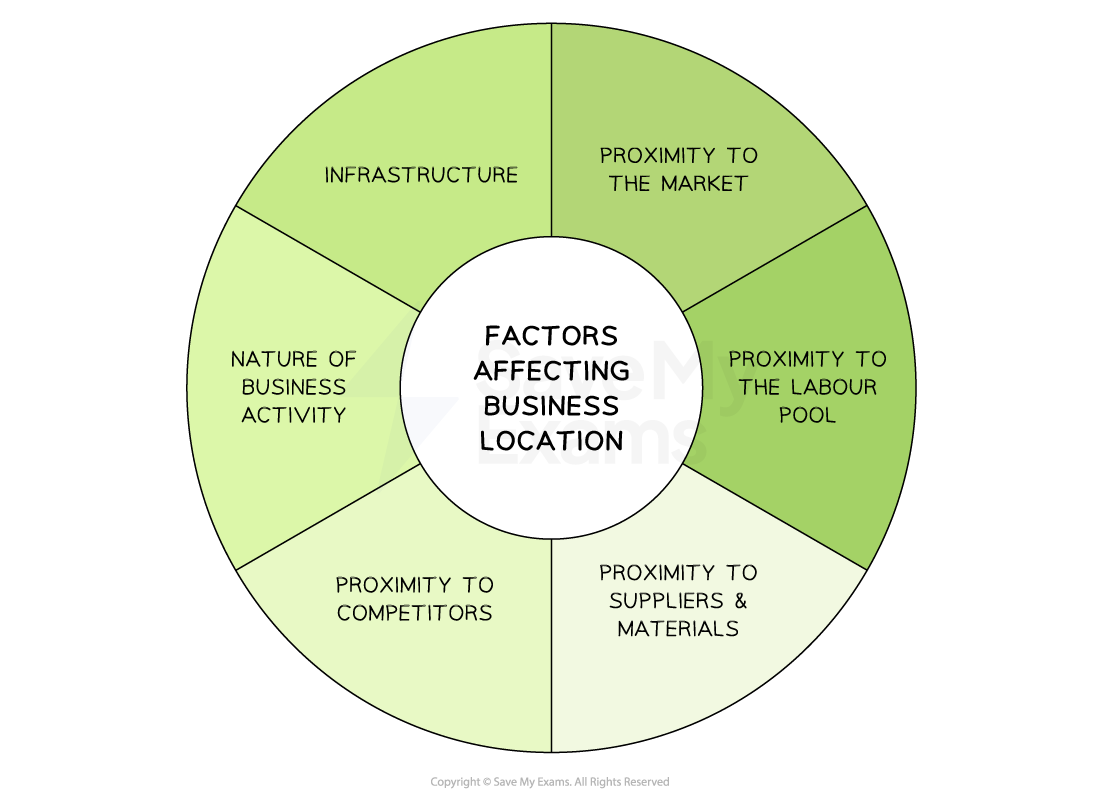
Production locations are affected by multiple factors and if a business chooses the wrong location, it can fail
Proximity to the market
- This refers to how close the business is to its target customers
- Being near the market can reduce transport costs and make it easier for customers to access the business
Proximity to labour
- This means being located near areas where skilled and qualified workers are available
- Businesses often choose locations with a strong local workforce to make it easier to recruit the right people and run operations efficiently
Proximity to materials
- This refers to how close a business is to the raw materials or supplies it needs
- Being near materials helps reduce transportation costs and ensures a steady supply
Proximity to competitors
- Some businesses choose to locate near competitors to attract the same customer base or to offer something different
- Others may avoid locating near competitors to reduce direct competition
The nature of the business activity
-
Different types of businesses have different location needs based on what they do
-
For example, a manufacturing plant may need large space and delivery access, while a law firm may need a smaller, more central office
- E.g. A factory needs room for machinery and deliveries, while a law office needs a professional, easy-to-access location
Infrastructure
- This includes transport links and electronic networks like internet connections
- Good transport is essential for businesses that deliver physical goods
- Fast and reliable internet access is key for online businesses
- E.g. An online fashion retailer needs a location close to the motorway for quick delivery and fast service, helping it compete in the market
Local, national and international location decisions
- When a business chooses where to locate, the scale of that decision can be local, national or international
1. Local location decisions
-
Local location decisions involve choosing where in a particular town or city to place the business, such as in the city centre, on an industrial estate or near transport links
- E.g. A hair salon might choose a busy high street over a quiet side road to attract walk-in customers
Key factors affecting local location decisions
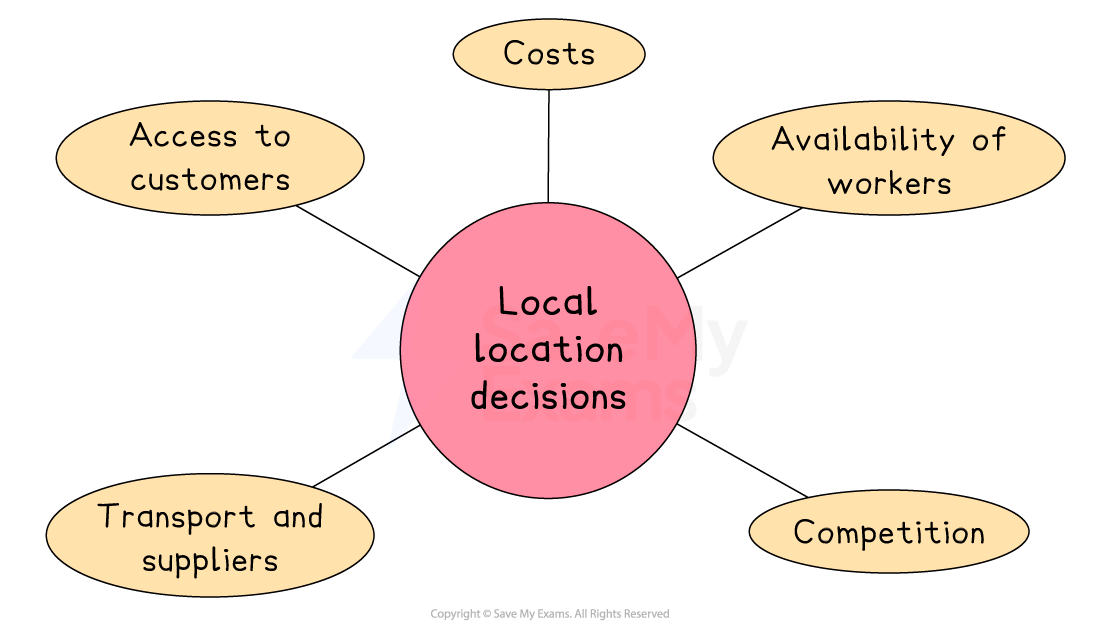
Local location decisions include considering access to customers, availability of workers and the location of competition
-
Access to customers
-
Retail shops often choose high footfall areas like shopping centres to attract more sales
- Major Turkish retail brands, for example, locate their flagship stores on İstiklal Caddesi, a busy shopping street in Istanbul.
-
-
Availability of workers
-
Businesses benefit from locating near skilled or affordable labour
- Hi-tech firms choose business parks around MIT in the USA to access a strong pool of computing graduates
-
-
Costs
-
Rent and business rates can vary widely even within one town or city
- Retail space on Berlin’s Kurfürstendamm is expensive, but nearby Prenzlauer Berg offers more affordable options
-
-
Competition
-
Locating near rivals can create a customer hub but may also reduce market share
- Hatton Garden in London is home to many high-end jewellery and gold businesses, attracting specialist customers.
-
-
Transport and suppliers
-
Good transport links are essential for service and delivery-based businesses
- Logistics firms favour northern Calais due to its excellent road, rail and ferry connections.
-
2. National location decisions
-
National location decisions involve choosing which part of a country to set up or expand a business
- E.g. A call centre might choose a city in the north of the UK to benefit from lower wages and government support.
Key factors affecting national location decisions
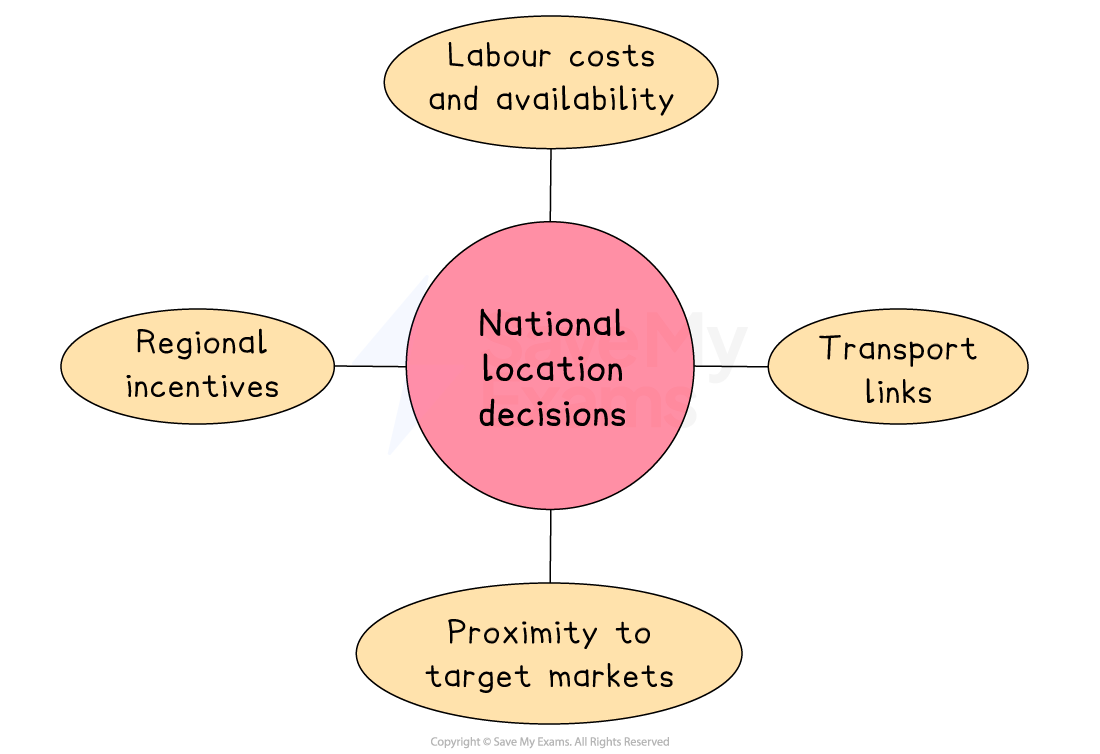
National location decisions involve consideration of regional incentives and transport links
-
Regional incentives
-
Governments may offer grants or tax breaks to attract businesses to poorer areas, aiming to reduce unemployment and support local economies
- E.g. The Welsh Government has funded companies locating in places like Cardiff and Swansea
-
-
Labour costs and availability
-
Wages and skills vary by region
-
Cities may offer highly skilled workers at higher wages, while rural areas may be cheaper but with fewer qualified employees
- E.g. In India, major cities like Bangalore and Delhi have more skilled workers than rural regions
-
-
Proximity to target markets
-
Locating near areas with high demand helps reduce delivery costs and respond better to local preferences
- E.g. Mexican food firms often base themselves near large cities like Mexico City or Guadalajara to reach more consumers
-
-
Transport links
-
Good access to roads, ports, railways or airports helps cut delivery times and transport costs, especially for goods-based businesses
- E.g. The Netherlands attracts many distribution centres due to Rotterdam port and a strong road and rail network
-
3. International location decisions
-
International location decisions relate to a business considering moving or expanding to another country
- E.g. A European clothing brand might open a factory in Vietnam to reduce production costs and sell to Asian markets
Key factors affecting international location decisions
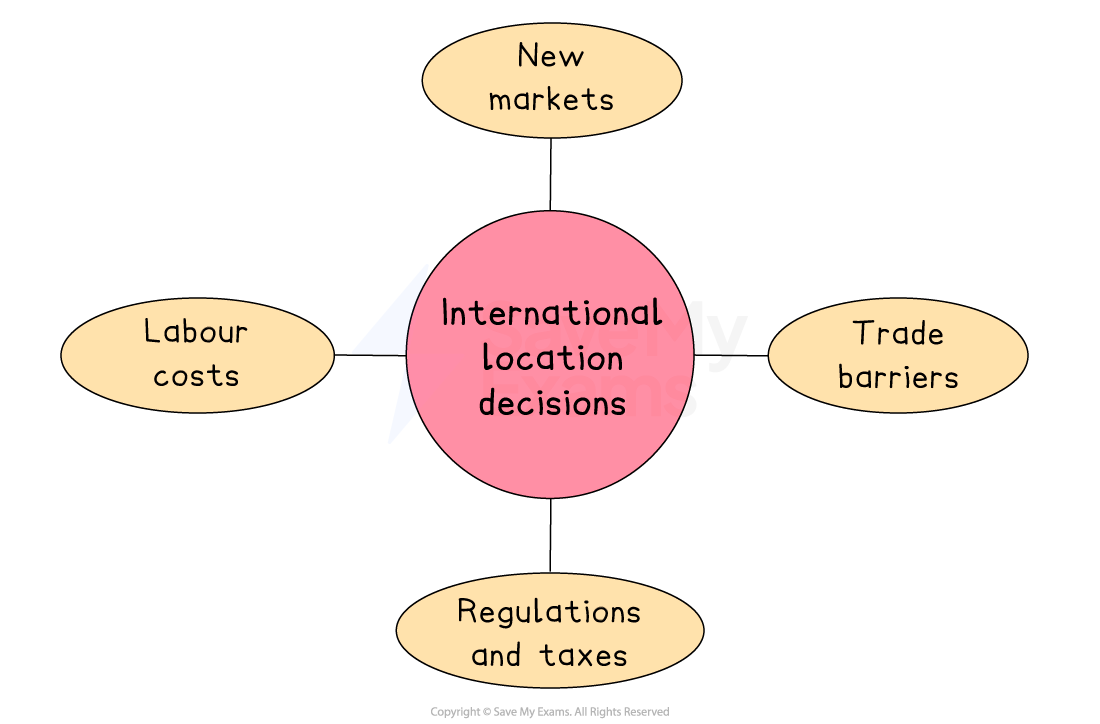
International location decisions often involve consideration of regulations and taxes, access to new markets and trade barrier
-
Labour costs
-
Businesses may locate in countries where wages are lower to reduce production costs, especially in labour-intensive sectors like textiles or electronics
-
However, they must weigh up lower wages against possible lower skill levels, productivity and working conditions
- E.g. Zara and H&M outsource production to countries like Bangladesh and Vietnam, where labour is much cheaper than in Europe or North America
-
-
New markets
-
Expanding abroad helps businesses access new customers, particularly in growing economies
-
This boosts sales and market share, especially if the home market is saturated
-
Being based locally also helps firms better understand customer behaviour and respond quickly to demand
- E.g. McDonald’s has entered Asian and African markets to tap into rising incomes and growing demand for Western food
-
-
Regulations and taxes
-
Some countries offer lower tax rates and simpler business laws, making them attractive for international firms
-
These benefits can raise profits but must be balanced with maintaining ethical standards
- E.g. Ireland’s low corporate tax and EU access have attracted major tech firms like Google and Facebook
-
-
Trade barriers
-
Locating within a country can help businesses avoid tariffs, quotas or other trade restrictions
-
This is vital for exporters and also improves delivery times and local relationships
- E.g. Toyota has built factories in the US and UK to avoid import tariffs and better serve local markets
-
The impact of offshoring and reshoring
Offshoring
-
Offshoring occurs when a business sets up operations in another country to carry out certain business processes so as to:
- Take advantage of lower labour costs
- Gain access to specialised skills
- Expand into new markets
-
Common examples of offshoring practices include call centres in foreign countries, software development teams or manufacturing plants established in countries with cheaper labour
Evaluating offshoring
| Advantages | Disadvantages |
|---|---|
| - Labour costs are often lower in offshore locations which reduces costs - Allows businesses to tap into skilled labour that may not be readily available domestically - By offshoring operations to different time zones, businesses can take advantage of 24/7 operations and provide better customer support - By establishing a presence in a foreign country, businesses can gain local market insights, develop relationships with customers and spot new growth opportunities | - Offshoring can present challenges in terms of communication and language differences which may result in delays - Maintaining quality can be more challenging when operations are moved offshore - Offshoring involves sharing sensitive information and intellectual property with external parties which may raise concerns about data security or confidentiality - Offshoring can result in domestic job losses as operations are shifted to lower-cost locations |
Reshoring
- Reshoring occurs when a business brings back its production activities to its home country from abroad
- It involves reversing the previous decision to offshore or outsource those activities to another country
- There are several reasons why a company may choose to reshore its operations
Reasons to reshore
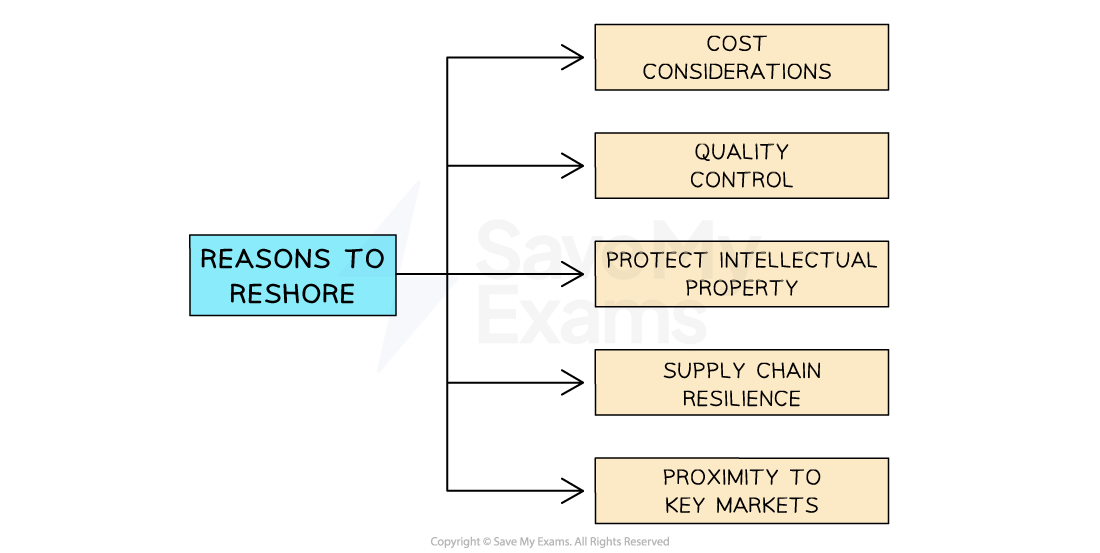
*Reasons for a business to reshore its operations *
- Cost considerations
- The initial cost advantages of offshoring may reduce due to rising labour or transportation costs in the foreign country
- Quality control
- By reshoring, companies can have better control over the manufacturing processes and ensure higher quality standards, which may lead to improved customer satisfaction
- Intellectual property protection
- By bringing manufacturing back to their home country, they can reduce the risk of intellectual property theft
- Supply chain resilience
- The COVID-19 pandemic highlighted the vulnerabilities of global supply chains
- Disruptions to transportation, logistics and international trade led to delays and shortages of critical goods
- Reshoring reduces dependence on foreign suppliers
- Market proximity
- Can allow companies to be closer to their target markets, which can lead to faster delivery times, reduced transportation costs and improved responsiveness to customer demands
Globalisation and location
-
Globalisation is the growing integration of economies, markets, and people across the world
- It allows businesses to operate more freely across borders and has a strong influence on where they choose to locate
How globalisation impacts business location
| Factor | Explanation |
|---|---|
| Access to international markets | - Businesses may locate in countries where they can directly serve large or fast-growing markets - This reduces transport costs and increases sales potential |
| Cheaper labour and materials | - Globalisation allows access to countries with lower wages or material costs - This helps firms reduce expenses and remain competitive |
| Improved transport and technology | - Better logistics, communication systems and infrastructure make it easier to operate across borders and coordinate global supply chains |
| Avoiding trade barriers | - Businesses can avoid tariffs or quotas by locating inside specific countries or trading blocs - This gives them easier access to important regional markets |
| Government incentives | - Some governments offer tax reductions or grants to attract international businesses, especially in developing areas |
| Cultural and language factors | - Understanding local customs and languages is key to operating abroad - Some businesses locate where suitable language skills and cultural understanding exist |
Was this revision note helpful?
Build on this topic