Test Strips & Biosensors (Cambridge International A-Level Biology)
Spec point —
14.1.11
Test strips & biosensors
Measuring urine glucose concentration
-
People with diabetes cannot control their blood glucose concentration so that it remains within normal, safe limits
-
The presence of glucose in urine is an indicator that a person may have diabetes
- If blood glucose concentration increases above a value known as the renal threshold, not all of the glucose from the filtrate in the proximal convoluted tubule is reabsorbed and some will be left in the urine
-
Test strips can be used to test urine for the presence and concentration of glucose
-
Two enzymes are immobilised on a small pad at one end of the test strip:
- glucose oxidase
- peroxidase
-
The pad is immersed in the urine sample for a short time
-
If glucose is present:
- Glucose oxidase catalyses a reaction in which glucose is oxidised to form gluconic acid and hydrogen peroxide
- Peroxidase then catalyses a reaction between the hydrogen peroxide and a colourless chemical in the pad to form a brown compound and water
-
The colour of the pad is compared to a colour chart
- Different colours represent different concentrations of glucose (the higher the concentration of glucose present, the darker the colour)
-
Urine tests only show whether or not the blood glucose concentration was above the renal threshold whilst urine was collecting in the bladder
- They do not indicate the current blood glucose concentration
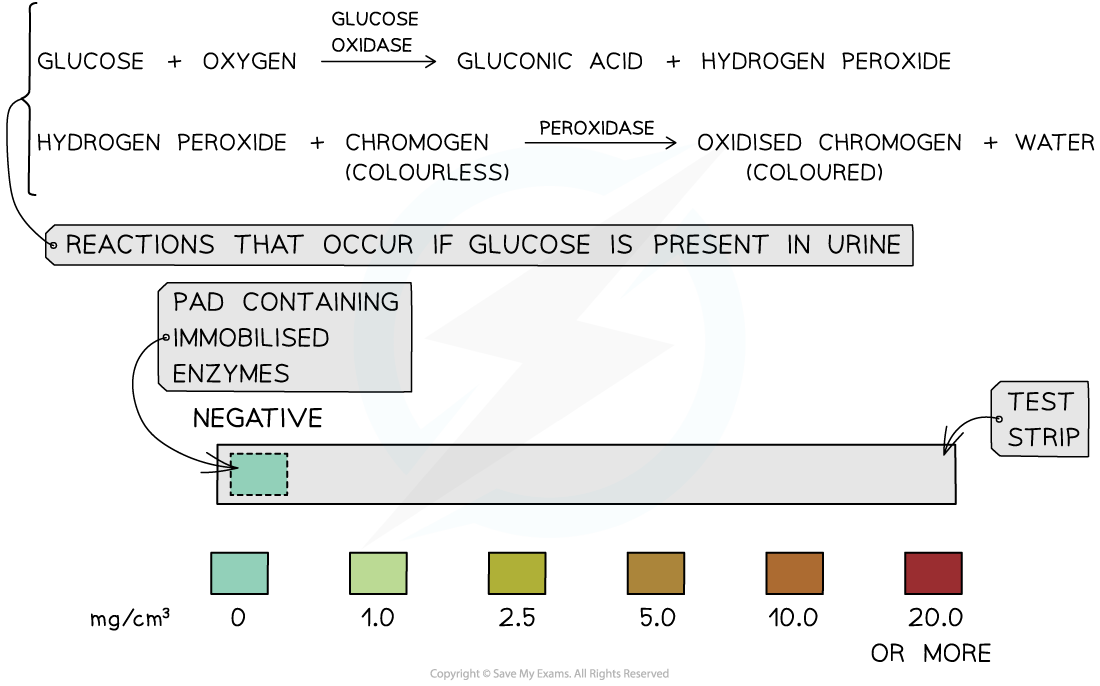
Top: the chemical reactions catalysed by the immobilised glucose oxidase and peroxidase enzymes on the end-pad of a urine test strip. Bottom: an example of the colour chart used to interpret the colour of the end-pad of a urine test strip.
Measuring blood glucose concentration
- A biosensor can be used by people with diabetes to show their current blood glucose concentration
- Similar to the test strips, a biosensor uses glucose oxidase (but no peroxidase) immobilised on a recognition layer
- Covering the recognition layer is a partially permeable membrane that only allows small molecules from the blood to reach the immobilised enzymes
- When a small sample of blood is tested, glucose oxidase catalyses a reaction in which any glucose in the blood sample is oxidised to form gluconic acid and hydrogen peroxide
- The hydrogen peroxide produced is oxidised at an electrode that detects electron transfers
- The electron flow is proportional to the glucose concentration of the blood sample
- The biosensor amplifies the current, which is then read by a processor to produce a digital reading for blood glucose concentration
- This process is complete within a matter of seconds
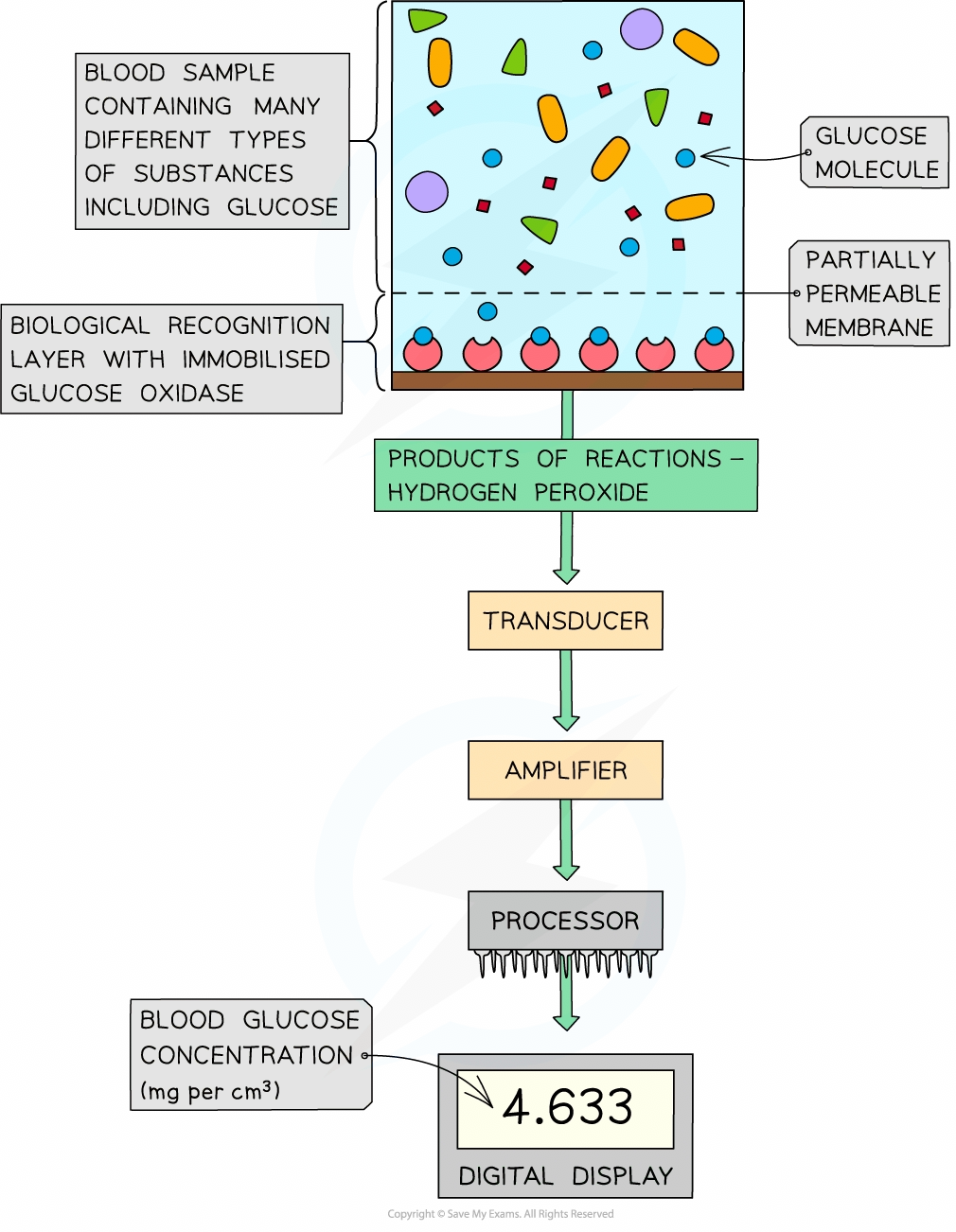
The parts of a glucose biosensor
Exam Hint The urine test strip will only produce a positive result for glucose. Other sugars such as fructose, sucrose and lactose will give a negative result. This is due to the specificity of the glucose oxidase enzyme.
Was this revision note helpful?
Build on this topic