Yeast in Food Production (Edexcel IGCSE Science)
Spec point —
5.5· understand the role of yeast in the production of food including bread
Yeast in Food Production
- Microorganisms can be used by humans to produce foods and other useful substances
- One example of this is the production of bread using yeast
- Yeast is a single-celled fungus that can carry out both aerobic and anaerobic respiration
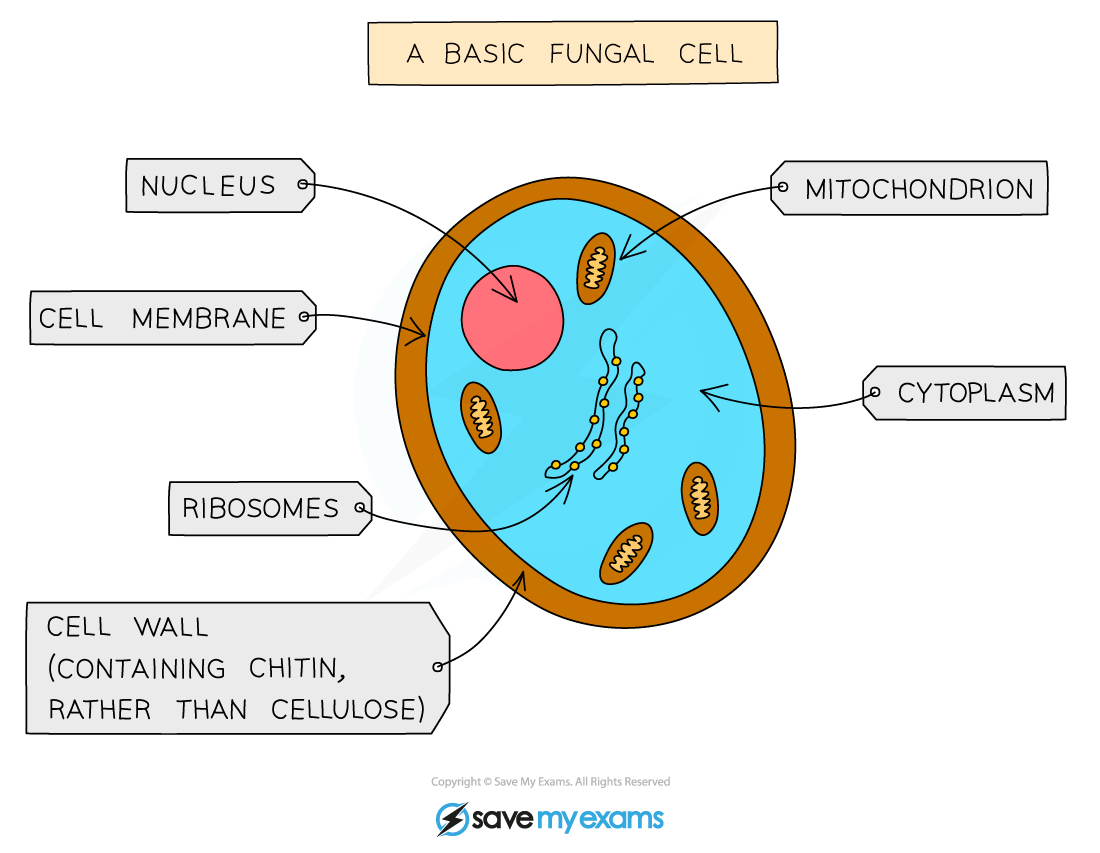
Yeast is a single-celled fungus, similar to the one shown in the diagram above
Making bread
-
During bread making yeast is added to bread dough
-
The yeast produces enzymes that break down the starch in flour, releasing sugars that can be used by the yeast in respiration
- The yeast begin to respire aerobically but will switch to anaerobic respiration when oxygen runs out
-
When yeast carries out anaerobic respiration it produces alcohol (ethanol) and carbon dioxide
-
The carbon dioxide produced by the yeast is trapped in small air-pockets in the dough, causing the dough to rise(increase in volume)
-
The dough is then baked in a hot oven to form bread
- During baking any ethanol produced by the yeast is evaporated in the heat, so bread doesn't contain any alcohol
-
The yeast is killed by the high temperatures used during baking
- This ensures there is no further respiration by the yeast
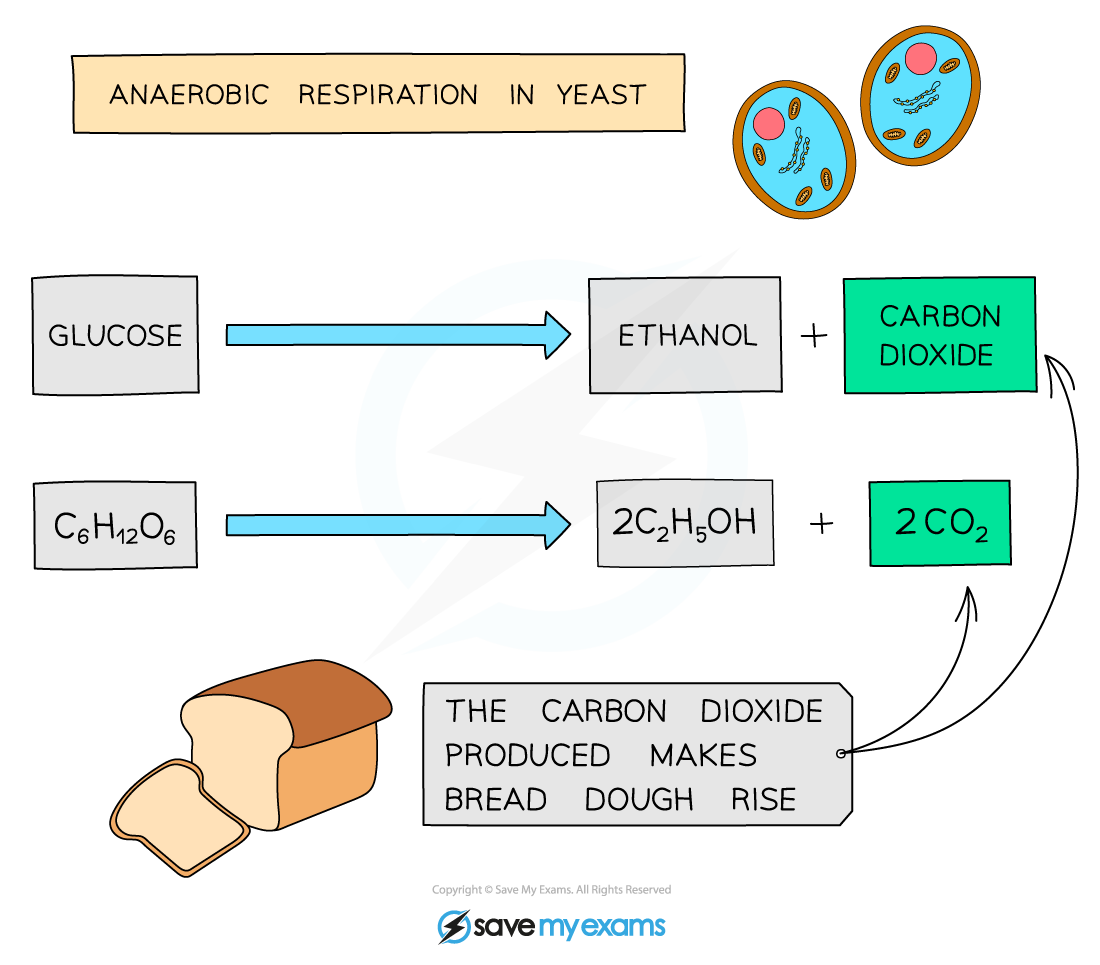
The carbon dioxide produced by the anaerobic respiration of glucose is what makes bread dough rise
Was this revision note helpful?
Build on this topic