The Genome & Genes (Edexcel IGCSE Science)
The Genome
Spec point —
3.14· understand that the genome is the entire DNA of an organism and that a gene is a section of a molecule of DNA that codes for a specific protein
-
The entirety of an organism's DNA is known as its genome
-
A gene is a section of a molecule of DNA
-
Each gene within the genome codes for a particular sequence of amino acids
-
These sequences of amino acids form different types of proteins
-
Genes control our characteristics as they code for proteins that play important roles in what our cells do
-
There are many different types of proteins e.g.
- Structural proteins such as collagen found in skin cells
- Enzymes
- Hormones
Chromosomes
Spec point —
3.15· understand that the nucleus of a cell contains chromosomes on which genes are located
-
In the nucleus of a cell, the DNA double helix supercoils to form structures called chromosomes
- Chromosomes are only visible during cell division
-
Ordinary human body cells contain 23 pairs of chromosomes, meaning that they contain 46 chromosomes in total
- This is a diploid number (often shown as 2n)
- One chromosome from a pair is inherited from each parent
- Each chromosome pair is called a homologous pair
-
Genes are found in specific locations on the chromosomes, these locations were identified in the human genome project
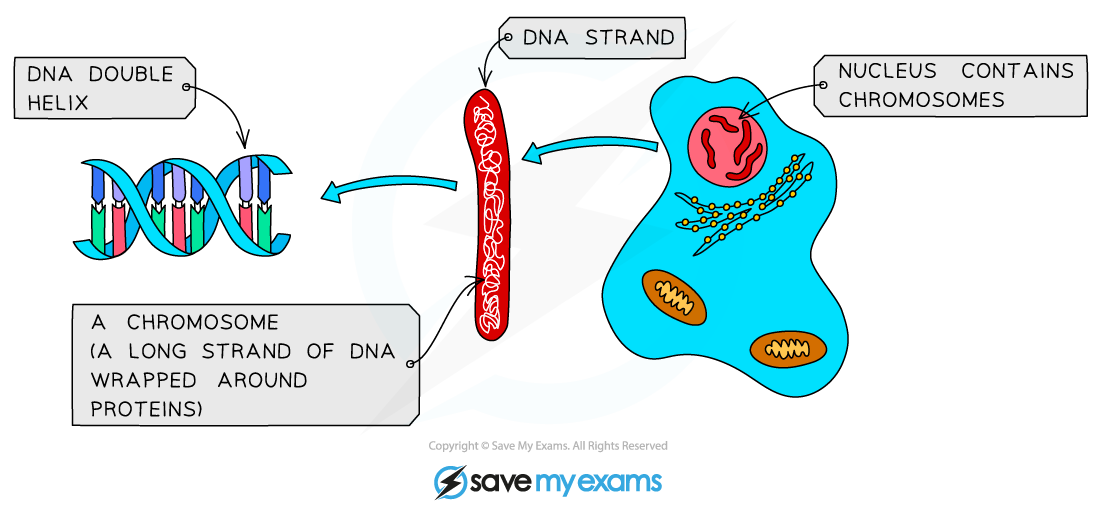
Genes are short lengths of DNA that code for a protein. They are found on chromosomes.
Exam Hint Remember that the number of chromosomes found in each species differs, for example, humans have 23 pairs, dogs have 39 pairs and rice plants have 12 pairs
Was this revision note helpful?
Build on this topic