The Human Eye: Structure (Edexcel IGCSE Science)
Exam board Pearson Edexcel · IGCSEUpdated 2026-07-02
Spec point —
2.91· describe the structure and function of the eye as a receptor
The Human Eye: Structure
- The eye is a highly specialised sense organ containing receptor cells that allow us to detect the stimulus of light
- The retina of the eye contains receptor cells sensitive to light
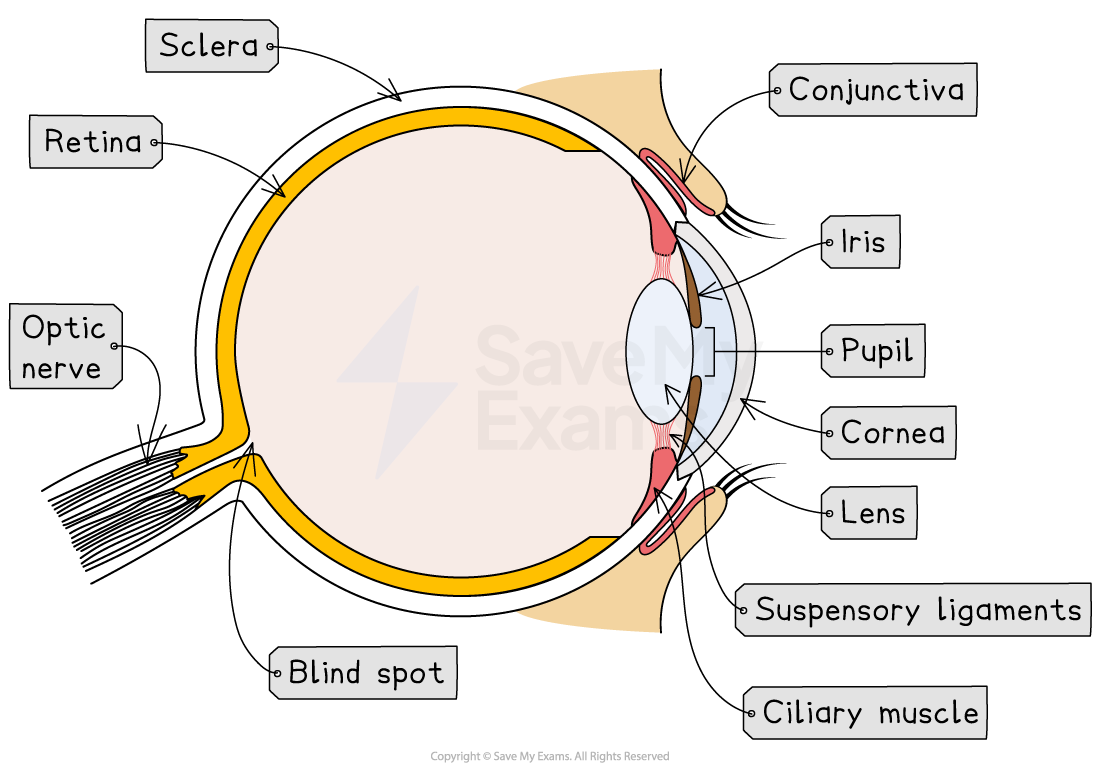
The eye is a sense organ that contains light receptor cells
The structures of the eye
- Conjunctiva - a clear membrane that covers the white of the eye and the inside of the eyelids; it lubricates the eye and provides protection from external irritants
- Cornea - transparent, curved layer at the front of the eye that refracts light as it enters the eye
- Sclera - the strong outer wall of the eyeball that helps to keep the eye in shape and provides a place of attachment for the muscles that move the eye
- Pupil - circular opening in the centre of the iris that allows light to enter the eye
- Iris - controls how much light enters the pupil
- Lens - transparent disc that can change shape to focus light onto the retina
- Ciliary muscle - a ring of muscle that contracts and relaxes to change the shape of the lens
- Suspensory ligaments - ligaments that connect the ciliary muscle to the lens
- Retina - contains receptor cells sensitive to light
- Fovea - region of the retina that contains densely packed cones (allows eyes to see in good detail and colour)
- Optic nerve - carries impulses between the eye and the brain
- Blind spot - the point at which the optic nerve leaves the eye, where there are no light receptor cells
Exam Hint Make sure you can identify the structures of the eye on a diagram because diagrams with labels are a very common form of exam question for this topic.
Was this revision note helpful?
Build on this topic