Circulatory System: General Structure (Edexcel IGCSE Science)
Circulatory System
Spec point —
2.69· understand the general structure of the circulation system, including the blood vessels to and from the heart and lungs, liver and kidneys
-
The circulatory system is a closed network of blood vessels connected to the heart, with blood flowing in one direction
-
Arteries carry blood away from the heart to organs, and this blood is usually oxygenated
- The pulmonary artery is an exception, it carries deoxygenated blood away from the heart
-
Arteries branch into narrower arterioles and then capillaries within the organs
-
In the organs, respiring cells use up the oxygen from the blood
-
Capillaries join to form venules, which widen into veins carrying blood back to the heart, and this blood is usually deoxygenated
- The pulmonary vein is an exception, it carries oxygenated blood to the heart
-
A different network of lymphatic vessels collect all the excess tissue fluid that leaks out of the capillaries and delivers it back to the circulatory system
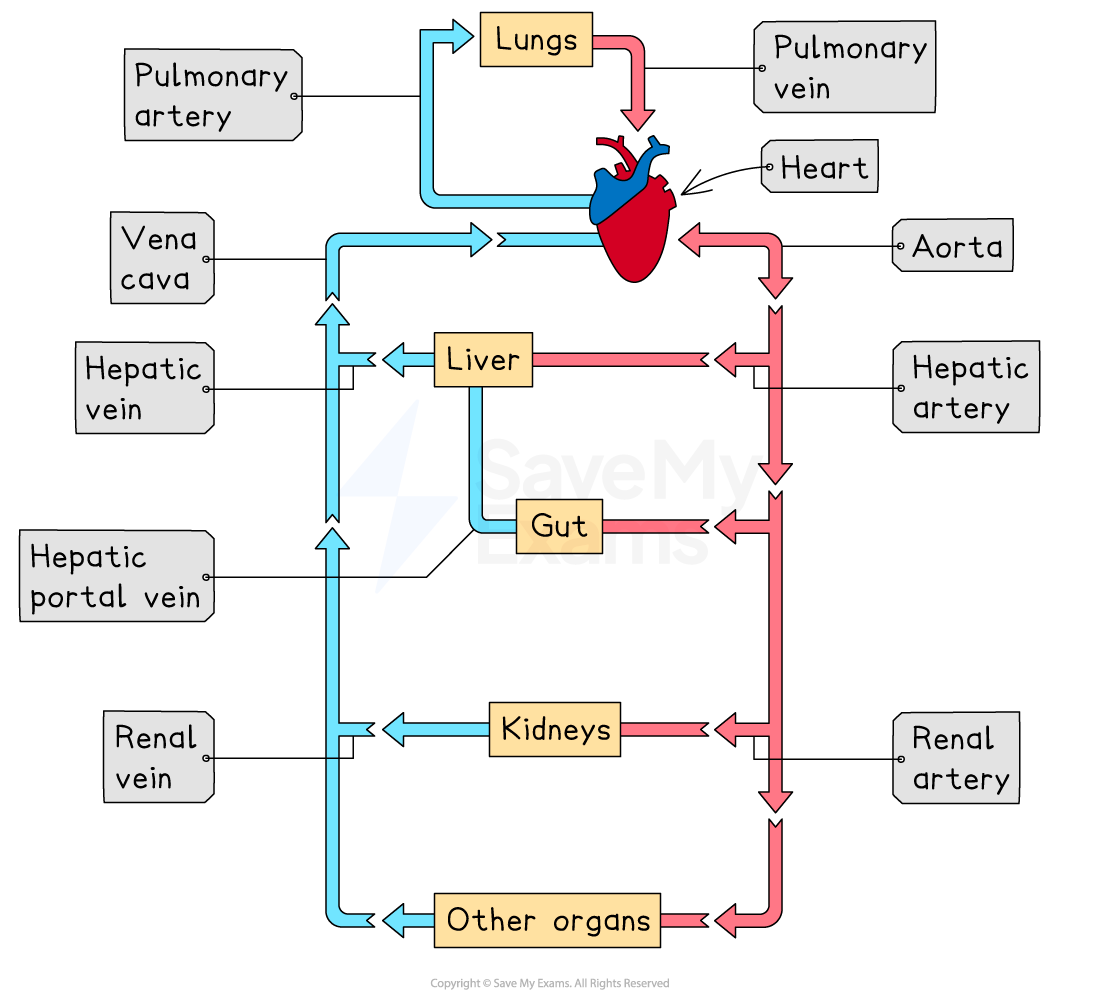
The circulatory system
Main Blood Vessels of the Circulatory System Table
| Organ | Towards organ | Away from organ |
|---|---|---|
| Heart | Vena cava, pulmonary vein | Aorta, pulmonary artery |
| Lung | Pulmonary artery | Pulmonary vein |
| Liver | Hepatic artery and hepatic portal vein | Hepatic vein |
| Kidney | Renal artery | Renal vein |
Was this revision note helpful?
Build on this topic