Adaptations for Pollination (Edexcel IGCSE Science)
Insect-Pollinated Flowers
Spec point —
3.3· describe the structures of an insect-pollinated and a wind-pollinated flower and explain how each is adapted for pollination
-
Flowers are the reproductive organs of plants
-
The role of flowers is to enable plant gametes to come together in fertilisation
- The male gametes of plants are found in pollen grains
- The female gametes of plants are in ovules
-
The process by which pollen is transferred from the male part of a flower to the female part of a flower is known as pollination; this can be carried out in various ways, e.g. by insects or by wind
Insect-pollinated flower structure
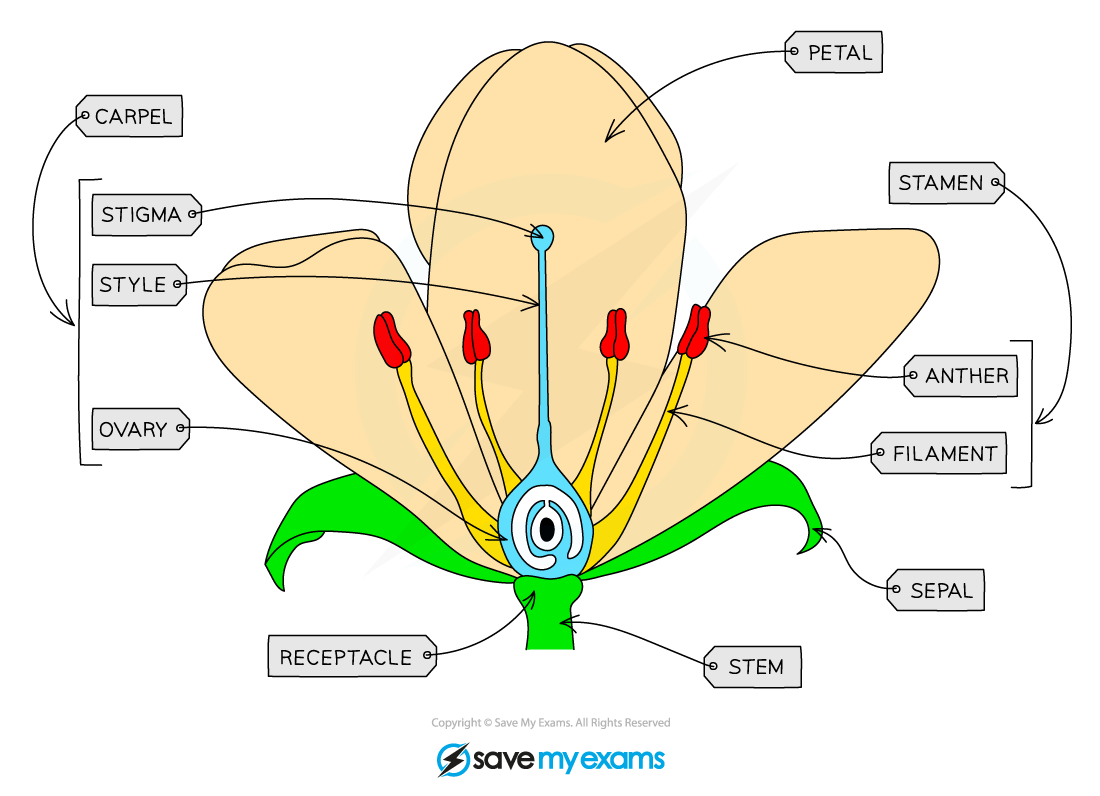
Insect pollinated flowers are adapted to attract insects and aid insect pollination
| Structure | Description |
|---|---|
| Sepal | Protects unopened flower |
| Petals | Brightly coloured in insect-pollinated flowers to attract insects |
| Anther | Produces and releases pollen |
| Filaments | Provides support to the anther |
| Stigma | Sticky top of the female part of the flower which collects pollen grains |
| Style | A tube that connects the stigma and ovary |
| Ovary | Contains the ovules |
| Ovule | Structures inside the ovary that contain the female gametes |
Structural adaptations of insect-pollinated flowers
-
Insect pollinated flowers are adapted to allow insects to collect pollen from one flower and easily transfer it to another flower
- When an insect enters a flower in search of nectar it brushes against the anthers, which deposit sticky pollen onto the insect's body
- When the insect visits another flower it brushes against the stigma and deposits some of the pollen from the first flower; this is pollination
| Feature | Adaptations of an insect pollinated flower |
|---|---|
| Petals | Large and brightly coloured to attract insects |
| Scent and nectar | Scent and nectar are produced to encourage insects to visit the flower and push past stamen to get to nectar |
| Anthers | Held on stiff filaments within the flower so that they brush against insects |
| Stigma | Sticky stigmas within the flowers catch pollen grains when insects brush past |
Wind-Pollinated Flowers
Spec point —
3.3· describe the structures of an insect-pollinated and a wind-pollinated flower and explain how each is adapted for pollination
Wind pollinated flower structure
- Wind-pollinated flowers do not need to attract insects, so their structure differs from that of insect-pollinated flowers
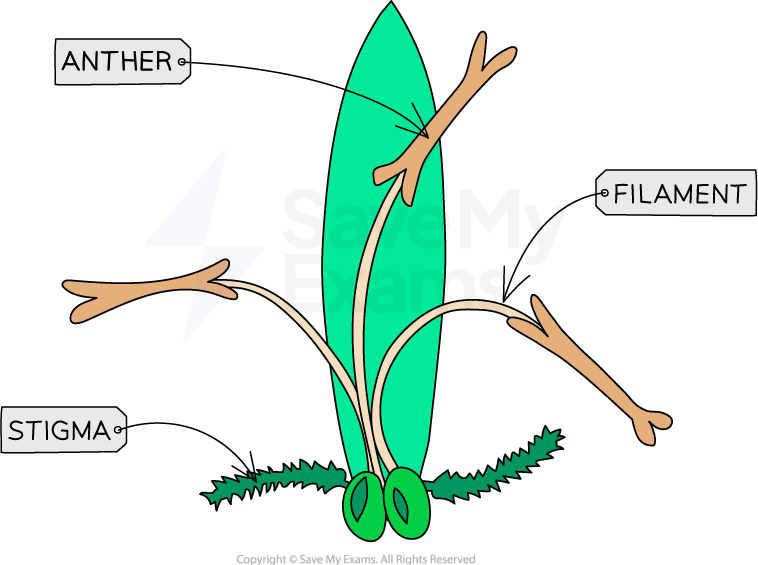
Wind pollinated flowers have anthers that hang outside the flower on long filaments, and feathery stigmas that can catch pollen easily
Structural adaptations of wind-pollinated flowers
-
Wind pollinated flowers are adapted so that wind can easily catch pollen grains and carry them to the stigmas of other flowers
-
The anthers and stigmas of wind pollinated flowers hang outside the flower so that:
- pollen can easily be blown away by the wind
- pollen can easily be caught by the stigmas of other flowers
| Feature | Adaptations of a wind pollinated flower |
|---|---|
| Petals | Small and dull, often green or brown in colour; producing colourful petals would be a waste of energy |
| Scent and nectar | Scent and nectar are not produced; this would be a waste of energy |
| Anthers | Held on long filaments outside the flower to release pollen grains easily into the wind |
| Stigma | Feathery stigmas outside the flower catch airborne pollen grains |
Was this revision note helpful?
Build on this topic