Gametes & Fertilisation (Edexcel IGCSE Science)
The Gametes
Spec point —
3.2· understand that fertilisation involves the fusion of a male and female gamete to produce a zygote that undergoes cell division and develops into an embryo
Gametes
-
Gametes are sex cells produced by meiosis
- The **sperm **and ovum in animals
- The pollen nucleus and ovum in plants
-
Gametes contain** half the number of chromosomes**(23 in human gametes) compared to normal body cells
-
Gametes have adaptations to improve the chances of successful fertilisation and embryo development, for example:
- Sperm cells have a tail to propel them towards the egg and mitochondria to provide energy for this movement
- Egg cells have energy stores within the cytoplasm to support early embryo development
Human gametes diagram
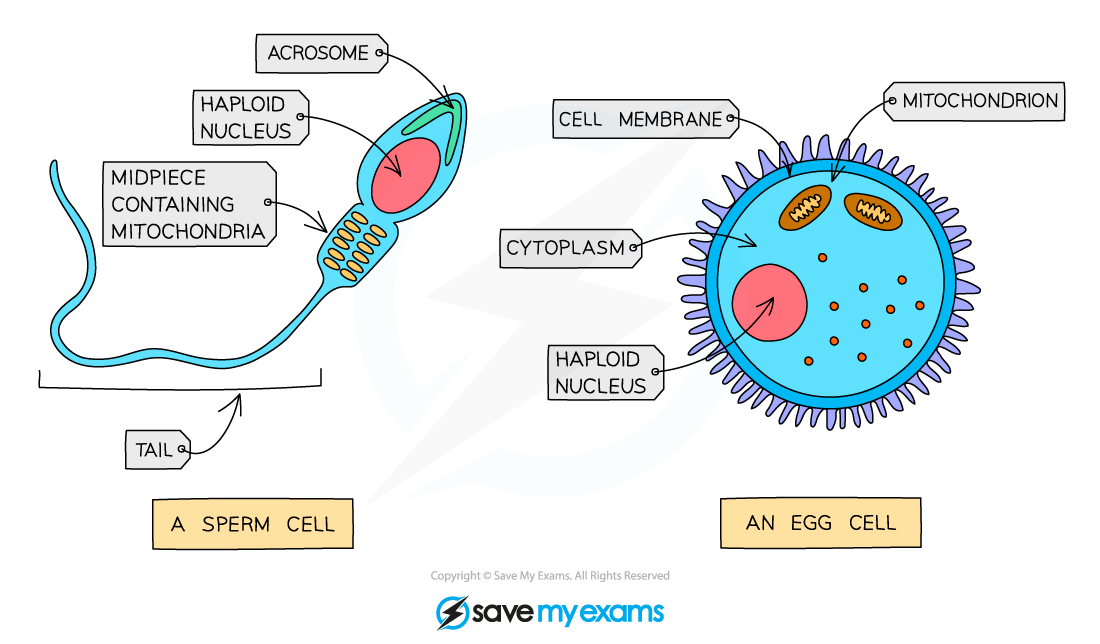
Comparing sperm and egg cells
Fertilisation
Spec point —
3.2· understand that fertilisation involves the fusion of a male and female gamete to produce a zygote that undergoes cell division and develops into an embryo
- Fertilisation can be described as:
the fusion of a male gamete and female gamete to produce a zygote
- The zygote then divides by mitosis to develop into an embryo
- Cells start to become specialised to perform specific functions, forming all the body tissues of the offspring
Fertilisation in humans
-
During sexual intercourse, semen is ejaculated into the female's vagina near the cervix, and sperm travel through the cervix into the uterus.
-
Fertilisation occurs in the oviduct if a sperm meets an egg, typically 1-2 days after ovulation
-
A human zygote contains the full 46 chromosomes (23 pairs of chromosomes)
- Half of the chromosomes in a zygote come from the father and the other half from the mother
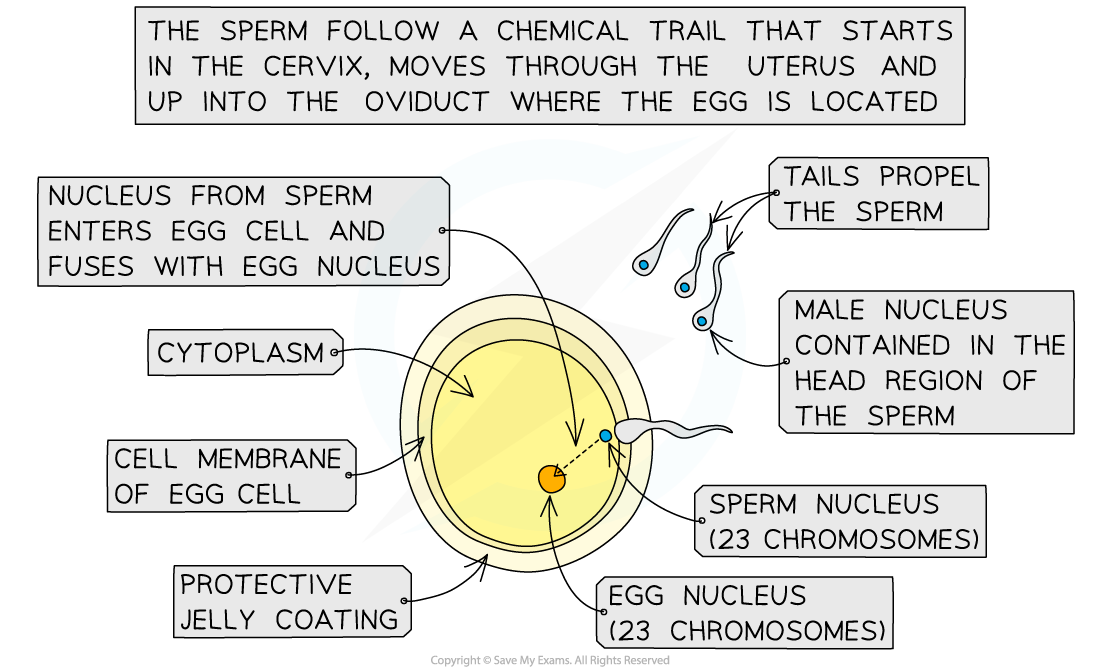
The process of fertilisation in humans
Fertilisation in plants
- In plants, fertilisation occurs when a pollen tube grows down from a pollen grain to deliver the male nucleus into the ovary
- Here the male and female gametes fuse to form the embryo
- More detailed notes on this process can be found here
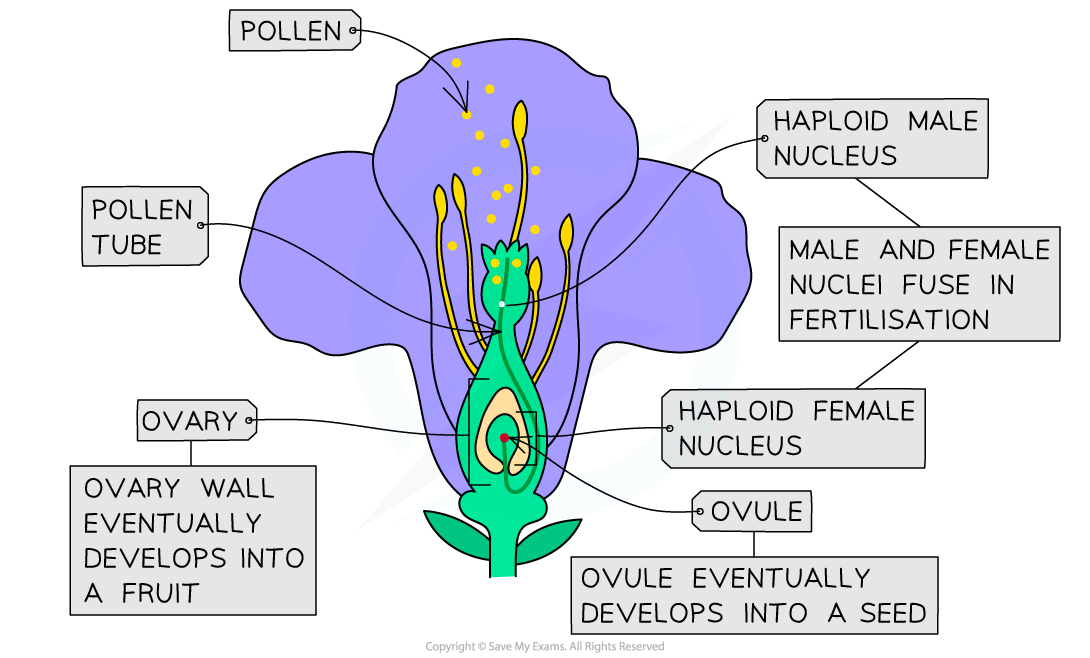
The process of fertilisation in plants.
Was this revision note helpful?
Build on this topic