Biological Consequences of Water Pollution (Edexcel IGCSE Science)
Effects of Eutrophication
Spec point —
4.17· understand the biological consequences of eutrophication caused by leached minerals from fertiliser
-
Minerals from agricultural fertilisers can be leached into water bodies, such as lakes and streams, resulting in a process known as eutrophication
-
The following events occur during eutrophication:
- fertilisers are high in nitrates, an essential mineral for plant growth, so this can result in the overgrowth of aquatic plants and algae at the water surface
- aquatic plants below the surface die due to reduced light levels, and are broken down by decomposers, e.g. bacteria and fungi
- decomposers increase in number, and the increased respiration of these organisms uses up oxygen in the water, reducing dissolved oxygen levels
- the water no longer contains enough oxygen to support other organisms, so many aquatic organisms die
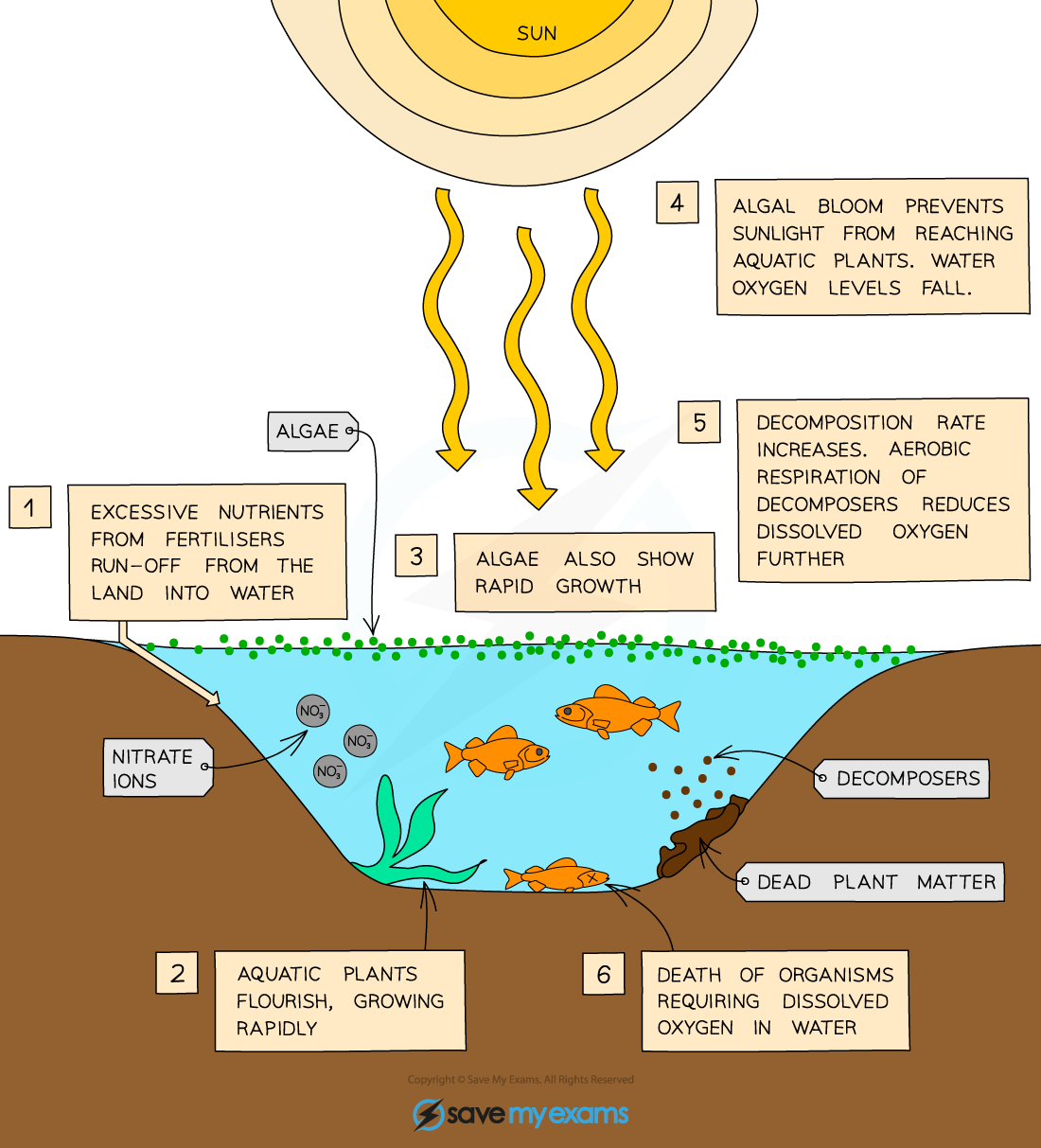
Fertiliser run-off can cause eutrophication in lakes and rivers
Effects of Sewage Pollution
Spec point —
4.16· understand the biological consequences of pollution of water by sewage
-
Water pollution can occur when sewage is washed into waterways, e.g. when sewers overflow or agricultural waste is washed off fields due to heavy rain
-
This can have harmful effects on aquatic ecosystems
- Sewage can cause an increase in growth of aerobic bacteria, which feed on biological waste
- These bacteria reduce the availability of dissolved oxygen in water
- Aquatic organisms that are sensitive to oxygen levels die, leaving only organisms that can survive at low concentrations of oxygen
- The aquatic ecosystem decreases in biodiversity
-
Sewage in waterways can also result in an increase in the number of pathogenic bacteria present
Was this revision note helpful?