Carbon Cycle (Edexcel IGCSE Science)
Exam board Pearson Edexcel · IGCSEUpdated 2026-07-02
The Carbon Cycle
Spec point —
4.10· describe the stages in the carbon cycle, including respiration, photosynthesis, decomposition and combustion
- Carbon is an essential part of the biological molecules from which cells are built, e.g. carbohydrates, proteins and fats
- Carbon is cycled through ecosystems via the processes of the carbon cycle
Uptake of carbon by living organisms
- Carbon is taken out of the atmosphere in the form of carbon dioxide by plants during photosynthesis
- The carbon is used to make glucose, which can be turned into carbohydrates, fats and proteins within the biomass of plants
Transfer of carbon between living organisms
- Carbon is passed from plants to animals when herbivores feed
- Carbon passes between animals when carnivores feed
Release of carbon into the atmosphere
-
Carbon returns to the atmosphere in the form of carbon dioxide during respiration
- Respiration occurs in plants and animals
- Microorganisms, such as bacteria and fungi, use dead and waste material to fuel respiration, releasing CO2 during decomposition
-
If animals and plants die in conditions where decomposers are not present the carbon in their bodies can be converted into fossil fuels; these can be burned to release carbon dioxide into the atmosphere by combustion
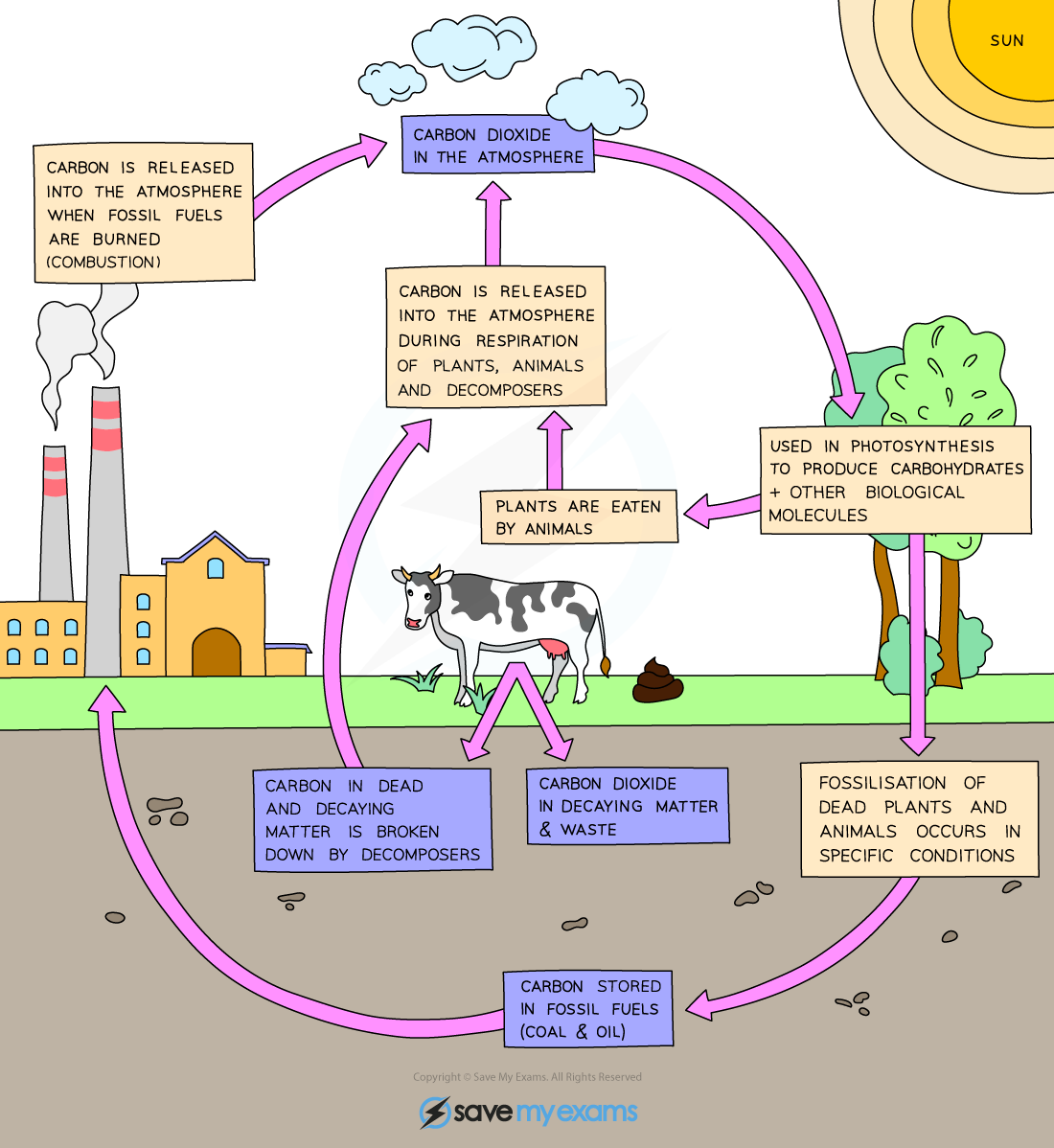
Carbon is cycles through ecosystems by processes such as photosynthesis, respiration, decomposition and combustion
Was this revision note helpful?
Build on this topic