Enhanced Greenhouse Effect (Edexcel IGCSE Science)
Spec point —
4.15· understand how an increase in greenhouse gases results in an enhanced greenhouse effect and that this may lead to global warming and its consequences
Enhanced Greenhouse Effect
-
The greenhouse effect is a natural process by which heat is trapped in the Earth's atmosphere
- The Sun emits radiation that enters the Earth’s atmosphere
- The Earth’s surface absorbs some of this energy and re-emits it as heat (infrared radiation)
- Some of this heat is reflected back into space
- Some is absorbed by greenhouse gases (such as carbon dioxide, methane, and water vapour) and trapped within the atmosphere
-
This process keeps the Earth warm enough to support life — it is a natural and essential phenomenon
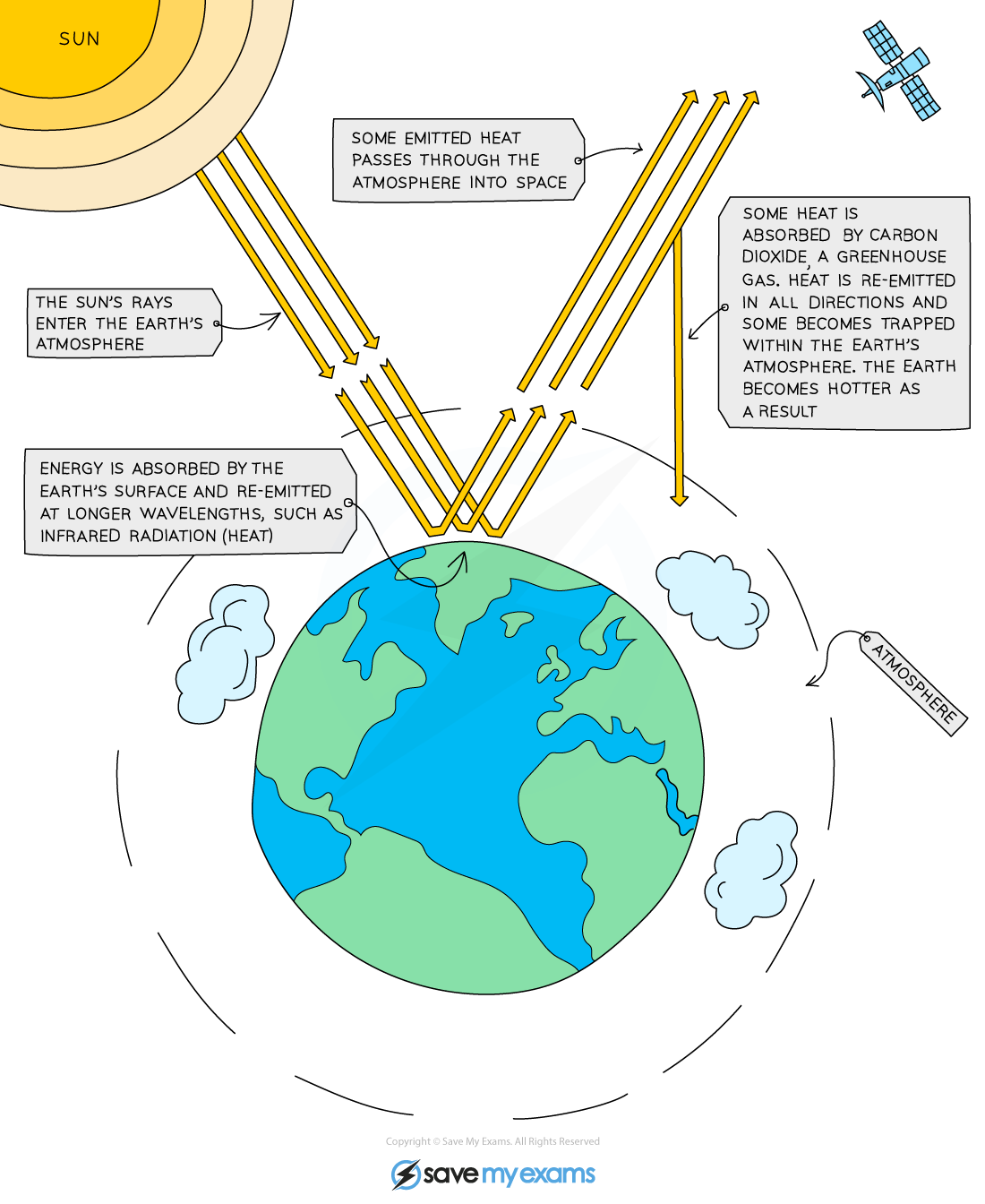
How the greenhouse effect works
The consequences of an enhanced greenhouse effect and global warming
-
The enhanced greenhouse effect occurs when increasing levels of greenhouse gases from human activities (such as burning fossil fuels, deforestation, and agriculture) trap more heat in the atmosphere As a result, the Earth’s average temperature rises above normal, leading to global warming and climate change
-
The consequences of global warming due to an enhanced greenhouse effect include:
- Ocean temperatures increasing, causing melting of polar ice caps, rising sea levels, flooding and coral bleaching
- Increasing temperatures causing extreme weather like super storms, flooding, droughts
- Changes in or loss of habitats due to extreme weather events
- Decreases in biodiversity as food chains are disrupted and extinction rates increase
- Increases in migration of species to new places, including increased spread of pests and disease
Was this revision note helpful?